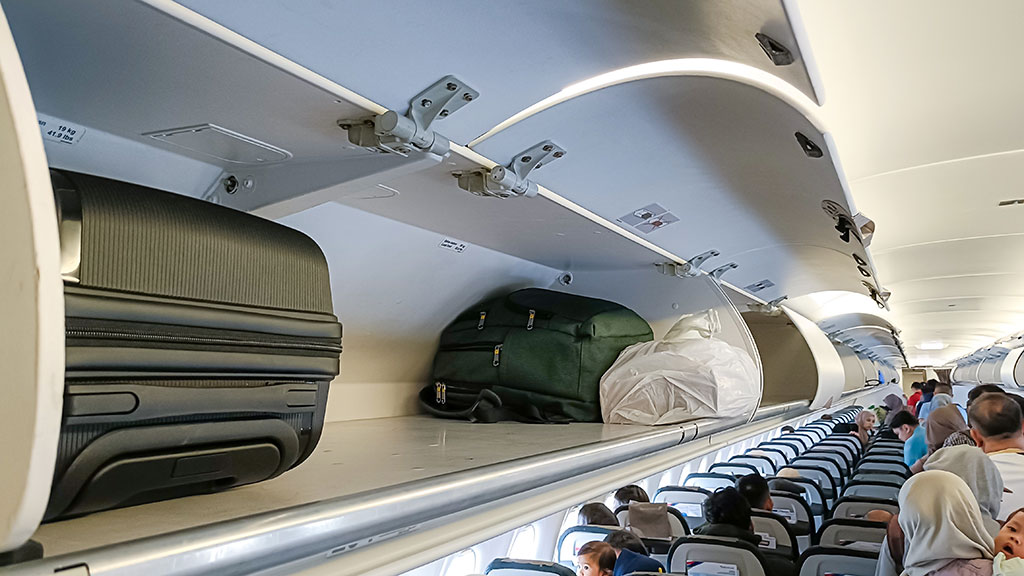
The industry is getting better at this: coverage of SITA’s 2026 Baggage IT Insights report puts the global mishandling rate at 4.9 bags per 1,000 passengers in 2025, down 23 per cent on the year before. The rate is not zero, and the person it happens to still arrives at a client meeting in yesterday’s shirt. For a two- or three-night trip, keeping everything in the cabin removes the risk entirely, provided the bag is packed around the rules that now apply at UK airports.
Know Which Liquid Rule Your Airports Use
The 100ml rule is no longer one rule. Gov.uk guidance says most airports still cap containers at 100ml, while some allow containers of up to two litres, and it tells travellers to check the departure airport, any connecting airport and the return airport separately. Heathrow completed its scanner rollout in January, as Travelling for Business reported at the time, joining Gatwick, Edinburgh, Birmingham and Bristol on the two-litre list. Manchester’s security page, updated in April 2026, still says containers over 100ml are not allowed, although liquids can stay inside the bag. Luton’s page says the same.
The practical consequence is that the outbound leg sets nothing. A traveller flying Heathrow to Manchester, or Edinburgh to a European airport without the new scanners, can carry a full-size bottle out and be made to bin it coming home. Pack to the strictest airport on the itinerary and the question never comes up.
Pack Toiletries to the 100ml Standard Anyway
Decanting into 100ml containers costs five minutes and works at every airport in the country. Manchester adds a detail that catches people out: reusable travel bottles must have their capacity printed on them, and handwritten labels or stickers are not accepted. Buy bottles with the volume moulded into the plastic. Where an airport still asks for the liquids to be bagged, gov.uk specifies one transparent resealable bag of about 20cm by 20cm holding no more than a litre, sealed without strain. Essential medicines, special dietary liquids and baby milk can exceed the limit, up to two litres, at every UK airport.
Keep Every Battery in the Cabin, and Count Them
Nothing with a lithium battery belongs in the hold, and a cabin-only trip makes that easy. The Civil Aviation Authority’s list of permitted items allows power banks and spare batteries only as carry-on, no more than two per person, with anything between 100Wh and 160Wh needing the airline’s approval. Spare batteries need their terminals protected, either in the original packaging, with tape over the contacts or in a separate pouch. Power banks must not be recharged on board, and this site’s guide to the current power bank rules sets out where individual airlines go further. Emirates, for example, has banned using a power bank at all on its flights since 1 October 2025 and permits one unit under 100Wh per passenger.
The same cabin-only rule covers e-cigarettes. Gov.uk allows them in hand luggage but not in hold baggage, and the CAA says the device should be carried on your person and never recharged on board. A spare bottle of vape liquid is a liquid like any other, so keep refills at 100ml or under for the return leg.
Arrive With Every Device Able to Switch On
Gov.uk is blunt about this: if a device does not switch on when security staff ask, it will not be allowed onto the aircraft. Winter trips are hard on batteries, between cold platforms and long days of hotspotting, so a laptop that was at three per cent when the meeting ended is a risk at the airport the next morning. Charge everything overnight and keep one cable in the bag that fits the phone, the laptop and the headphones. If the suitcase itself has a built-in battery, the CAA requires a lithium battery above 2.7Wh to be removed and carried in the cabin if the bag is ever checked, so a cabin-only plan is the simpler option there too.
Dress for the Airport, Not the Destination
Coats and belts with buckles still come off at security, even at airports where laptops and liquids now stay in the bag. Wear the heavy coat rather than packing it, keep pockets empty before the queue, and put the watch, wallet and keys into the bag before reaching the tray. At Manchester and Luton the electronics stay inside the bag, so there is no need to dig them out, but keeping chargers and cables in one pouch makes a closer inspection quick if staff ask for one.
Plan the Bag Around Two Working Days
A cabin bag for a winter business trip holds a surprising amount if the wardrobe is built around one colour. Two shirts, one knit, one pair of trousers and the suit worn on the plane cover a three-night trip. Shoes are the space problem, so travel in the pair that works for the meeting. Keep the laptop, documents, medication and anything irreplaceable in the smaller under-seat bag, because that is the one that stays with the traveller if the overhead lockers fill and the larger case is taken to the hold at the gate. If that happens, the batteries and the e-cigarette come out first, as the CAA rules require.
Check the Rules Again the Week Before
Airport scanner rollouts, airline battery policies and route-specific restrictions have all changed within the past twelve months, and the pages quoted here carry their own update dates. Five minutes on the departure airport’s security page and the airline’s baggage page the week before travel is the cheapest insurance a business traveller can buy, especially on a trip where a missing bag means a missed meeting.