


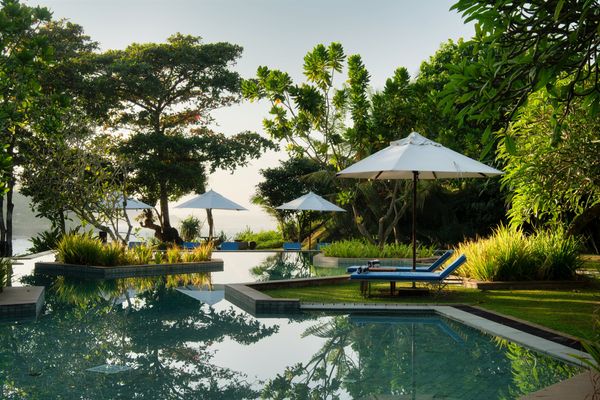
Occupancy between May and September has risen compared to the same period in 2025, pointing to continued interest in experiencing Sri Lanka outside its conventional peak. This supports efforts to position Sri Lanka as a year-round destination.
“We’ve seen strong growth between May and September, which we now call the Emerald Season. We no longer refer to it as the off-season, because Sri Lanka offers real diversity across the entire year,” says Malik Fernando, Chairman, Resplendent Ceylon. “The country has a continent’s worth of experiences in one island, and you can spend time in the mountains, the wildlife parks or on the coast in any month. This year-round positioning is also gaining ground with travellers who are finding summers elsewhere harder to travel in. The hill country offers a cooler escape at this time, and more people are now aware of that.”
That depth is helping shape a new Sri Lanka. The island’s established draws – its beaches, heritage sites and wildlife- now sit alongside a growing range of experiences that invite travellers to stay longer and travel differently. Hiking, birdwatching, surfing, immersive family travel, local food, conservation, cultural discovery, and Ayurveda-led wellness are all opening up new ways to experience the country. What each of these looks like changes through the year, so there is something different to see in every season.
The Pekoe Trail is another striking example of year-round activity. The 300km route through Sri Lanka’s Central Highlands is divided into stages, allowing it to be explored over multiple journeys during different times of the year rather than completed as a single itinerary. Its sections move through tea estates, villages, forests and highland landscapes, offering opportunities for walking, birdwatching and encounters with the people and places that define the region.
The Emerald Season also covers some of the most important dates in Sri Lanka’s festival calendar, many of which winter visitors never see. Vesak, usually in May, marks the birth, enlightenment and passing of the Buddha. Towns and villages across the island are lit with handmade lanterns, and large illuminated pandols depict scenes from Buddhist stories. Poson follows in June. In July or August, the Kandy Esala Perahera, one of the country’s largest cultural processions, takes over the streets of Kandy for several nights. The Kataragama Perahera, held around the same time, draws pilgrims from across the country.
Sri Lanka’s hospitality landscape is evolving alongside these experiences. In 2026, six Michelin Keys were awarded across Resplendent Ceylon’s portfolio – three to Ceylon Tea Trails, two to Wild Coast Tented Lodge and one to Cape Weligama – adding international recognition to a destination increasingly known not only for its landscapes and wildlife, but also for the character of its hospitality, design and culinary experience. The tea, sea and safari journey across these properties has become one of the country’s defining luxury itineraries.
That breadth is reflected across Resplendent Ceylon’s five properties. At Ceylon Tea Trails, guests can explore the tea country and sections of the Pekoe Trail; at Wild Coast Tented Lodge, the experience is rooted in the wilderness of Yala; further south, Cape Weligama and Ahu Bay offer different expressions of the southern coast, while Kayaam brings an Ayurveda-led approach to wellness in Tangalle.
For Sri Lanka, the next opportunity lies in building on that range, so that the island is seen as a destination to visit in any month.


