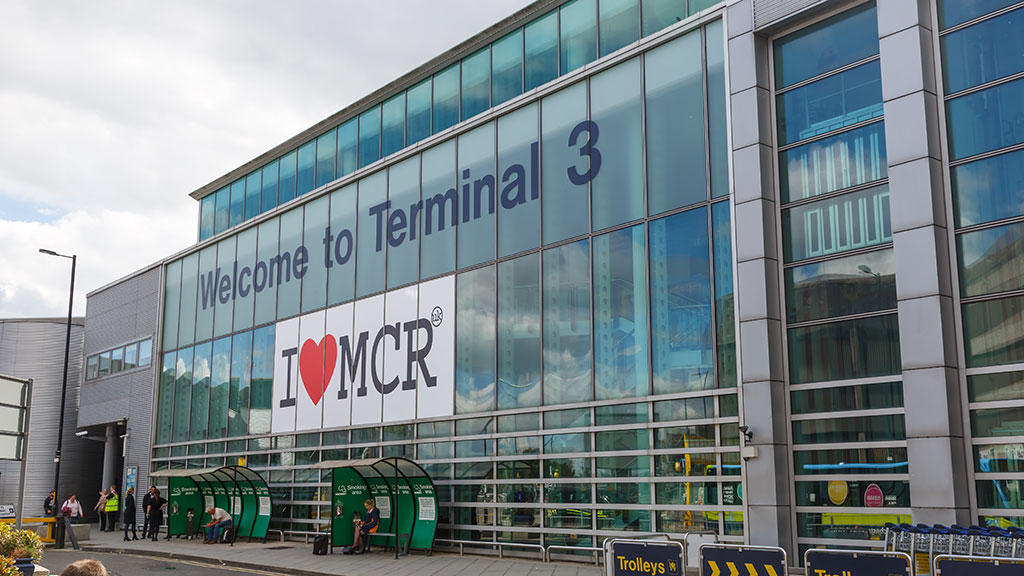
Manchester Airport now has two terminals. Since Terminal 1 closed in March 2026, almost every airline flies from the expanded Terminal 2, while Ryanair alone uses Terminal 3. The airport is the UK’s largest outside London, carrying around thirty-two million passengers a year, and trains from the station between the terminals reach Manchester Piccadilly in around 20 minutes, every 10 minutes. Get the terminal right and the rest of the day follows.
Quick facts: Terminals: 2 (T2 for all airlines except Ryanair; T3 for Ryanair) · City centre: Manchester Piccadilly by train, around 20 minutes · Terminal drop-off: £5.50 for 5 minutes, free at JetParks 1 · Security FastTrack: from £5.49, T2 and T3 · Lounges: Escape, The Executive by Escape and Aspire (T2), Escape (T3), Emirates (T2), all airside, plus the separate aether private terminal
Manchester Airport terminals: Terminal 2 or Terminal 3?
The transformation has made Manchester simpler than it has been in decades. The decade-long programme, first costed at £1.3 billion and now put by the airport at £1.5 billion, has turned Terminal 2 into the centrepiece. It handles around three-quarters of all passengers: the long-haul carriers and their A380s, easyJet, Jet2 and the full-service Europeans, beneath a glass atrium with two security halls, a shopping street and a street-food market hall.
Terminal 3 has absorbed parts of the old Terminal 1 and is now Ryanair’s alone. Ryanair passengers check in through the former Terminal 1 departures area, then walk through to the Terminal 3 departure lounge after security, so follow the Ryanair signs rather than looking for a separate Terminal 3 entrance. Terminal 1 itself is closed after more than sixty years.
The rule of thumb is short: Ryanair means Terminal 3, almost everyone else means Terminal 2. The caution is that the moves are recent. Airlines that sat in Terminal 1 for decades have only just relocated, and a handful shifted more than once during the programme. The two terminals are linked but not adjacent, so confirm your building when you book and again on the day.
Getting from Manchester Airport into the city
Few airports outside London are as well wired into the rail network. The station sits between the two terminals, and trains run to Manchester Piccadilly every ten minutes or so. Beyond the city the reach is remarkable: TransPennine Express and Northern fan out to Liverpool, Leeds, York, Newcastle, the North Wales coast and Scotland, and a handful of Avanti West Coast trains run direct to London Euston each day. For somewhere on its route, the Metrolink tram is a slower, cheaper alternative. Our guide to the Manchester Airport train station covers the routes, the walk to each terminal and first and last trains.
Manchester Airport drop-off, parking and coaches
Manchester does a great deal of its business by road. The airport sits just off the M56, which links quickly to the M6, and National Express and Megabus run coaches from cities across the North and Midlands that the trains serve less well. Official parking runs from the budget JetParks sites, with their shuttle buses, to Meet and Greet, which takes the car at the terminal. Booking ahead online is markedly cheaper than turning up.
Stopping at the terminal now costs money. The drop-off zones at Terminals 2 and 3 charge £5.50 for five minutes and £6.50 for ten, rising to £25 for up to 30 minutes, the maximum stay. There are no barriers: cameras record the visit and you pay online by midnight the day after. The neat way round it is the free drop-off area at JetParks 1, from which a shuttle bus runs around the clock to the terminals.
Quick facts: Terminal drop-off: £5.50 (5 minutes), £6.50 (10 minutes), £25 (up to 30 minutes, maximum) · Payment: online, by midnight the next day · Free alternative: JetParks 1 drop-off, with shuttle bus
Into central Manchester the train still wins on time and cost. For the wider region, and for the early start with luggage, Manchester is genuinely a car-and-coach airport, more so than any of the London hubs.
Manchester Airport security and fast track
Security has been one of the biggest winners of the rebuild. Terminal 2’s two security halls use next-generation CT scanners, and laptops can now stay in your hand luggage. Liquids no longer need to go in a clear bag, but the 100ml limit on each container still applies at Manchester. Security FastTrack is sold at both terminals from £5.49 and is well worth the modest cost for an early departure or a holiday-week flight. For short-haul, arrive around two hours ahead; for long-haul, three hours is the comfortable standard. Our Manchester Airport fast track guide explains where the lanes are, how booking works and when it pays.
Manchester Airport lounges
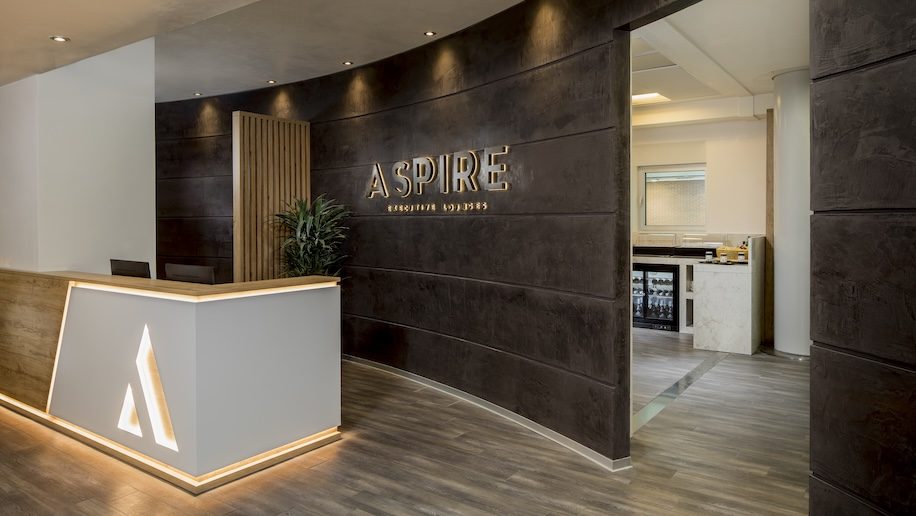
The lounges have been rebuilt along with the terminals. In Terminal 2, the Escape Lounge is the dependable all-rounder, The Executive by Escape is the polished premium room that opened in summer 2026, and Aspire has added a 300-seat lounge, its third at the airport. Terminal 3 has its own Escape Lounge for Ryanair passengers. Emirates’ premium passengers now have the airline’s own £10 million lounge, and the 1903 Lounge closed at the end of June 2026. Not every lounge takes Priority Pass, so check before you rely on a membership. Our Manchester Airport lounges guide has prices, hours and which to pick.
Eating and shopping in Terminal 2
Dining is one of the most visible gains of the transformation. Terminal 2 is built around a street-food market hall, a bright, sociable space gathering a range of kitchens under one roof. It gives the business traveller far more than the tired chains of the old terminal, from a quick quality bite to a proper sit-down meal before a long-haul departure. Alongside it runs a shopping street with fashion, technology, beauty and duty-free, concentrated in one place rather than scattered down distant piers.
Terminal 3, the smaller Ryanair base, is more functional but covers the essentials for a short-haul hop. In either building, treat the shops as a safety net for the charger, adaptor or book you forgot rather than a way to fill time. Eat and buy in the main departure area, where the choice is widest, and watch the screens: even a smart new terminal can involve a fair walk to a far gate.
Manchester Airport hotels
Manchester’s airport hotels cluster around the station and the covered Skylink walkway, so several are a short, dry walk from check-in. The Radisson Blu is the closest to Terminal 2 and the most polished, with soundproofed rooms, a pool and a restaurant overlooking the airfield. The Crowne Plaza and the Clayton sit closest to Terminal 3, with the Hilton and budget options filling out the range. Our guide to Manchester Airport hotels sets out which to book for an early long-haul start and which for value.
Connecting at Manchester Airport
Manchester is the one airport outside Heathrow that works as a real long-haul hub, and its connections behave accordingly. The Gulf and Asian carriers, Virgin Atlantic and the full-service Europeans all interline here, so a journey on a single ticket has bags checked through and the connection protected. Most of these connections now happen within Terminal 2, a walk through the building rather than a trek between satellites, with transfer security where required.
The complication is the change between terminals. A Terminal 2 to Terminal 3 connection on separate tickets, most often where a Ryanair flight meets something else, is a self-transfer. You reclaim and re-check your bag and pass landside between the buildings, so treat it as two journeys and allow generous time. On a single interlined ticket within Terminal 2, minimum connection times are realistic. Know before you fly which kind of connection you have, and build the buffer to match.
The regular’s playbook
Manchester rewards the traveller who has kept up with its rebuild. These are the habits that separate the one who glides through the new airport from the one still navigating the old.
- Confirm your terminal afresh: Ryanair is Terminal 3, almost everyone else is Terminal 2.
- Take the train to Piccadilly for the city and onward main-line connections.
- From across the North, check for a direct TransPennine or Northern train to the airport itself.
- Use the Metrolink tram for destinations on its line; it is cheap if slower.
- Never pay the forecourt charge; use the free JetParks 1 drop-off and its shuttle.
- Book parking online in advance, JetParks for value or Meet and Greet for convenience.
- Pack liquids in 100ml containers; the larger allowance has not reached Manchester.
- Buy FastTrack ahead for an early or holiday-week flight, or check your fare or lounge includes it.
- Book an Escape, Executive or Aspire lounge ahead, and check it is in your terminal; the 1903 has closed.
- Eat at the Terminal 2 street-food market hall.
- For an early long-haul, sleep at the Radisson Blu and walk to check-in under cover.
- Treat a Terminal 2 to Terminal 3 change on separate tickets as a self-transfer.
Manchester Airport: your questions answered
How many terminals does Manchester Airport have?
Two. Terminal 1 closed for good in March 2026, leaving the expanded Terminal 2, which handles around three-quarters of all passengers, and Terminal 3. It is the first time in more than thirty years that Manchester has run as a two-terminal airport.
Which terminal is Ryanair at Manchester Airport?
Ryanair flies from Terminal 3 and is the only airline there. Check-in is through the former Terminal 1 departures area, and after security you walk through to the Terminal 3 departure lounge. Ryanair passengers also have their own Escape Lounge in Terminal 3.
Which terminal is easyJet at Manchester Airport?
easyJet flies from Terminal 2, along with Jet2, the long-haul carriers including Emirates and Virgin Atlantic, and the full-service European airlines. In practice, if you are not flying Ryanair, you are almost certainly in Terminal 2, but confirm on the day because airlines moved recently.
Is there a free drop-off at Manchester Airport?
Yes. The drop-off area at JetParks 1 is free, and a shuttle bus runs from there to the terminals around the clock. Dropping off outside Terminals 2 and 3 costs £5.50 for five minutes and £6.50 for ten, paid online by midnight the following day.
How early should I get to Manchester Airport?
For a short-haul European flight, arrive around two hours ahead, and more in school-holiday weeks. For long-haul, three hours is the comfortable standard for a relaxed passage through security and time in a lounge. FastTrack shortens the security part of that, not the check-in deadline.
The bigger picture
The defining story at Manchester is the transformation now drawing to a close. The programme, now costed by the airport at around £1.5 billion, has delivered a vastly enlarged Terminal 2, retired the sixty-year-old Terminal 1 and reshaped the airport around two modern buildings with gates able to handle the largest aircraft flying. Its purpose is plain: to cement Manchester as the long-haul gateway for the North and relieve the pressure that sends so many northern travellers down to a congested Heathrow. Owned by the Manchester Airports Group, also behind Stansted, the airport is backing the rebuild with a steadily expanding route network, and a revamp of Terminal 3 is under way.
For the traveller, the next few years should bring the dividend of all that disruption: a smoother, better-connected airport with a passenger experience matched to its scale. For anyone in the Midlands weighing the options, Birmingham Airport is the obvious comparison, but for long-haul reach Manchester has no regional rival. It intends to be a genuine alternative to the London hubs, and for the frequent flyer based anywhere in the North it already is.