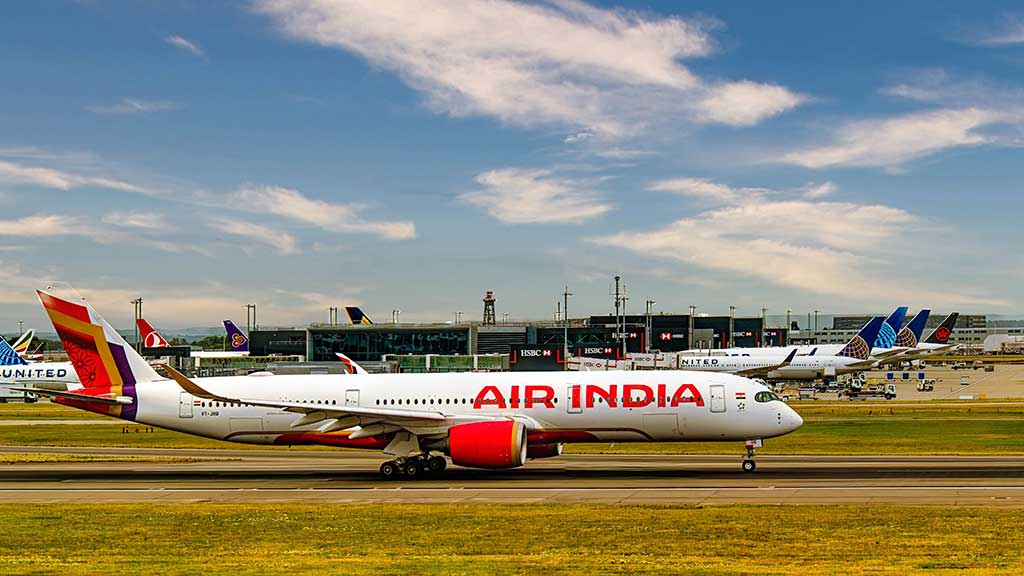
Air India cost cuts worth 60 billion rupees, about $650m, are planned for the current financial year, as the airline’s new chief executive sets out how he plans to revive the loss-making carrier.
The measures were outlined by chief executive Tewolde Gebremariam at a staff townhall meeting on Wednesday 25 November, according to people familiar with the matter quoted by Bloomberg. The airline’s financial year runs to the end of March 2027.
Where the Air India cost cuts will fall
According to the reports, the plan includes merging some departments at Air India and its budget arm, Air India Express, starting a dedicated cargo service and introducing holiday packages. Gebremariam has also sought to reduce maintenance costs and is considering folding Air India Express into the main group.
He told staff to focus on efficiency and asked them to show more urgency in turning flights around between landing and take-off. Air India did not respond to requests to confirm his comments.
The latest Air India cost cuts build on steps taken in October, when the airline set up a dedicated cross-functional team to find savings across the business and introduced a scheme to reward employees whose ideas cut costs or raise revenue. At the same time, it tightened approvals for spending.
Why westbound flights are moving from Delhi
One of the biggest changes for travellers is that some westbound flights to the Middle East and Europe will move from New Delhi to Mumbai and Bengaluru. Pakistani airspace has been closed to Indian airlines since April 2025, after a deadly attack in Kashmir strained relations between the two countries, forcing long detours on flights heading west from northern India.

Flying from Mumbai and Bengaluru should shorten those detours, saving fuel and time. Air India has not said which routes will move or when, so business travellers who connect through Delhi on Air India’s European services should check bookings for schedule changes in the coming months.
Air India lost more than 220 billion rupees in its last financial year. The losses were driven by a fatal crash in June 2025, the airspace closure and the war in Iran, which disrupted flights and pushed up fuel costs. A weaker rupee has added pressure, because much of the airline’s spending is in dollars. Those pressures explain why Air India cost cuts are now the priority, after several years in which the focus was on growth and new aircraft.
A new chief executive under pressure
Gebremariam joined Air India in September after 11 years running Ethiopian Airlines Group. He succeeded Campbell Wilson, who announced in April that he would step down. The airline is owned by the Tata Group, which took it over from the Indian government in January 2022.
Speaking at the Aviation India and South Asia conference in New Delhi on 3 November, Gebremariam said the airline was punching below its weight and that would change, adding that the greatest growth opportunity lay in full-service, wide-body flying, although the low-cost Air India Express would also expand. He has also been exploring shared corporate functions across the two airlines.
For UK companies with staff travelling to India, how the Air India turnaround affects schedules, fares and service will matter to anyone with regular trips to Mumbai, Delhi or Bengaluru. Travellers weighing alternatives may also note recent new links between the two countries, including IndiGo’s daily flights between Mumbai and Heathrow.