


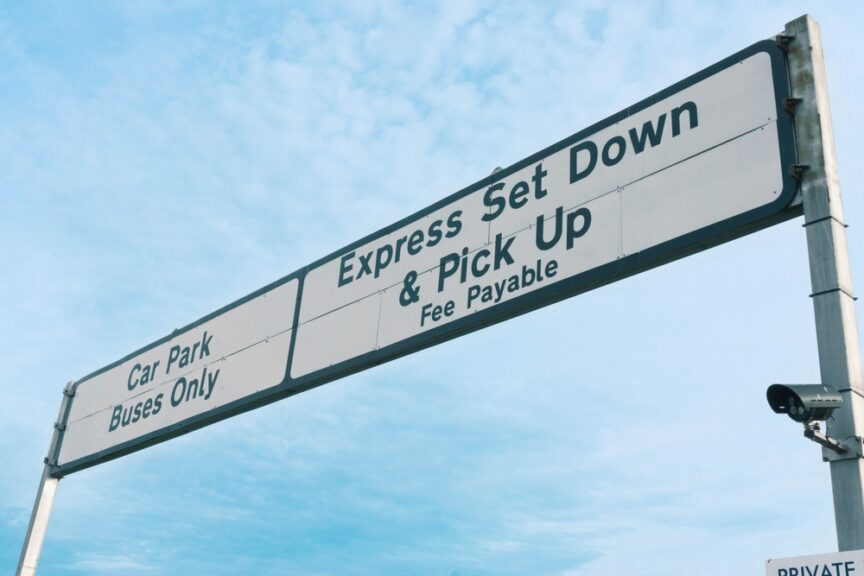
The Business Travel Association (BTA) has welcomed the prospect of a government review of airport drop-off charges, renewing its calls for reform of fees that many travellers see as excessive.
The association says a review is a chance to tackle concerns over affordability, accessibility and transparency in the “kiss and fly” charges that most UK airports now apply.
What the BTA wants from a review of airport drop-off charges
The BTA has been campaigning for a package of changes:
- A £3 cap on drop-off fees
- Charges applied only at peak times
- A 50% discount for electric vehicles
- A single daily charge, however many times a driver visits
Criticism of drop-off costs has been growing across the UK. Research by the RAC found that 16 of the country’s 20 busiest airports have raised their charges in the past year, taking the average fee to £7.
BTA chief executive Clive Wratten said the review must lead to “meaningful change” rather than allowing airports to justify their existing charges. He argued that fees of up to £10 for a brief stop at the terminal are hard to defend when public transport is not always a practical alternative.
Will the government review airport drop-off charges?
The issue was raised in Parliament during the debate on the Civil Aviation (Consumer Protection and Regulatory Reform) Bill. Transport minister Keir Mather told MPs that “the Government have no objection to conducting a review of this matter”. The scope and timing of any review have not yet been set out.

Why it matters for business travellers
For business travellers, drop-off fees are a small but frequent cost. Many early flights leave before public transport starts running, and a lift from a colleague, family member or taxi is often the only realistic way to get to the airport. Taxi firms usually pass the charge on, so it ends up in expense claims either way.
Disabled travellers and those with heavy luggage or young children are often the most affected, as they may be unable to use public transport or walk from a remote car park, which is one reason the BTA highlights accessibility.
The charges also add friction for companies. Travel policies often do not say clearly whether drop-off fees can be claimed, and small charges paid by card at a barrier or online can easily be missed. A clear rule, such as allowing the fee where no public transport is available, avoids disputes later.
There are ways to reduce the cost. Some airports offer free drop-off in their long-stay car parks, with a shuttle bus to the terminal, which can be a useful option when time allows. Travellers can also check whether their airport has rail links that fit their flight times.
Our airport guides, including the Heathrow airport guide and the Gatwick airport guide, set out the drop-off arrangements and transport options at the UK’s busiest airports.
Airport costs have been rising in other ways too. As we reported, the Heathrow airport charge is set to rise from January, adding to the price of tickets. For frequent travellers, a cap on airport drop-off charges would be a welcome change, but any review is likely to take time, and airports are likely to argue that the fees help manage traffic and fund road improvements.


