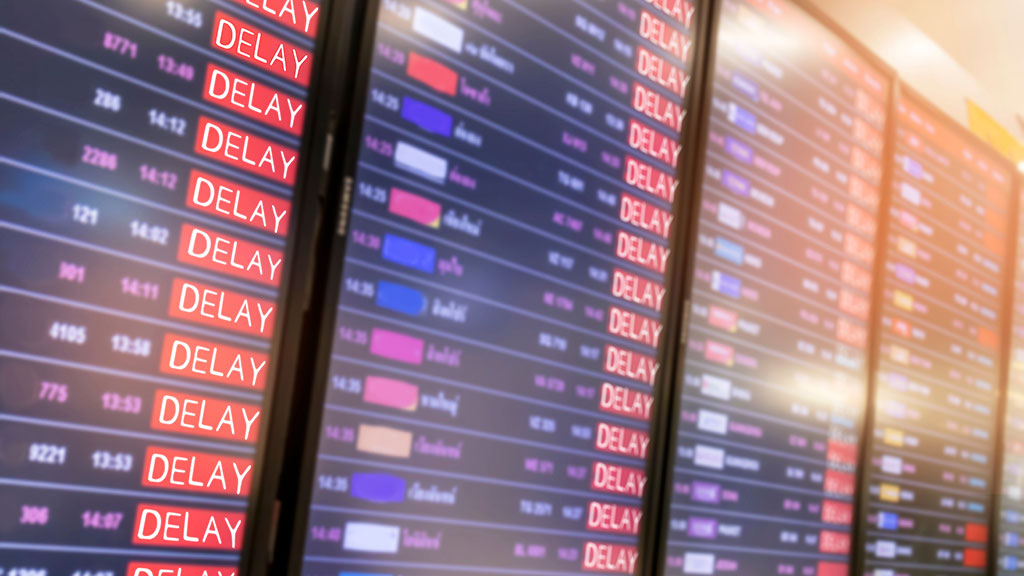
Airlines are far more confident about coping with Thanksgiving flight disruption than the people who fly with them, according to research published by travel technology company IBS Software on 19 November 2026. Only 26% of the 2,000 UK and US consumers surveyed agreed that the airline industry is well prepared to manage large-scale disruption, leaving 74% unconvinced.
That matters for UK business travellers heading to the US this week, as Thanksgiving on Thursday 26 November brings one of the busiest periods of the year for American aviation. The same study, which polled 500 airline leaders including 259 in C-suite roles, found that two in three (66%) rate their own airline as well prepared for large-scale disruption, and 67% say the same of the wider industry.
Airlines and passengers see airline disruption differently
The confidence gap comes with a hefty bill for carriers. Among C-suite respondents, 54% estimated the annual cost of disruption to an airline at between $5 million and $10 million, a figure that takes in operational costs, compensation, rebooking, customer support and customer loyalty.
IBS Software argues that a disconnect of this size cannot be fixed by communication alone. For travel managers, the findings are a reminder that an airline’s view of its own resilience is no substitute for a contingency plan when an important meeting depends on a tight connection.
Only 1% of airline leaders say they can notify passengers instantly when disruption strikes, falling to 0% in the UK against 2% in the US. A further 10% can alert travellers within 1-15 minutes, while 45% need 16-30 minutes to get word out.

Passengers feel that lag. A lack of updates ranks among the biggest disruption frustrations for 29% of consumers, and 34% say timely, clear updates matter most when plans change. For nearly two in three (63%), proactive communication would improve their opinion of an airline, which suggests that slow alerts could cost carriers return bookings.
Julian Fish, Head of Aviation Operations at IBS Software, said: “As the holiday season approaches, airlines should prepare not just to handle disruption, but to keep passengers informed as soon as it becomes apparent. Technology must identify upcoming issues, and then connect operational systems with passenger communications, allowing airlines to turn changing flight schedules into timely updates and rebooking options. Legacy technology infrastructure should not stand in the way of a faster, more coordinated response. The priority is giving passengers clarity about what happens next in the case of a delay, with accessible support and rebooking options when they need it.”
What Thanksgiving flight disruption means for business travel
For anyone on a work trip to the US over the holiday, a half-hour gap between an airline spotting a problem and telling its passengers can decide whether a traveller secures one of the last seats on an alternative flight or misses out. It pays not to rely on the airline’s alert alone: checking the status of the inbound aircraft in the carrier’s app often gives earlier warning. Our report on the new FAA runway rule starting on the busiest day of Thanksgiving travel explains why US departures could be slower this week.
Companies can also build the findings into travel policy, asking their travel management company how quickly it passes disruption alerts on to travellers and making sure employees know who to call for rebooking out of hours.
Business travellers caught up in Thanksgiving flight disruption on the way home should check whether their flight is covered by UK law, which depends on the route and the airline. The Civil Aviation Authority’s guidance on flight delays sets out when airlines must provide care and compensation, and our guide to EU and UK rights for cancelled flights explains what travellers can claim. The regulator’s own research has found that just one in ten passengers feel fully informed of their rights when a flight is disrupted.