


For the modern business traveller, the boundaries between work and leisure have never been blurrier. As hybrid schedules, flexible working and wellbeing-led corporate travel policies take hold, bleisure, the art of extending a work trip with leisure has shifted from perk to priority.
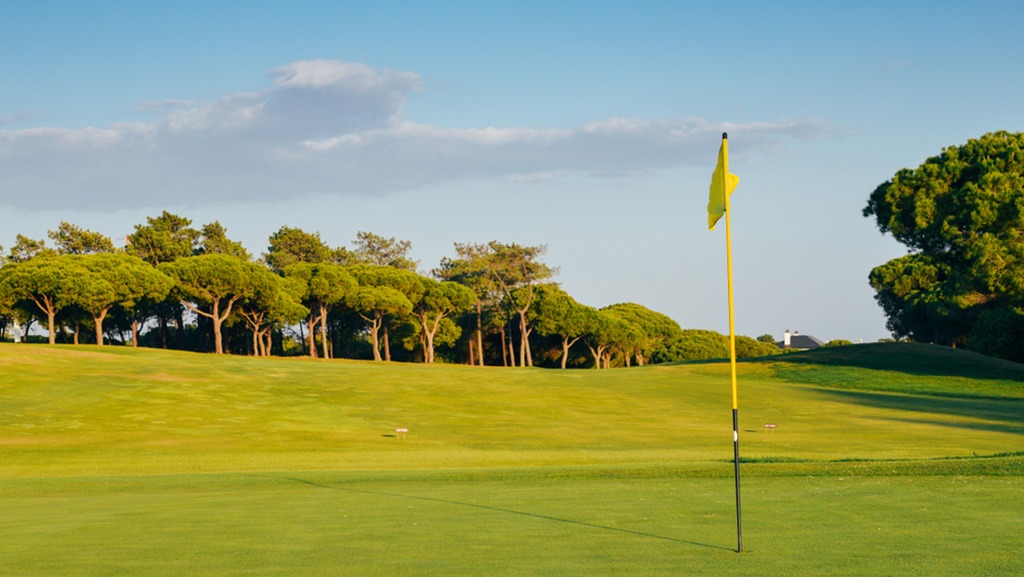
Few destinations embody this evolution quite like Portugal’s Algarve, where championship golf courses, high-end resorts and robust business infrastructure sit beneath an almost permanently blue sky.
Long associated with sun-seekers and retirees, the Algarve has quietly reinvented itself as one of Europe’s most compelling destinations for executives who want their diary to include both boardroom meetings and back-nine tee times. For business travellers arriving from London, Frankfurt or New York, it offers something increasingly rare: efficiency without exhaustion.
Easy access, low friction
Bleisure trips succeed or fail on logistics, and the Algarve excels here. Faro Airport is well connected to the UK and northern Europe, with direct flights from London taking under three hours, shorter than many domestic rail journeys. For executives working across time zones, that convenience matters.
Once on the ground, travel times are refreshingly short. From the airport, Quinta do Lago, Vale do Lobo and Vilamoura, the Algarve’s golfing triumvirate, are all within 30 minutes. That proximity allows business travellers to schedule early meetings, afternoon calls and still comfortably fit in a twilight round.
It also helps that Portugal consistently ranks as one of Europe’s safest and most politically stable countries, an often-overlooked but increasingly important consideration for corporate travel managers.
Golf that means business
The Algarve’s reputation as a golfing powerhouse is well earned. With more than 40 courses, many designed or endorsed by legends of the sport, it offers variety without compromise. For the bleisure traveller, golf here is not simply recreation; it is a networking tool, a decompression ritual and, increasingly, a venue for informal deal-making.
Quinta do Lago remains the flagship. Its North and South courses regularly feature in Europe’s top rankings, blending immaculate conditioning with layouts that reward strategy over brute force, ideal for mixed-ability corporate groups. Nearby Vale do Lobo’s Royal Course, famous for its cliff-top par-3, delivers visual drama that rivals any boardroom presentation.
Vilamoura, meanwhile, offers scale and flexibility. With multiple courses, conference-capable resorts and a marina buzzing with restaurants and bars, it is particularly well suited to incentive trips, leadership retreats and client entertaining.
Crucially, Algarve golf is a year-round proposition. While summer heat can be intense, spring and autumn offer ideal playing conditions, aligning neatly with peak corporate travel seasons. Winter, too, remains mild enough to keep courses busy while northern Europe shivers.
Resorts designed for working travellers
What sets the Algarve apart from more traditional golf destinations is how seamlessly its resorts have adapted to business needs. Luxury properties here are no longer content with offering just spas and sea views; they are building serious workspaces into their DNA.
At Quinta do Lago, resorts cater to executives who expect enterprise-grade connectivity, discreet meeting rooms and flexible accommodation layouts that support longer stays. Many villas and serviced residences are now explicitly marketed to remote workers, with dedicated offices, ergonomic furniture and secure Wi-Fi.
Vilamoura’s larger resorts take this a step further, offering conference facilities capable of hosting multinational gatherings while still maintaining a leisure-first atmosphere. Morning plenaries can give way to afternoon golf clinics or sailing sessions, reinforcing team cohesion in ways a city-centre hotel rarely can.
This blending of business and pleasure reflects a broader shift in corporate culture. Increasingly, companies recognise that productivity is not maximised by relentless scheduling, but by environments that allow people to perform, and recover, at their best.
The wellness dividend
Golf may be the Algarve’s headline act, but its bleisure appeal is underpinned by a wider focus on wellbeing. For executives under constant pressure, the region’s slower pace offers something genuinely restorative.
Early mornings might begin with a walk along the Ria Formosa lagoon, a protected nature reserve that runs behind much of the central Algarve. Afternoons can be spent cycling coastal trails or enjoying Atlantic-inspired cuisine that is both indulgent and health-conscious.
Portuguese food culture, rooted in fresh fish, olive oil and seasonal produce, aligns neatly with the wellness expectations of modern travellers. Long lunches may be traditional, but they are rarely heavy, making it easier to return to work refreshed rather than sluggish.
This emphasis on balance has not gone unnoticed by HR departments. As wellbeing becomes a measurable KPI rather than a vague aspiration, destinations like the Algarve are increasingly favoured for off-sites and senior leadership meetings.
Networking beyond the clubhouse
While golf remains central, the Algarve’s bleisure credentials extend beyond the fairway. The region has developed a sophisticated dining and hospitality scene that supports high-level networking without feeling contrived.
From Michelin-starred restaurants to relaxed beach clubs, evenings here lend themselves to informal conversations that often prove more productive than formal meetings. Deals are discussed over grilled sea bass rather than PowerPoint slides; partnerships are forged during sunset walks along the coast.
For international executives, there is also a cultural advantage. Portugal’s reputation for warmth and hospitality makes it easier to build rapport quickly, an intangible but powerful asset in business travel.
Sustainability on the agenda
As corporate travel faces increasing scrutiny, sustainability has become a decisive factor in destination choice. The Algarve, long criticised for overdevelopment, has made tangible efforts to address this.
Many golf courses now operate water-efficient irrigation systems, use reclaimed water and actively protect surrounding ecosystems. Resorts are investing in renewable energy, reducing single-use plastics and promoting local sourcing, initiatives that resonate with companies under pressure to meet ESG commitments.
For bleisure travellers, this means fewer compromises. Enjoying a luxury golf break no longer has to feel at odds with corporate responsibility, particularly when operators are transparent about their environmental strategies.
A strategic pause, not an indulgence
Perhaps the Algarve’s greatest strength as a bleisure destination lies in perception. Unlike long-haul escapes, it does not feel excessive or indulgent. A three- or four-day extension to a business trip can be justified as easily as a London-Manchester rail journey, yet the return on wellbeing and productivity is disproportionately high.
For UK-based executives, especially, the Algarve represents a strategic pause rather than a holiday. Emails are answered, calls are taken, decisions are made, just in better surroundings.
As bleisure travel matures, destinations will increasingly be judged not by novelty but by how well they support this duality. On that measure, Portugal’s Algarve is no longer just a golf paradise; it is a blueprint for the future of business travel.
In an era where time is the ultimate luxury, few places allow you to spend it quite so well, one meeting, one fairway, one sun-drenched afternoon at a time.