



Half of global travellers now book restaurant reservations before they even secure their flights, a Hilton survey reveals. What’s more, one in five are going on trips specifically to hunt down new restaurants and culinary experiences.
However, for those at the luxury end of the scale, it’s no longer about chasing Michelin stars and accolades. UHNWIs are after something money usually can’t buy – authenticity according to the Hilton survey.
Forget the Michelin-starred tasting menus. The world’s wealthiest travellers are ditching white tablecloths for something far more intimate: home-cooked meals in remote corners of the globe.
In fact, requests for authentic local dining experiences have nearly tripled compared to two years ago, while Michelin-starred restaurants have decreased by 10%, shares luxury travel club, 360 Private Travel (360privatetravel.com).
Where a restaurant’s desirability was once measured by how many Michelin stars it held, today’s discerning travellers are more focused on seeking out hole-in-the-wall restaurants, local favourites and generational chefs.
“There’s been a real move away from the formality of fine dining. Luxury travellers don’t just want a good meal anymore, they want to have a full-on experience,” explains James Turner, CEO and founder of 360 Private Travel.
“People are now looking for meals that tell a story, whether that’s eating with fishermen on a remote island or learning centuries-old recipes from grandmothers in their own kitchens. It’s food experiences that you won’t find on Google or other search platforms: they’re family-owned and have run for 100+ years across generations. It’s definitely becoming more about connection, not just consumption, and HNWIs are looking to be moved by their dining experiences.”
From a community-owned inn perched on the edge of Newfoundland to a restored Portuguese estate where the family has farmed the same land for two centuries, the properties winning over wealthy travellers are those that blur the line between restaurant and home.
A Remote Inn Where You Can Eat Cod Tongues with Fishermen Who Caught Them This Morning
On a remote stretch of Newfoundland’s coast, where the North Atlantic crashes against ancient rock, sits Fogo Island Inn. Getting here isn’t easy – it’s a two-hour flight from Halifax, followed by a ferry ride – but that’s rather the point.
This isn’t your typical luxury hotel. The contemporary building, designed by Norway-based architect Todd Saunders, juts out over the coastline like a modernist sculpture, but everything inside tells the story of this fishing community. The culinary programme, led by Executive Chef Tim Charles, revolves entirely around what can be fished, farmed, hunted, and foraged within spitting distance of the inn.
Breakfast might feature cod tongues from Joe Batt’s Arm, served alongside vegetables from a garden just down the road in Tilting. Dinner showcases handlined cod from the Fogo Island Co-Op, paired with turnips and carrots grown by farmers the kitchen team knows by name. Wild mushrooms foraged from Central Newfoundland forests appear in dishes alongside honey from Grand Falls-Windsor.
What makes it authentic is the inn’s deep roots in the community. Every ingredient tells a story of the people who caught, grew, or foraged it. The inn even has a “dine around” programme, encouraging guests to eat at local restaurants in the community, with the bill covered by the hotel. It’s the kind of place where you might find yourself learning to preserve berries using techniques passed down through generations, or heading out on a fishing excursion to catch the cod that will appear on your plate that evening.
The setting itself is part of the experience. Floor-to-ceiling windows frame views of icebergs drifting past in spring, while the dining room overlooks the wild, ever-changing seascape. There’s no pretension here, just honest food that reflects the place and the people who’ve lived here for generations.
Truffle-Hunting with Dogs and Sampling Cheese from the Farm’s Own Sheep Below the Great Smoky Mountains
Tucked into the foothills of the Great Smoky Mountains in Tennessee, Blackberry Farm has been winning over guests since the 1970s. It’s the property’s dedication to what they call “foothills cuisine” that has recently earned it recognition as the top US hotel for food and drink for the second year running.
Spread across 4,200 acres, this isn’t just a hotel with a good restaurant; it’s a working farm that happens to have exquisite accommodations. With repeat visitors, many drawn back by the kind of cooking that celebrates seasonality and simplicity over flash.
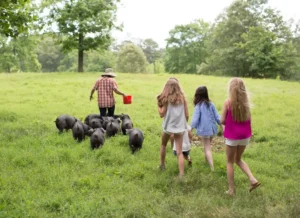
The culinary team, led by Chef Cassidee Dabney at the James Beard Award-winning restaurant The Barn, works with ingredients grown mere feet from the kitchen. Summer tomatoes are grilled and caramelised, carrots become Romesco sauce for lamb, and the property makes 100% of its cheese from sheep on the farmstead.
At The Main House, where most guests take breakfast and lunch and the buttermilk biscuits and sausage gravy are beloved fan favourites. Evening meals at The Dogwood or The Barn lean heavily on preserves and fermented ingredients, a nod to Appalachian traditions.
But the experience extends far beyond the dining room. Guests can join truffle-hunting expeditions with the property’s pack of Lagotto Romagnolo dogs, tour the farmstead to meet the animals, or try their hand at fly-fishing in nearby streams. The farm shop sells fresh cheeses, preserves (the bacon onion jam is legendary), and cured meats, tangible reminders of a place where luxury means knowing exactly where your food comes from.
Dining Under the Stars on an Estate That’s Been Farmed by the Same Family for Two Centuries
In Portugal’s sun-baked Alentejo region, a 780-hectare estate that’s been in the same family for over 200 years has been transformed into one of Europe’s most compelling luxury destinations. São Lourenço do Barrocal isn’t trying to be anything it’s not – it’s a working farm that produces wine, olive oil, and organic vegetables, which also happens to have 40 beautifully restored rooms and cottages.
The estate’s restaurant showcases what eighth-generation owner José António Uva calls “Alentejo-inspired food” – honest, rustic dishes made with ingredients from the property or nearby family producers. Serra da Estrela cheese is so creamy you can eat it with a spoon, lamb stew fragrant with local herbs like oregano and pennyroyal, and gazpacho made with vegetables from the estate’s gardens.
During summer, a second restaurant called Hortelão opens beside the kitchen garden, where organic veal and acorn-fed pork are grilled alongside home-grown vegetables. Dinners here unfold under the stars, with views across the Alentejo plains and the distant castle of Monsaraz perched on a hilltop.
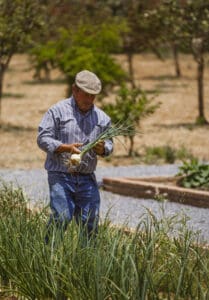 The food isn’t fussy. A typical meal might feature partridge prepared to a recipe that once belonged to José’s grandmother, or oxtail stew rich with wine from the estate’s own vineyards. Breakfast brings freshly baked bread from a local baker, house-made jams crafted from fruit picked in the orchard, and honeycomb from a family-run operation just a few miles away.
What elevates it beyond simple farm-to-table dining is the sense of place. Scattered across the estate are ancient stone menhirs, some 7,000 years old, silent witnesses to centuries of cultivation. Guests can explore on horseback or bicycle, stopping for picnics among the olive groves, or simply absorb the profound quiet of one of Europe’s least populated regions.
Harvesting Vegetables from the Kitchen Garden That Will Be on Your Plate Tonight
Perched on dramatic cliffs above the Pacific Ocean, Rosewood Cape Kidnappers sits on a 6,000-acre working sheep and cattle farm on New Zealand’s North Island. The location alone is spectacular, but it’s the property’s commitment to showcasing Hawke’s Bay’s agricultural bounty that sets it apart.
Head Chef James Honore and his team harvest vegetables, fruits, and herbs from the property’s extensive kitchen garden, with menus changing daily to reflect what’s at its peak. When additional ingredients are needed, Honore turns to the region’s artisanal producers, sustainably caught crayfish and pāua from Tora Collective on the South Wairarapa Coast, strawberries from farms in nearby Havelock North, and fresh seafood from local fishermen.
The daily-changing menu might feature spiced Eastbrook quail with artichoke and dandelion, or slow-roasted beef tenderloin with parsnip, hazelnut, and black garlic. The signature lamb dish, prepared with herbs and vegetables from the garden and paired with Hawke’s Bay red wine, has become something of a legend among repeat guests.
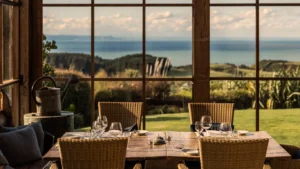
Dining here means floor-to-ceiling windows framing views where rolling farmland meets sheer cliffs and the Pacific beyond. For something more intimate, guests can arrange dinner in the property’s grain silo, with a table set before a roaring fire. The experience is grounded in the landscape; after a meal, you might spot kiwi birds on a guided night walk through the Cape Sanctuary, New Zealand’s largest privately funded wildlife restoration project.
The property makes the most of its location in what’s known as the “fruit bowl” of New Zealand. Guests can join wine and food tours through Hawke’s Bay, meeting the growers and winemakers whose products appear on the table, or simply watch the farm dogs at work during the daily shepherding demonstrations.
Learning to Make Tamales from Grandmothers in a Traditional Mayan Kitchen
Deep in the Yucatan jungle, about 30 minutes from Mérida, a restored 19th-century hacienda has become a destination for travellers seeking genuine Mexican culinary experiences. Chablé Yucatan’s restaurants are overseen by Jorge Vallejo, the mastermind behind Mexico City’s Quintonil, but the real magic happens in a small palapa called Casita Maya.
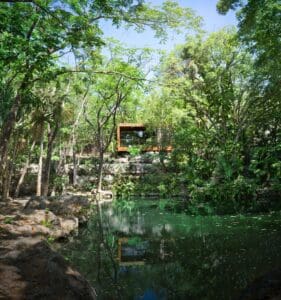
Here, local women known as Las Tías teach guests to cook traditional Yucatecan dishes using methods passed down through generations. Under the thatched roof, with the crackle of the comal and the scent of freshly ground corn filling the air, they demonstrate how to wrap tamales, prepare cochinita pibil the traditional way, and shape handmade tortillas. It’s not a cooking class so much as an invitation into someone’s kitchen, where every ingredient has a story and every technique carries centuries of knowledge.
The property grows much of its own produce in traditional Mayan raised gardens called ka’anches, using centuries-old harvesting techniques. These organic vegetables and herbs find their way into dishes at the property’s restaurants, Ki’ol, the poolside all-day restaurant where healthy breakfasts might include eggs in fresh tortillas with bean sauce and pickled red onions, and Ixi’im, the fine-dining restaurant housed in the former sisal factory.
But it’s the intimate experiences that linger longest in memory. Dining under the stars at Casita Maya after cooking with Las Tías, with bold flavours on your plate and the sounds of the jungle as backdrop, feels less like a hotel meal and more like being welcomed into a community. The food isn’t performing for an audience; it’s simply honest, rooted in place, and deeply satisfying.
The setting amplifies the experience. The hacienda sits on 750 acres of Mayan forest, with its own sacred cenote at the heart of the property. Everything here feels connected to the land and to traditions that stretch back long before luxury travel was even a concept.