


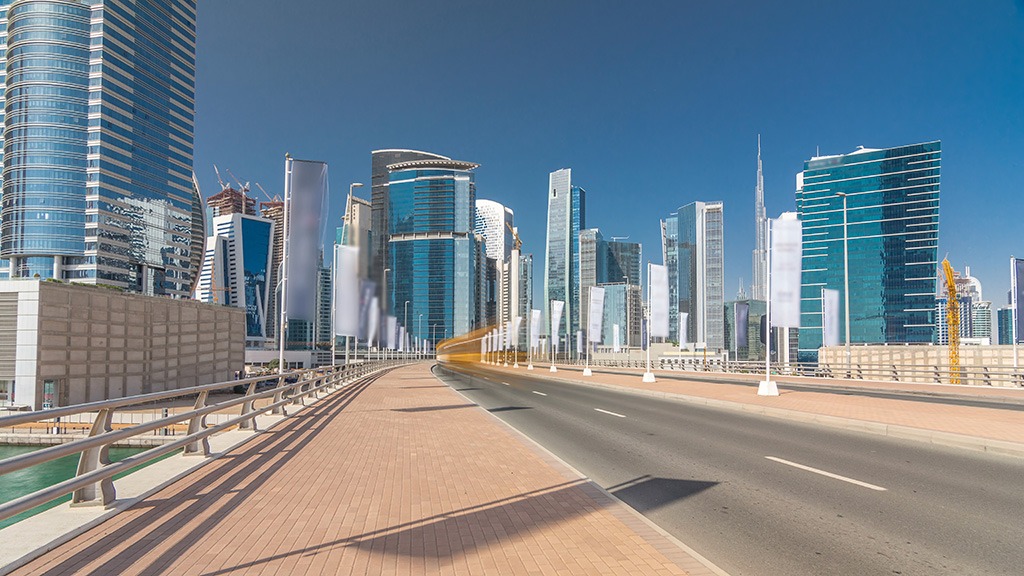
Over 6,900 financial entities, hundreds of tech startups, and thousands of multinational corporations now operate across Dubai’s business districts.
The city’s commercial geography reflects deliberate urban planning: free zones with specific regulations, mixed-use developments combining offices and residences, and infrastructure-led districts built around transport hubs. Below is a district-by-district breakdown of where different business sectors concentrate and what each area offers to companies and investors.
Downtown Dubai: The Prestige Address
At the heart of Dubai’s business ecosystem sits Downtown Dubai, the city’s most iconic district. Anchored by the Burj Khalifa and The Dubai Mall, this ultra-central location combines global landmarks with premium commercial and residential real estate.
Key advantages:
- Immediate access to Business Bay, DIFC, and Dubai World Trade Centre
- Direct metro connectivity to airport and major business zones
- Average rental yields of 5-6% with strong capital appreciation
- Luxury hotels, fine dining, and Opera District cultural venues
Properties include high-rise apartments with panoramic city views and ultra-luxury branded residences, making Downtown the preferred location for executives requiring immediate access to both commercial and lifestyle infrastructure.
DIFC: The Financial Powerhouse
The Dubai International Financial Centre stands as the region’s leading financial hub. This 110-hectare free economic zone now hosts over 6,900 entities spanning banking, asset management, insurance, fintech, and legal services.
What sets DIFC apart:
- Independent regulatory framework based on English common law
- 100% foreign ownership and zero corporate tax (subject to conditions)
- Own judicial system (DIFC Courts)
- Access to 77 markets across the MEASA region
- Home to Barclays, HSBC, Citibank, Clifford Chance
Beyond offices, DIFC is fully integrated with luxury residences, five-star hotels (Ritz-Carlton, Four Seasons), world-class dining like Zuma, and cultural attractions including the DIFC Sculpture Park. Dubai International Airport sits just 15 minutes away via two metro stations.
Business Bay: The Dynamic Hub
Located directly south of Downtown Dubai along the scenic Dubai Canal, Business Bay represents the city’s most vibrant mixed-use business district. With over 240 planned buildings, it attracts diverse businesses—from regional startups to international corporations.
Why businesses choose Business Bay:
- Competitive office rates compared to DIFC
- Canal-side location with dining and entertainment
- Direct metro connectivity and highway access
- Proximity to Downtown, DIFC, and Sheikh Zayed Road
The district offers modern infrastructure in a prestigious central location, making it popular with companies balancing cost and convenience.
Sheikh Zayed Road: The Commercial Artery
Running through Dubai’s heart, Sheikh Zayed Road serves as the city’s primary commercial corridor. This 55-kilometer highway is lined with impressive skyscrapers housing multinational corporations and regional headquarters across industries.
Properties here command high visibility with excellent connectivity via the parallel-running Dubai Metro Red Line. For businesses prioritizing accessibility and brand presence, this corridor remains a prime choice.
Jumeirah Lake Towers (JLT): The Affordable Alternative
JLT has emerged as Dubai’s hub for tech startups, media companies, and growing businesses seeking quality office space at accessible prices.
JLT advantages:
- Average office rents: AED 133/sq ft (around £29/$36 per sq ft—significantly lower than DIFC)
- 100% foreign ownership within DMCC free zone
- Mixed-use towers surrounding four artificial lakes
- Direct metro access to Dubai Marina, Internet City, Media City
The balanced work-life environment makes it attractive for entrepreneurs and SMEs.
Dubai Creek Harbour: The Emerging Contender
As Dubai’s property market matures, infrastructure-led investment gains prominence. Dubai Creek Harbour benefits from the planned Metro Blue Line expansion, positioning itself as a future-forward business destination near Dubai International Airport and the historic Creek area.
Dubai South: The Logistics Gateway
With Al Maktoum International Airport expansion underway—set to become the world’s largest—Dubai South has transformed into a strategic investment zone.
Focus areas:
- Logistics, aviation, and industrial operations
- Competitive rates and purpose-built infrastructure
- Access to warehousing and future airport connectivity
Ideal for supply chain, e-commerce, and manufacturing companies.
Aligning Location with Business Goals
Each district offers distinct advantages:
- Financial services → DIFC’s regulatory framework
- Tech companies → JLT or Dubai Internet City
- Executives seeking prestige → Downtown Dubai or DIFC luxury towers
- Logistics/aviation → Dubai South
- Cost-conscious businesses → Business Bay or JLT
For business travelers exploring opportunities, Dubai provides transparent freehold ownership, competitive tax policies, and Golden Visa eligibility for properties valued at AED 2 million or above (around £430,000 / $545,000). The city’s role as a bridge between Eastern and Western markets, together with exceptional infrastructure and a dynamic commercial landscape, maintains strong demand across all business districts.