


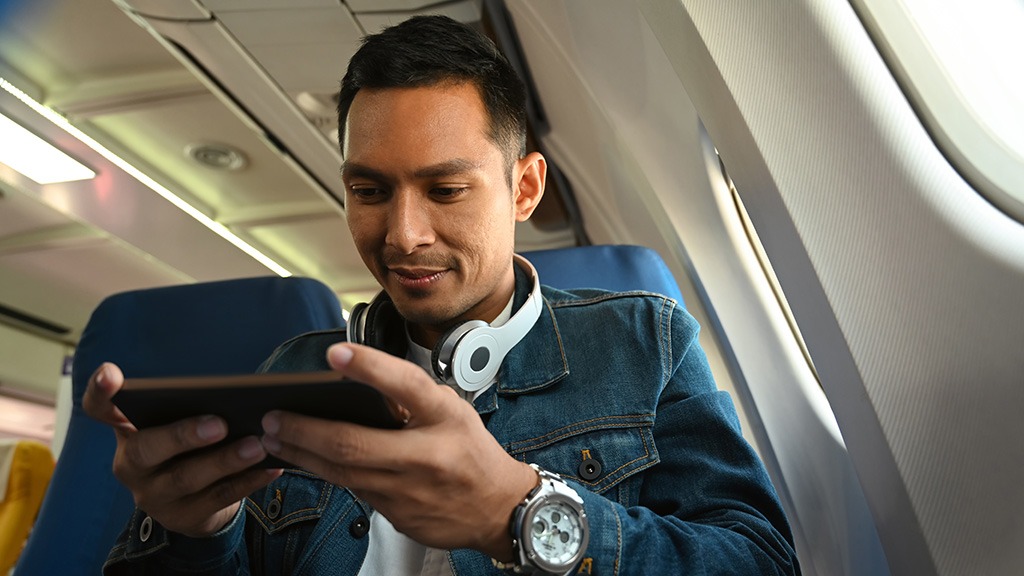
Offering public Wi-Fi onboard planes during flight is quite common nowadays, many airlines offer these services and they are extremely popular.
Anyone who has flown with Qatar Airways, Delta Air Lines, JetBlue, Emirates, or United Airlines will know that you can get Wi-Fi inflight, offering these services either for free, or faster and more secure networks for a premium.
Passengers can pass the boring hours strapped into their seats watching movies, reading news articles, or even opening a casino online UK platform or mobile app to enjoy their favourite casino games. While it may be a public network, the only people who can access the Wi-Fi are your fellow passengers. So, for all practical purposes, the Wi-Fi won’t be overstretched and burdened with heavy usage, it should be pretty safe, and it should therefore be good for iGaming in flight. But there is much more to consider here.
Inflight Internet Security Protocols
Unfortunately, Wi-Fi on planes are not designed to be ultra secure or use top tier encryption to mask activity. The networks you use are on the same network as everyone else on the flight, and that means your data is not safeguarded by security patches that you would have if you were using a private network.
These Wi-Fi networks are much like public hotspots that can be found at the airport, or other communal spaces like hotel lobbies, cafes, and shopping centres. It does not mean they are bad networks, but just that they prioritise stability and supporting many users at the same time. While the iGaming sites may use HTTPS encryption, the network that you use to access it is still shared.
That means the traffic can be potentially monitored, and you data can even be intercepted by people using the same connection. If you wouldn’t use a Wi-Fi network at your local cafe to play casino games, or don’t trust the airport Wi-Fi network, then you probably shouldn’t use the inflight Wi-Fi.
Performance Strength of the Onboard Networks
Inflight internet technology really shot to the forefront in the 2000s, and it has come a long way since. The Wi-Fi networks use satellite connections and air-to-ground systems that can provide near broadband level internet services. Though they still have ground to cover to make these connections as stable and fast as Wi-Fi on the ground. When browsing a casino site, or playing games that do not require much data like a simple video slot, this usually does not pose much of a problem.
However, for the more complex games that require more input, such as live casino games, multiplayer poker, and titles with high definition animations or graphics, the performance can lag, and thus issues can arise. Lagging screens and sudden drops in the internet are not uncommon, but within the context of gaming, these are issues that can cause game failure or even unresponsive sites.
Considerations for iGaming Inflight
That is not to say you are not allowed to play games during a flight, but you have to be cautious. Taking security measures such as setting up 2FA or joining the network with a VPN helps protect your data. It is better to mitigate the data sent and received on these platforms, avoiding making deposits and withdrawing money. Using a mobile app is always safer than accessing sites, as these are better protected, but many online casino apps require location services to be turned on, and this means you can run into geoblocks and can’t open your account.
The bottom line, is that it is always better to use a trusted network and to cut down any risk of cybertheft. If the network allows iGaming sites, which some may not because they may be blocked, then there is nothing stopping you from accessing your online casino and hitting some slots mid-flight. But you must factor in the risks, and take the security measures to ensure your account details and personal information remain safe.