


The executive rushing through airport security, laptop half-open, coffee growing cold in a cardboard cup, has become an emblem of modern business travel.
Yet across Europe, a quieter revolution is unfolding. Professionals are increasingly choosing trains over planes for continental journeys, and the shift reflects more than environmental conscience. It signals a fundamental rethinking of what travel time should accomplish and how mobility fits into contemporary working life.
The Productivity Paradox of Modern Transit
Air travel, for all its speed, devours time in peculiar ways. The journey to the airport, the mandatory early arrival, the boarding choreography, the descent, and baggage retrieval on the other end accumulate into hours of dead time. A flight from London to Paris takes roughly an hour in the air but often requires four hours door to door. The Eurostar covers the same distance in two hours and fifteen minutes, platform to platform, with passengers able to work until moments before departure.
The digital infrastructure supporting this transformation extends beyond professional tools as well. Streaming services, news platforms, and various digital applications, including gaming options such as online slots and other games, have made train journeys adaptable to different needs, blurring the boundaries between work, transit, and personal time.
Environmental Accountability Becomes Business Strategy
Corporate sustainability commitments have moved from marketing language to operational reality. European companies increasingly track carbon emissions from business travel, with rail journeys producing significantly lower environmental impacts than equivalent flights. The pressure comes not just from internal policies but from investors, clients, and employees who scrutinise environmental performance. Choosing trains over planes has become a visible, measurable action that aligns behaviour with stated values.
Railways themselves have accelerated this shift through infrastructure improvements. High-speed networks now connect major European cities with frequencies and comfort levels that rival air services. Routes between Amsterdam and Brussels, Frankfurt and Munich, Madrid and Barcelona offer multiple daily departures with spacious seating and smooth rides that make working feasible.
The Geography of Time Reconsidered
European geography favours rail for many business corridors. Journeys under four hours increasingly default to train travel as the sensible option. London to Brussels, Paris to Geneva, and Rome to Florence operate with regularity and ease that air travel cannot match in terms of total journey time. Even longer routes prove competitive when overnight sleeper services enter consideration, allowing passengers to board in one city after dinner and wake in another ready for morning meetings.
The stations themselves occupy central urban locations, unlike airports relegated to peripheries. Arriving at Milano Centrale or Gare de Lyon places travellers immediately within the business district rather than requiring additional transit from remote terminals. This geographical advantage compounds with time savings to create journeys that feel qualitatively different from flying, less about enduring transit and more about using it purposefully.
The Luxury of Slower Speed
Productivity arguments and environmental benefits aside, something subtler drives executives toward trains. The pace itself offers relief. Air travel demands constant focus on timetables and gates. Train travel permits relaxation into rhythm. Passengers can stand, move between carriages, and visit the dining car without having to wait for the seatbelt signs to be activated. The journey becomes part of the day rather than an interruption to it.
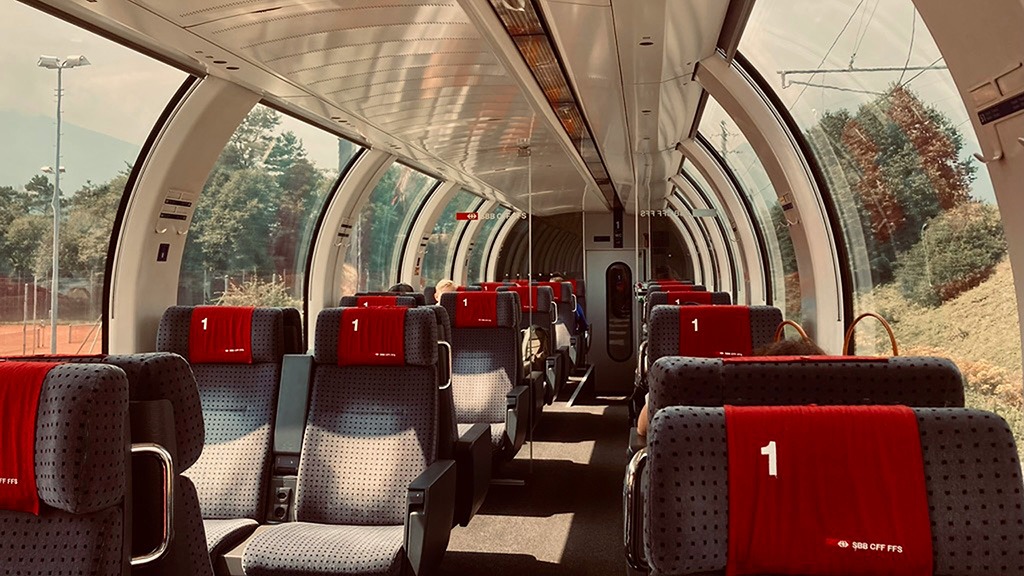
First-class rail services have refined this experience. Complimentary refreshments, power outlets at every seat, and spacious legroom create environments where work happens naturally rather than grudgingly. Some executives report conducting their most focused thinking during train journeys, freed from office interruptions yet not subjected to the cramped discomfort of economy air travel. The middle distance of several hours provides enough time for substantial work without the exhaustion of long-haul flying.