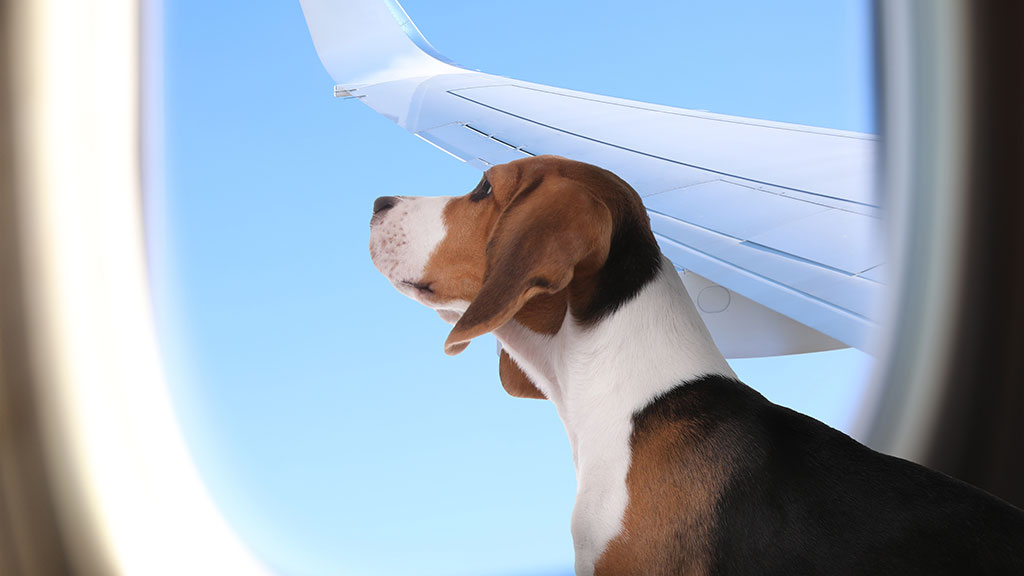
Every year, thousands of American professionals accept job postings, secure work visas, or take up academic posts in the United Kingdom — and for most of them, leaving a pet behind isn’t an option.
Data from Starwood Pet Travel, one of the largest international pet relocation companies handling US-to-UK moves, shows this is far from a niche concern. Business relocations account for a steady, growing share of pet travel requests, with the pace roughly doubling since 2021 as hybrid and international hiring became routine across sectors like higher education, technology, energy, and legal services.
Looking at several years of relocation records, a few patterns stand out. Nearly two-thirds of relocating employees travel with a single pet, and almost a quarter bring two — usually a pair of dogs or a dog-and-cat household. The employees themselves skew toward roles that come with built-in mobility: university faculty and researchers taking up UK postings, oil and energy engineers moving between international offices, tech employees transferring to London hubs, and legal or consulting professionals relocating for client work. In other words, this isn’t a small, specialized problem. It’s a routine part of corporate and academic mobility that HR teams, relocation coordinators, and the employees themselves are often unprepared for.
Why the UK Is Different From Other International Moves
The UK’s pet import rules are more forgiving than many EU countries, but they still catch first-time movers off guard, mainly because the paperwork has to happen in a specific order and on a specific timeline.
For dogs, cats, and ferrets arriving from the US, the basic path looks like this:
- Microchip first. The pet needs an ISO-compliant microchip implanted before any vaccinations count toward UK entry requirements. If the rabies vaccine was given before the microchip, it typically has to be repeated.
- Rabies vaccination, followed by a mandatory 21-day wait before travel is permitted — this is the step that most often derails a tight relocation timeline.
- An official USDA-endorsed health certificate, issued within 10 days of travel by an accredited veterinarian and endorsed by USDA APHIS.
- Tapeworm treatment for dogs, administered by a vet no less than 24 hours and no more than 120 hours (1–5 days) before arrival in the UK. This step is easy to miss and one of the most common reasons pets get held up at the border.
Assuming those boxes are checked in order, most pets travel into the UK without quarantine. The bigger challenge tends to be logistics: airline pet policies, appropriate crate sizing for the specific carrier and route, and coordinating arrival with a relocating family’s own flight and housing timeline — especially when a job start date isn’t flexible.
The Part Employers and Employees Both Underestimate
Because pet relocation touches immigration timelines, HR mobility packages, airline booking, and veterinary scheduling all at once, it tends to fall through the cracks of a standard relocation checklist. A few things worth flagging for anyone managing a US-to-UK move, whether that’s an HR mobility team or the employee themselves:
- Start the paperwork before the visa is finalized, if possible. The 21-day post-rabies waiting period plus USDA endorsement processing can eat up a month on its own, and that clock doesn’t care whether the visa has cleared yet.
- Confirm which airport the employee is actually flying into. Direct routes into London Heathrow have more established pet import handling than connections through less pet-friendly hubs, and a routing change late in the process can force a re-booking of the pet’s travel separately from the family’s.
- Ask early whether the relocation package covers pet shipping. It’s increasingly common — a related industry benchmark tracked by Starwood found the share of companies offering a pet relocation benefit rose from roughly 37% in 2022 to 49% in 2025 — but it’s rarely advertised unless an employee specifically asks their mobility or HR contact.
- Multi-pet households need more lead time, not less. Coordinating documentation, crates, and vet appointments for two or three pets on the same clock as a single-pet move is where most delays originate.
Getting the Timeline Right
For a typical US-to-UK business relocation, working backward from a firm arrival date, a reasonable plan looks like this: microchip and rabies vaccination roughly 6–8 weeks out, USDA paperwork submitted within the 10-day pre-travel window, tapeworm treatment scheduled precisely within the 1–5 day arrival window, and crate/airline booking locked in as soon as the employee’s own flights are confirmed. Any of these done out of sequence can mean starting the clock over.
Companies that specialize specifically in international pet relocation — as opposed to general movers who occasionally handle a pet as an add-on — tend to catch these sequencing issues before they become a problem, since they’re managing the USDA and destination-country requirements daily rather than once a year. Starwood Pet Travel works directly with relocating employees and corporate mobility teams on exactly this kind of move, coordinating the health certification, airline booking, and UK entry paperwork as one process rather than several disconnected ones.
For professionals and HR teams who want a deeper look at how international pet relocation intersects with broader corporate mobility trends, Starwood’s Pet Travel Insider podcast covers real cases from families and companies navigating these moves, including the UK specifically.
Relocating for a job is stressful enough without wondering whether a pet’s paperwork lines up with a flight that’s already booked. Getting the sequence right — microchip, vaccination, the 21-day wait, USDA endorsement, tapeworm treatment — is almost entirely about timing, not difficulty. Employees who start early, and employers who build pet relocation into the mobility package from day one, tend to make it to the UK with far less last-minute scrambling.