The best business travellers no longer just fly in and out. They add a day or two of something restorative, and increasingly that means the outdoors. Portugal, with its trails and mild climate, has become a favourite for exactly this.
The rise of bleisure travel, blending work with leisure, is now mainstream. Extending a European trip with a hiking tours package in Portugal turns dead time into a genuine reset. The case for it is stronger than it first appears.
Why Add a Hiking Break to a Business Trip?
The logic is simple economics of time. You have already paid for the flights and cleared the calendar, so a short extension costs little extra. The added cost is tiny and the return is high.
The maths is stark. A return flight to Portugal can run 200 to 400 pounds, so adding 2 nights is a fraction of the cost of a separate trip.
The benefit is recovery. Back-to-back meetings drain focus, and a day on a trail restores it better than another hotel gym session. Nature resets attention in a way screens never will.
Portugal makes it easy. Trails sit close to Lisbon and Porto, the two main business hubs. A walking break can begin within an hour of your last meeting.
Employers increasingly encourage it too. A rested traveller performs better, so a short extension is quietly good for business, not just morale.
Which Portuguese Regions Are Best for Walking?
Portugal offers trails for every energy level. These regions reward walkers most.
- Sintra-Cascais, forested hills and palaces just outside Lisbon.
- The Douro Valley, terraced vineyards above a winding river.
- Peneda-Gerês, the wild national park in the green north.
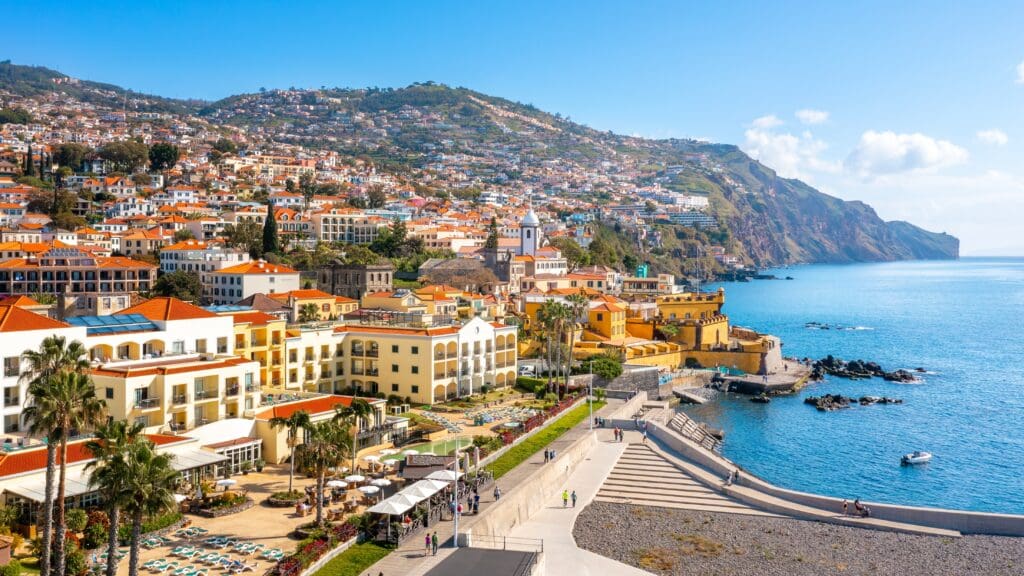
- Madeira, the famous levada water-channel walks in the Atlantic.
- The Algarve coast, cliff-top paths with sweeping sea views.
Each suits a different mood. A gentle vineyard stroll and a rugged mountain day are worlds apart. Match the terrain to how much reset you actually need.
Madeira deserves a special mention. A levada is a narrow irrigation channel, and its famous levada walks follow those channels on gentle gradients, ideal after a demanding week.
How Does Walking Help a Stressed Traveller?
The evidence is clear and practical. The World Health Organization’s physical activity guidance recommends regular moderate movement for both body and mind. A day of walking easily meets that bar.
The mental side matters most for travellers. Walking lowers stress hormones and lifts mood, which sharpens the next day’s work. It is active recovery, not idle downtime.
The effect compounds over a trip. Even a single long walk breaks the sitting cycle of flights and meetings. Both body and mind register the change.
The lift is quick, too. Research puts the mood boost from a single 30-minute walk at hours, not minutes. A full day outdoors extends that well into the evening.
Consistency counts too. National activity guidelines for adults suggest 150 minutes of moderate movement a week. A two-day hiking break covers a large share of that in one go.
What Do Guided Hiking Tours Include?
Guided tours remove the friction that stops busy people. A good operator plans the route, moves your luggage, and books the beds. You simply walk and enjoy the country.
A guided tour is a package where the operator handles routes, transfers, and beds. That leaves you carrying only a day pack and your attention.
Most packages bundle the essentials. Expect daily routes graded by difficulty, luggage transfers between hotels, and meals built around local food. Self-guided options add flexibility for those who prefer solitude.
Safety is built in as well. Guides know the terrain, the weather windows, and the exit points. That local knowledge matters most on unfamiliar trails.
The appeal is a ready-made plan with no logistics to manage. That suits a traveller who has spent all week making decisions. The tour handles the details so recovery stays effortless.
How Do You Fit It Around Work?
A little planning makes the extension smooth. Work through these five steps.
- Book the trip to bolt directly onto your meeting dates.
- Choose a region near your business hub to cut transfer time.
- Pick guided or self-guided based on how much you want handled.
- Pack light layers and proper footwear alongside your work kit.
- Confirm the operator handles luggage so you travel unencumbered.
Planning ahead protects both halves of the trip. The same slow, mindful pace that luxury hotels now sell is what a walking break delivers for less. Lock the logistics early and the reset takes care of itself.
What to Remember
- Extending a work trip with a hike costs little once flights are booked.
- Sintra, the Douro, Peneda-Gerês, and Madeira all suit different walkers.
- Walking meets WHO activity guidance while actively lowering stress.
- Guided tours handle routes, luggage, and meals so you just walk.
- Book the extension onto your meeting dates and pack light layers.
The Business Case for Slowing Down
A hiking break is not a distraction from a work trip, it is what makes the trip pay off. Portugal offers the trails, the climate, and the easy logistics to do it well. Add a day or two on foot and you fly home restored, not depleted.
FAQ
What Is Bleisure Travel?
Bleisure travel means blending a business trip with leisure time, usually by extending it. It lets travellers use flights and time away more efficiently, adding personal experiences like a hiking break to a work schedule.
Do I Need to Be Fit for a Portugal Hiking Tour?
Not especially. Guided tours grade routes by difficulty, so you can pick gentle vineyard walks or tougher mountain days. Most operators tailor the pace, making the trips accessible to ordinary travellers.
Which Part of Portugal Is Best for Hiking?
It depends on your base. Sintra-Cascais suits Lisbon trips, the Douro rewards wine lovers, and Peneda-Gerês offers wild northern scenery. Madeira’s levada walks are a destination in their own right.
How Long a Break Do I Need?
Even two days delivers real benefit. A short extension covers a large share of weekly activity guidance and gives the mind a proper reset before you return to work.