A board roadshow across European and UK cities can place London, Frankfurt, and Milan on a calendar before anyone tests whether the airline timetable can support them. For executives and senior management, the practical question is not whether multi-city travel sounds efficient, but whether every meeting, transfer, and departure can happen within the available hours.
That question becomes harder when the diary is fixed. Commercial flights may leave too early, connect through congested hubs, or require an overnight stay that breaks the sequence. Meanwhile, the travelling group must stay together and arrive close enough to each venue to preserve the planned schedule. Before comfort or preference enters the discussion, the itinerary must be tested as an operating plan: can this multi-leg programme physically be flown as scheduled?
What a Private Charter Buys a Travelling Board
A private charter is a per-trip booking of an entire aircraft and its crew, with the trip priced as a whole rather than sold seat by seat. That distinction separates it from commercial flights, scheduled services, and shared or semi-private seat sales.
The strategic advantage of private charters lies in control, not added comfort. A travelling board controls the departure time, the airfield, and who enters the cabin. Because the aircraft serves the group rather than a published route, the schedule follows the meeting calendar instead of forcing meetings around airline timetables.
That flight schedule control changes what is operationally possible. A day that commercial airlines would break into connections, overnight stays, or separate travelling parties can instead be designed around when each meeting ends, giving senior management a practical way to protect a tightly compressed business programme.
Building a Three-City Day Around Your Meetings
A multi-city itinerary starts with the meeting diary and works backwards. For a London, Frankfurt, and Milan sequence, planners set each wheels-up time from the expected end of the preceding meeting. Some corridors use scheduled carriers, some legs only work on a private jet charter booked for the group, and others are faster by road. Repositioning and refuelling happen while the group is meeting. Before confirming the programme, planners check aircraft availability, operating hours, night curfews, payload, and range. Short-notice demand on popular corridors can still defeat the plan, so choosing the right aircraft comes before promising three cities in one day.
Where Hub Congestion Costs You a Leg
Commercial schedules do not fail only through cancellations. A delayed arrival slot or missed hub connection can remove the final city from the day, particularly when the next scheduled service leaves the following morning. Once that happens, flight schedule control has disappeared, and the meeting diary has to absorb the loss.
A private terminal or FBO departure removes much of the hub process. Passenger handling, baggage transfer, and boarding take place close to the aircraft, often through facilities operated by ground-handling specialists such as Jetex. That compressed arrival-to-airborne period is what makes an extra leg workable rather than merely possible on paper.
Regional Airfields and Door-to-Door Time
Regional access changes the calculation again. An Embraer Phenom 100, for instance, is designed for short sectors and smaller groups, making it relevant where runway suitability, baggage, and passenger load align with the mission.
The FAA’s airport classifications include airports with no scheduled commercial service, illustrating why charter routing reaches beyond airline networks. Across Europe, smaller and regional airports can place travellers closer to industrial sites, regional headquarters, or meeting venues. The meaningful comparison is not simply one flight time against another. It is a landing followed by a long motorway transfer versus an airfield much nearer the final destination.
The Cabin as a Controlled Board Meeting
The flight is often the only part of a roadshow when the entire group is together, seated, and free from interruptions. Treating that time as a working session protects productivity between cities. The value becomes especially clear when the agenda contains material that cannot be discussed in public.
Keeping Pre-Announcement Talk Contained
M&A terms, pre-announcement figures, personnel decisions, and board papers do not belong in an airline cabin, departure lounge, or boarding queue. On a commercial journey, several potentially productive hours become unusable because nearby passengers, visible screens, and overheard calls create avoidable exposure.
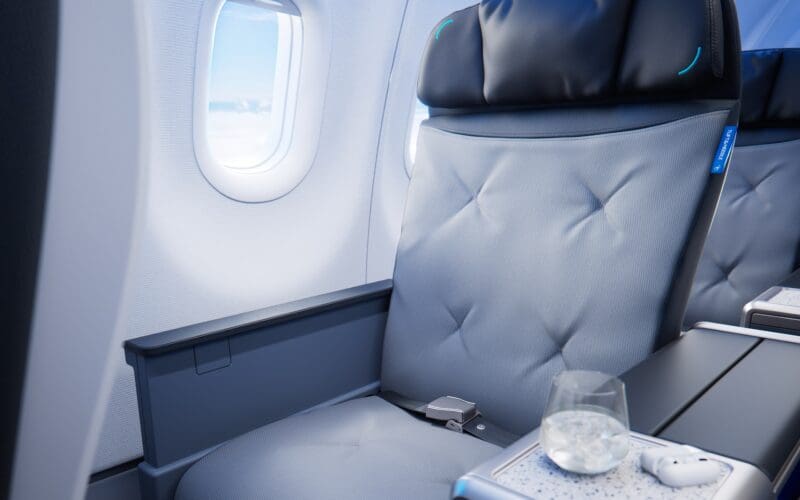
A sole-use cabin changes the working conditions. Documents can remain open, screens do not need to be hidden from neighbouring passengers, and discussions can continue with only the crew present. Large-cabin aircraft such as the Bombardier Global Express also provide enough space to separate a working area from quieter seating, supporting privacy and confidentiality without presenting the journey as a luxury exercise.
Duty of Care When the C-Suite Flies Together
Corporate travel policies sometimes limit how many named executives may travel on the same scheduled aircraft. Charter does not remove concentration risk, but it allows the risk team to assess the chosen operator, aircraft, crew, and ground arrangements before departure.
That assessment can draw on specific evidence, including operator safety audits, verified crew records, aircraft documentation, and controlled handling through a private terminal. These are records that a travel risk policy can examine. Combined with the gains associated with time-saving private jet travel, they give senior management a governance-based rationale for the arrangement rather than a comfort-based one.
What It Costs and What You Compare It To
The cost per flight hour is rarely the right unit on its own. Finance teams need the total trip cost measured against the business day being protected. However, charter is still the wrong answer for a single traveller on a well-served trunk route, a long-haul journey where a scheduled premium cabin offers a comparable timetable, or a peak-week booking made after aircraft availability has tightened.
Cost per Flight Hour Across the Group
Indicative hourly quotations span a wide range. Light aircraft sit toward the lower end, midsize and super-midsize jets move higher, and large or global-cabin aircraft can reach five-figure hourly sums. The route, positioning requirement, airport charges, waiting time, and crew arrangements all affect the final quote.
That figure becomes more meaningful when divided across a group of six to eight. On some routes, the per-person cost then moves within range of flexible business-class fares, particularly when the alternative requires several separate bookings. Empty-leg availability can reduce the cost of a positioning sector, although it only works when the group’s dates and times can move.
Recovered hours form the offsetting line. An avoided overnight stay, one less motorway transfer, or an additional city completed in the same working day can be measured against senior salary costs and the value of keeping the full team productive.
Charter, Jet Card, Fractional or Owned
The purchasing structure should follow demand. Per-trip charter carries no capital commitment or annual utilisation target, which fits irregular roadshows. A jet card exchanges prepayment for agreed hourly terms, while fractional ownership adds a longer commitment and fixed management costs alongside occupied-flight charges.
Full ownership introduces aircraft acquisition, staffing, maintenance, insurance, and continuing operational oversight. It belongs at the consistently high-utilisation end of the range, not with occasional board circuits. An Airbus A319 ACJ, for example, offers extensive cabin capacity, but its scale would be difficult to justify for a small group flying intermittent European sectors.
Accordingly, irregular multi-leg demand usually points away from ownership. The aircraft category can change from one trip to the next, allowing a light jet for a short regional circuit and a global cabin for an intercontinental programme without paying year-round for either asset.
Where Charter Earns a Place in Travel Policy
Charter earns a defined place in travel policy when three conditions meet: the multi-city itinerary is compressed, executives or senior management need to travel together, and the content of their conversations requires a controlled environment. In that setting, schedule ownership, regional airport access, productive cabin time, and auditable operating arrangements support the same business objective.
The routine single-leg trip is not the case for charter. Scheduled travel remains the rational choice when routes are direct, timings are workable, and confidentiality does not limit productive time. The strategic advantage appears when the meeting programme, rather than the airline timetable, has to determine how the day runs.