Business travel has a strange rhythm. You’re rushing through security because the gate has changed. Next, you’re sitting in an airport lounge, 90 minutes to spare, and absolutely nowhere to be. That second part gets less attention.
The travel industry talks endlessly about faster check-ins, smoother connections, and, of course, shorter queues. Yet, much of a work trip is still spent waiting. Waiting for a client. Waiting to board, for a room to be ready, or waiting for a delayed train that was supposed to arrive twenty minutes ago.
The reality is, those gaps used to be written off as dead time. But not anymore. Businesses have realised that something valuable happens when people have nowhere urgent to go. They start looking for something to do.
The Business of Filling the Gaps
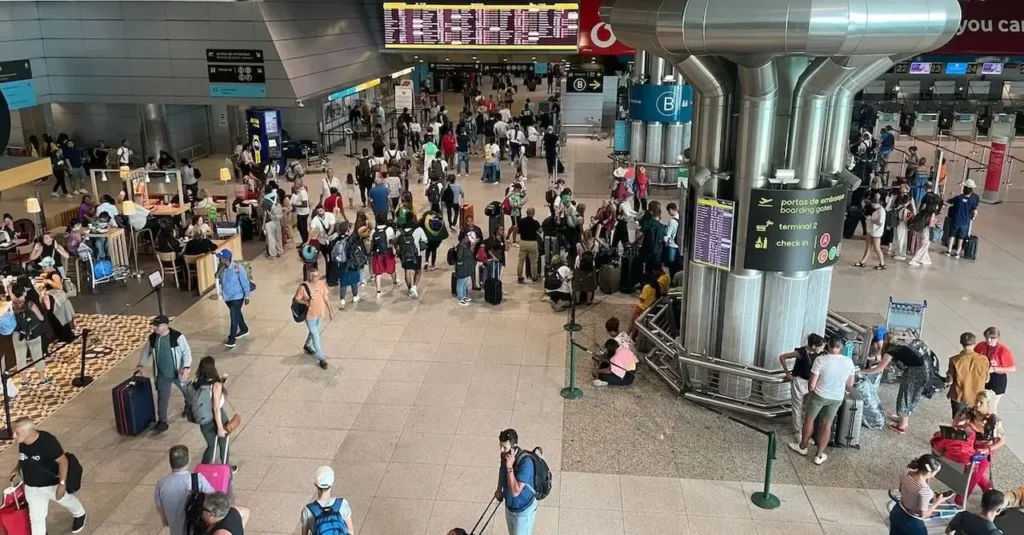
Walk through a modern airport, and the pattern becomes obvious. Coffee chains compete for attention. Lounge operators advertise day passes. Retail stores stretch far beyond what most travellers actually need. None of this is accidental.
Travellers represent a rare audience. They are away from their normal routines. They often have disposable income. Most importantly? They are temporarily captive. A delayed departure can create an extra hour of browsing, shopping, eating, or scrolling. That may not sound significant. Multiply it by millions of travellers each year, and it becomes a serious business opportunity.
The same logic extends beyond the airport terminal. Hotels now invest heavily in digital services. Airlines promote entertainment platforms. Travel apps compete to become part of a traveller’s daily routine rather than a tool used only during bookings. Everyone is chasing the same thing: attention.
Convenience Wins
The most successful services in the travel industry share one thing in common: they eliminate friction. A complicated system isn’t something anyone wants to learn at an airport or while checking in late at night at a hotel. Convenience usually wins.
That is why streaming is so popular, as are mobile games, podcasts, and other forms of digital entertainment. They can be readily understood and found even in distant areas. There are even some travellers who search for these entertainment facilities even before they leave home. For example, an online slot website can help users compare platforms, understand available features, and review responsible gambling information before deciding whether a service is right for them.
The appeal is not complicated. People prefer knowing what they are signing up for, particularly when travelling.
As with any gambling-related activity, participation should be limited to adults aged 18 and over and approached responsibly.
Downtime Looks Different Than It Did Ten Years Ago
There was a time when spare hours on a work trip were difficult to fill. It would entail a television in the hotel room, a newspaper from the reception, or perhaps a walk around the city if time allowed.
Today, however, most travellers have an assortment of options in their pockets. In seconds, a phone can be a cinema, a games console, a newsstand, a music player, or a video call screen. That shift has quietly changed traveller behaviour.
People no longer wait in the same way. Some use the time to catch up on work. Others use it to escape from work altogether.
The second group may be growing. After a full day of meetings, many travellers are not looking for another productivity tool. They simply want something enjoyable that requires very little effort.
Travel Is Becoming More Personal
Perhaps the most interesting change is not technological at all; it is behavioural.
Business travel used to follow a fairly rigid script. Fly in, attend the meeting, then fly home. That still happens, but travellers increasingly shape trips around their own preferences. Some arrive early and explore a city. Others extend their stay for a day or two. Many pay closer attention to how they spend the quieter parts of a trip.
McKinsey has noted the growing importance of traveller expectations and personal experience across several areas of the travel sector. The old assumption that travellers only care about getting from A to B is becoming less convincing. People remember how a trip felt. That includes the moments nobody puts on the itinerary.
The meeting may be the reason for travelling. The presentation may determine whether the trip was successful. Yet, the hours in between have become valuable in their own right. Travel companies understand that. Increasingly, they are building entire businesses around it.
Bottom Line: More Than Just Getting From A to B
Business travel is still built around meetings, conferences, and client visits. Yet many travellers now want more from the time surrounding those commitments. Some arrive early to explore a destination. Others stay an extra night rather than rushing straight home. The growing interest in blended travel reflects that change.
Travel providers have noticed. Hotels, airlines, and travel brands are now more focused on the entire experience, not just the trip. In other words, business travel is no longer only about getting people to a meeting and back home again.