

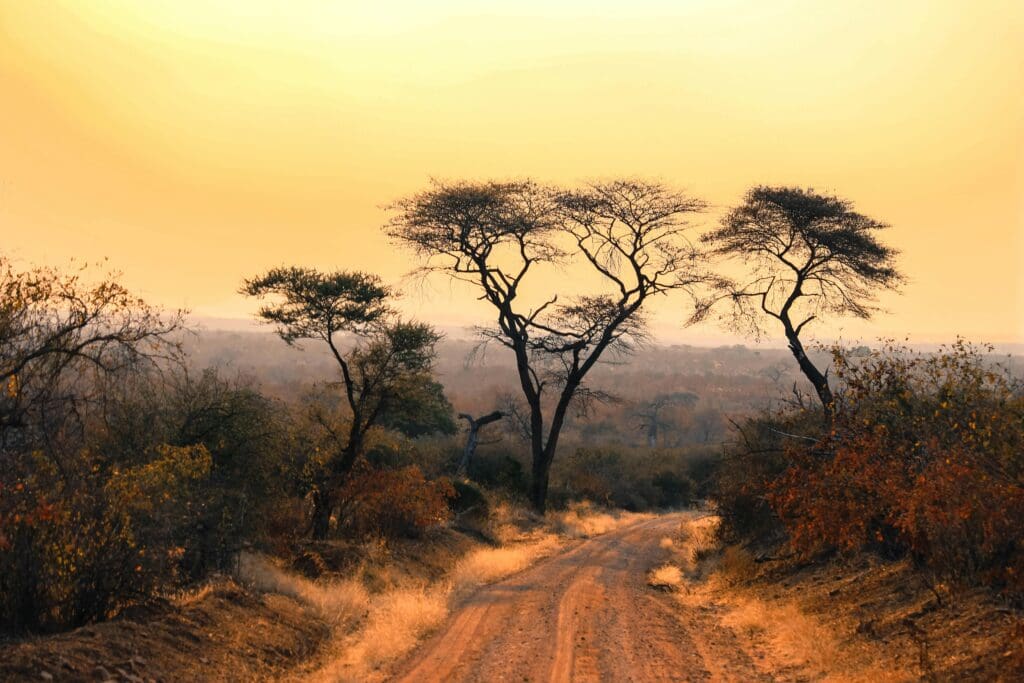
Deep in Tanzania’s Ruaha National Park, where the Great Ruaha River carves through ancient granite and baobabs tower over endless plains, a new kind of lodge is taking shape.
Ubuyu, a Banyan Tree Escape, scheduled to open in early 2026, strives to answer the question: Can high-end travel exist without taking more than it gives back?
While 83% of travellers say sustainable travel is important to them, nearly half admit it’s not a primary consideration when actually booking. Yet over half of global travellers now actively seek accommodation that combines comfort with innovative sustainability features, which suggests the market is shifting toward properties that make responsible travel feel less like a sacrifice and more like an elevation.
Why Sustainability Matters
Few places illustrate the importance of sustainable tourism more clearly than Africa. Tourism generates over $170 billion annually across the continent and provides employment for 24 million people. But the sector’s growth must be carefully managed. Africa’s iconic wildlife and ecosystems face serious threats from biodiversity loss and habitat degradation that could fade the very experiences travellers come to find.
Protected areas worldwide face an annual funding shortfall estimated at up to $440 billion. Safari tourism helps bridge that gap, with entrance fees and operating permits funding ranger salaries, anti-poaching patrols, and conservation programs. When tourism collapsed during the pandemic, the vulnerability of national parks was laid bare.
Communities living alongside these landscapes often feel those shifts first. When they’re included, trained, and hired, the standard becomes both stronger and fairer.
Sustainability at Ubuyu
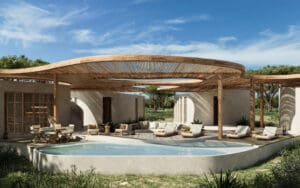
Ubuyu’s approach to sustainability begins with its foundation. From inception, the lodge was designed to belong to the landscape rather than sit upon it. Construction minimised earthworks and preserved mature vegetation, with each villa positioned for both seclusion and harmony with its surroundings. Drawing inspiration from traditional Maasai architecture, the design celebrates Tanzanian craftsmanship through locally sourced stone, timber, and thatch.
The construction itself became an exercise in community investment. The lodge was built almost entirely by local tradespeople, ensuring economic value remained rooted in the region. Most staff positions will be filled by recruits from neighbouring villages and towns, supported through tailored mentorship and skills development in hospitality and conservation. Through Banyan Tree’s Gallery initiative, regional artisans will showcase and sell their work on-site, preserving cultural traditions while creating sustainable income streams.
Energy and water independence set Ubuyu apart in one of Africa’s most remote ecosystems. The lodge operates entirely on solar power, with battery storage ensuring consistent energy supply. A private well provides all water needs, filtered to drinking quality on-site, making this a significant advantage over lodges dependent on truck deliveries and dramatically reducing the carbon footprint.
What may be most telling is what the property doesn’t have: air conditioning. Natural ventilation and passive cooling systems maintain comfortable temperatures in the villas, cutting energy consumption while preserving the profound quiet that defines Ruaha. In a place where lions roar at dusk and elephants rustle through nearby grass, eliminating mechanical hum means the sounds of the wild remain the only voice.
The kitchen operates on zero-waste principles, with chef’s table evenings built around hyper-local, seasonal ingredients that showcase the region’s flavours while minimising transport emissions. Wellness treatments use indigenous botanicals, connecting spa rituals directly to the land and its traditions. Solar-powered bush dinners unfold under clear night skies, while an elevated treehouse offers immersive overnight stays that place guests within the nocturnal rhythms of the wilderness.
Guided conservation walks, conducted in partnership with park authorities, give guests insight into efforts to protect Ruaha’s ecosystems, including endangered African wild dogs. Hot-air balloon safaris provide perspective on the park’s vast scale and fragility, while photographic excursions teach visitors to capture encounters without disturbing wildlife behaviour.
Redefining Luxury in the Wild
Safari tourism was valued at $32.1 billion in 2023 and continues to grow, highlighting the responsibility to sustainability. Seventy-five per cent of travellers say they want to travel more sustainably, and more than half hope to reduce energy use on future trips. The appetite is growing; the industry just needs to keep pace.
When you spend time in Ruaha, the idea of luxury shifts. It becomes less about amenities and more about access to silence and encounters that feel earned rather than orchestrated.
Ubuyu is placing its faith in what travellers value: a form of luxury rooted in sustainability, where a lighter footprint feels effortless and guests can walk away knowing their time at the property has supported the landscape instead of depleting it.