


Whether it’s passing by bouquets, or happening upon some wildflowers on your local walk, no one can deny the impact that seeing beautiful blooms has on us.
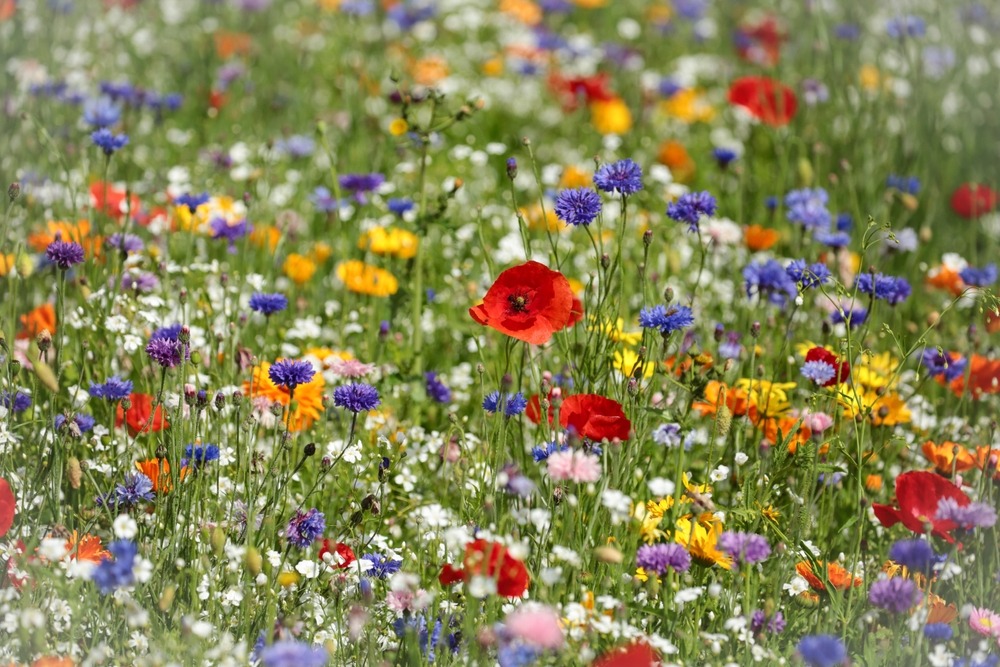
In fact, new research from fresh flower and gift delivery service, Eflorist, has found that Brits want to go on flower tourism trips to see wildflowers, both in the UK and further afield.
The most popular floral trip is the tulip fields in Keukenhof Gardens, the Netherlands, as over half (54%) of Brits said they would put it on their bucket list to visit.
However, wildflowers in the UK and abroad are at risk, as previous studies suggest a huge 97% of wildflower meadows in Britain have been lost since the 1930s alone. To help Brits see the real impact that flowers have on these iconic locations, Eflorist reimagined these top stops and removed any blooms from these bucket list locations.
Keukenhof Gardens, Hollard
First opened to the public in 1950, Keukenhof Gardens welcomes around 1.5 million visitors every year. Over 100 flower bulb companies exhibit their Spring flowering bulbs for people to go and view. Best known for their tulip blooms, 54% of UK adults said they would add these flower fields to their bucket list.
Monet’s garden
Meanwhile almost two in five (39%) said they would want to head to France to see painter Claude Monet’s garden in real life.
Best known for his water lilies series, Monet’s works are on display across the world in Musee de l’Orangerie in Paris, Museum of Modern Art (MoMA) in New York, and London’s National Gallery. But many of us would want to see the garden that inspired his famous pieces–the site sees 500,000 visitors over the seven months it is open each year.
Full of a mix of flowers, from poppies and daisies to rare varieties, Monet was dedicated to his garden, once saying that all of his money went into it. And so when imagined without its colourful additions the scene is far less joyful.
Wiltshire’s poppy fields
When it comes to the UK’s flower fields, a third (37%) said they would want to visit Wiltshire’s poppy fields. Blooming from late May to July, you can usually find them at locations such as Yarnbury Castle, Wilton Windmill, or around the Marlborough Downs–although these change every year due to the nature of wildflowers as they’ll bloom wherever they can.
Cornwall’s wildflower coast
The coast of Cornwall is also known for its iconic coastal wildflowers that a third (33%) would want to go and see. From May to October you can see plenty of blooms from the common bird’s foot trefoil and ox-eye daisies, all the way to the pink flowers they’re well known for–thrift, also known as ‘sea pink’.
Although still offering a sea view, the pops of colour are gone in a world without flowers blooming, proving a less joyful staycation spot.