Pittsburgh airport has marked the first year of its $1.7 billion terminal with figures showing shorter security queues and much faster baggage delivery. The new landside terminal at Pittsburgh International Airport opened on 18 November 2025, after more than a decade of planning and four years of construction.
The airport says the building has largely achieved what it set out to do: replace an ageing terminal designed for a connecting hub with a simpler, more efficient gateway for people starting and ending their journeys in Western Pennsylvania.
Faster security and baggage at Pittsburgh airport
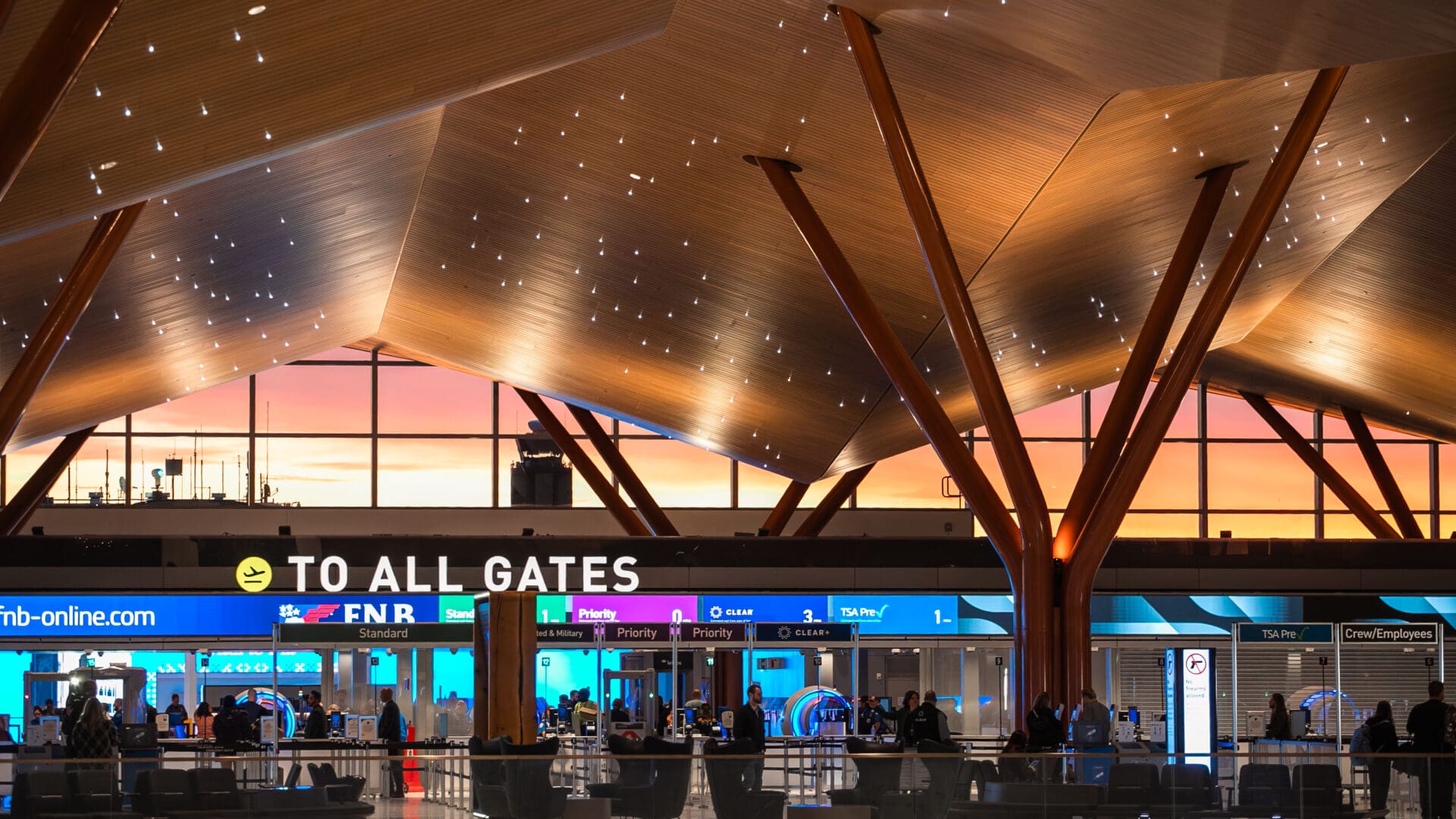
The biggest change for passengers is at security. The new terminal has a single consolidated checkpoint with 12 lanes, and the airport says peak security wait times have fallen by 50%. It now ranks sixth among the 50 busiest US airports for the lowest average security wait times.
Baggage handling has improved even more. A new system has cut domestic baggage processing times from around 15 minutes to about two minutes, an improvement of 87%, while international baggage processing is now around 93% faster. The system also uses 74% less electricity than the one it replaced.
Almost 25 new shops, cafes and restaurants have opened, mixing local businesses with national brands, and the airport has added accessibility features, new parking and an upgraded international arrivals area.
The terminal has also attracted attention from the industry. It was named 2026 Airport of the Year by International Airport Review.
The building was designed by Gensler and HDR, working with Luis Vidal + Architects, and was intended to reflect the character of the surrounding region. Before opening, the airport ran public trials with thousands of volunteers, whose feedback was used to adjust security layouts, signage and baggage claim.
Why the terminal was built
Pittsburgh’s old terminal was built for US Airways, which ran a large connecting hub at the airport. Most passengers passing through security were changing planes, and the layout reflected that.
After the hub closed, far more passengers began and ended their journeys in Pittsburgh, and the building no longer suited them. The new 811,000 sq ft terminal brings ticketing, security, baggage claim and ground transport together under one roof.
Not every change has been popular. Some local travellers have said they miss the old terminal’s train, and others have complained about waiting for shuttles from the long-stay car parks.
What it means for UK business travellers
For UK companies with business in Pennsylvania, the improvements make Pittsburgh a smoother arrival point. Short security queues and fast baggage delivery matter most on tight itineraries, when a meeting is scheduled soon after landing.
Pittsburgh is also better connected to Europe than it was. Aer Lingus launched flights between Pittsburgh and Dublin in May 2026, operating four times a week. That gives UK travellers a one-stop option with US preclearance in Dublin, so immigration checks are completed before departure.
Aer Lingus is also upgrading its long-haul product, with new business class suites and its first premium economy cabin arriving on refitted A330s from 2027, as our report on Aer Lingus premium economy explains.
The real test will come over the next few years. New terminals are judged on whether they attract new routes, support the regional economy and keep passengers satisfied as traffic grows. After its first year, Pittsburgh airport has made a strong start.