


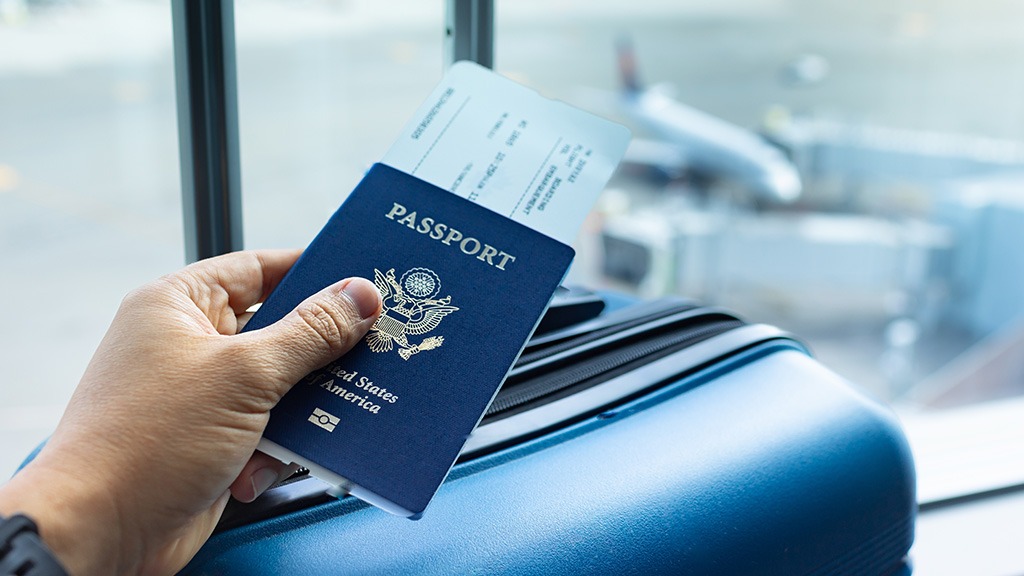
For decades, the passport in your pocket was something you barely thought about. You queued, you stamped, you moved on. For British business travellers, especially those who built careers on frictionless global movement, that quiet assumption has evaporated. Today, the passport has become strategy.
Second passports, once the preserve of globetrotting aristocrats, expats with a family tree to trace, or the ultra-wealthy, are rapidly entering the mainstream of international business thinking. Not as a luxury, but as insurance. Mobility insurance. Political insurance. Commercial insurance.
The late-2025 news that George Clooney quietly acquired French citizenship barely caused a ripple. That, in itself, is revealing. What would once have been celebrity trivia now feels like common sense.

From perk to plan b
Dual citizenship has long appealed to travellers who wanted shorter queues, fewer visas and more freedom. But in a post-pandemic, post-Brexit, increasingly volatile world, it has taken on a new role. For entrepreneurs, investors and senior executives, a second passport is no longer about aspiration – it is about resilience.
British passport holders know this better than most. Brexit stripped UK citizens of automatic freedom of movement across the European Union, turning what was once a seamless commercial bloc into a patchwork of residency limits, work permits and administrative hurdles. A second EU passport, whether Irish, Italian, French or Portuguese, instantly restores that lost mobility.
For business travellers who split time between London, Paris, Milan and Frankfurt, the difference is profound. One passport opens doors. The other erects barriers.
Who is actually applying?
The stereotype of dual citizenship as a billionaire’s hobby no longer holds. According to advisers working at the sharp end of the market, demand has broadened dramatically in the past three years.
Firms such as Henley & Partners, which specialises in citizenship and residency planning, report a surge not just from emerging markets but from established economies. Americans now represent a significant share of applicants. Britons have surged into the top tier since Brexit.
The motivations are strikingly similar. Political uncertainty. Tax unpredictability. Travel disruption. And, crucially, the realisation during Covid that even a powerful passport can suddenly become useless.
Executives who found themselves locked out of countries where they had homes, investments or teams learned a harsh lesson. Mobility cannot be assumed.
Business travel without friction
For frequent flyers, the practical advantages of dual citizenship are immediate. Dual nationals typically exit and enter countries using the passport of that jurisdiction. A British-French dual national, for example, leaves the UK on a British passport and enters the EU as a French citizen, bypassing third-country queues and visa limits.
That alone can save hours every month. For senior leaders whose time is monetised, it is not trivial.
More importantly, a second passport can unlock the legal right to live and work without sponsorship. For founders expanding into Europe, or executives relocating teams, this can mean the difference between speed and stagnation.
Education is another factor. Dual citizenship can grant children access to domestic tuition rates, scholarships and work rights across entire regions. A passport choice made today can shape a family’s options for decades.
The three routes – and why they are narrowing
Most second passports are acquired via one of three routes: descent, naturalisation or investment.
Citizenship by descent is often the simplest, if you qualify. Irish, Italian and Polish ancestry has long provided a legal gateway back into Europe. But governments are tightening the rules. Italy’s 2025 decree limiting claims to two generations sent shockwaves through applicant communities worldwide and introduced a new sense of urgency.
Naturalisation – living legally in a country for five to ten years before applying – remains viable but slow, expensive and uncertain. Fees, language tests and cultural exams are increasing, not decreasing.
Citizenship by investment, meanwhile, is undergoing a quiet retreat in Europe. Malta, Cyprus, Spain and the UK have all dismantled or curtailed so-called “golden passport” or visa schemes amid political pressure. What remains is increasingly selective, targeted and expensive.
Outside Europe, however, the landscape is very much alive. Caribbean nations such as Grenada, St Lucia and Antigua continue to offer investment-based citizenship, prized for their political neutrality and broad visa-free access.
The hidden risks
Dual citizenship is not without complications, and serious applicants ignore them at their peril. Taxation is the most obvious. The United States taxes citizens regardless of residence, meaning dual nationals face ongoing obligations even after relocating. Others may face higher overall tax exposure depending on residency rules.
Military service can also pose risks. In times of conflict, renewing or using certain passports can expose individuals to conscription or travel restrictions. In such scenarios, a neutral second passport can provide essential flexibility.
There is also a growing trend toward “citizenship maintenance” costs. Proposals in countries such as Italy to charge expatriate citizens for healthcare access hint at a future where holding a passport comes with annual obligations.
And perhaps most importantly, the value of any passport is not fixed. Diplomatic relationships shift. Visa agreements change. What is powerful today may be diluted tomorrow.
Why governments are closing doors
From a state’s perspective, the rush for second passports presents a dilemma. Citizenship confers rights, not just revenue. European authorities argue that passports should reflect genuine connection, not commercial transaction.
At the same time, many governments are quietly replacing crude investment schemes with “merit-based” pathways, rewarding exceptional contribution, innovation or strategic investment. The era of writing a cheque and receiving a passport is fading. The era of curated citizenship is emerging.
Smaller states, particularly those vulnerable to climate change or demographic decline, are experimenting with targeted programmes designed to fund national priorities rather than property speculation.
A plan b for uncertain times
For business leaders, the appeal of a second passport is ultimately psychological as much as practical. It represents optionality in a world where optionality is shrinking.
It means being able to move capital, talent and family without waiting for permission. It means insulating commercial plans from political cycles. It means knowing that if one door closes, another remains open.
As one adviser put it bluntly: eligibility is not permanent. If you qualify today, you may not tomorrow.
For Britain’s globally minded entrepreneurs, executives and investors, the question is no longer why second passports are in demand. It is why anyone who can still qualify would delay.
In a world where borders harden overnight and policies change without warning, the smartest travellers are no longer just packing lighter.
They are planning further ahead.
And, increasingly, carrying more than one passport.