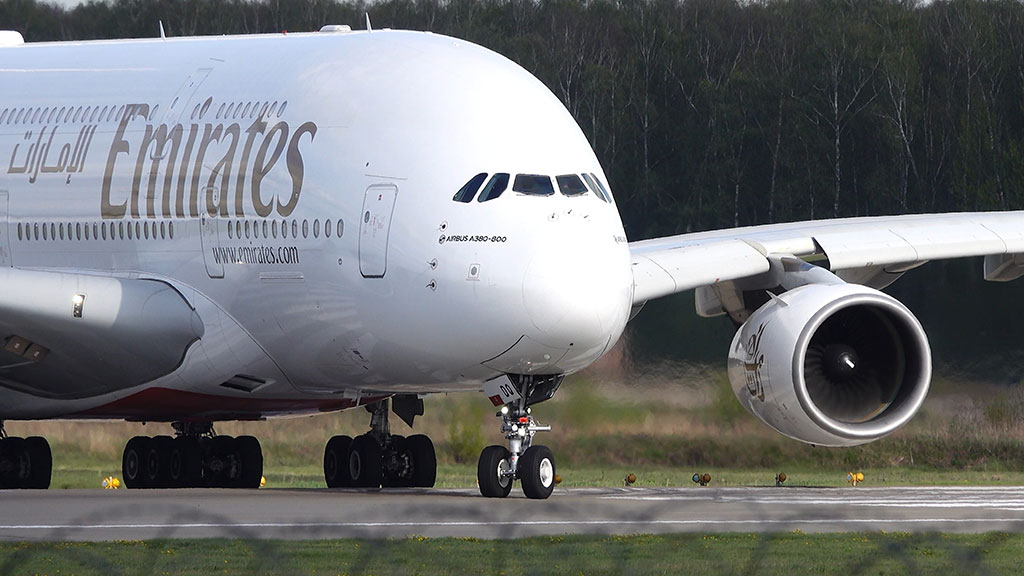
Airbus is to inspect 16 A380 superjumbos, five of them immediately, after cracks were discovered in a critical wing component on aircraft operated by Emirates and Qantas.
The European Union Aviation Safety Agency (EASA) has issued an urgent airworthiness directive requiring airlines to examine the wing-spar structure on the affected jets, after inspectors found the cracks during routine maintenance checks. The cracks appeared in a structural beam that runs along the wing and carries much of the aerodynamic load in flight.
Of the 16 aircraft earmarked for inspection, 15 are operated by Emirates and one by Qantas. The five jets to be checked immediately are all flown by Emirates, and were due to begin the process as early as Wednesday. The Dubai carrier operates the largest A380 fleet in the world, flying more than half of all active superjumbos.
Airbus said the cracks, which “could reduce the structural integrity of the wing”, were found during inspections ordered by EASA under a directive issued in December 2025. All A380s “with the same production history” have now been identified, the European planemaker added, with immediate inspections to be carried out on the first five aircraft.
The Toulouse-based manufacturer said it would discuss with EASA whether repairs are necessary. The remaining 11 aircraft can be inspected later, but before their thirteenth flight, equivalent to 25 cycles, with one cycle comprising a flight, a take-off and a landing.

It is not the first time the A380 has faced wing-related scrutiny. In 2012, EASA ordered inspections after cracks were found in brackets linking the wing skin to internal ribs. That issue affected the entire global A380 fleet and led to a costly repair programme, which Airbus later addressed through design changes on aircraft produced subsequently. As Euronews reported, the latest directive has placed the manufacturer under fresh scrutiny over the long-term maintenance demands of an ageing fleet.
Airlines operating the A380 include Emirates, Singapore Airlines, British Airways, Qantas, Lufthansa, Qatar Airways, Korean Air, Etihad Airways, ANA and Asiana Airlines. The double-decker remains central to several premium long-haul networks, even as carriers weigh the costs of keeping the type in service. Emirates, for its part, has committed to flying the A380 until 2041 and expanding its active fleet to 110 aircraft, underpinned by a multi-year cabin retrofit programme spanning more than 100 aircraft.
A Qantas spokesperson said there was no impact on the airline’s flights as a result of the directive. “We have one A380, which requires additional inspections,” they said in a statement. “The aircraft was already in scheduled maintenance and we will comply with any additional requirements as a result of this airworthiness directive.” The carrier recently completed the renewal of its A380 fleet, returning its final refurbished superjumbo to international service.