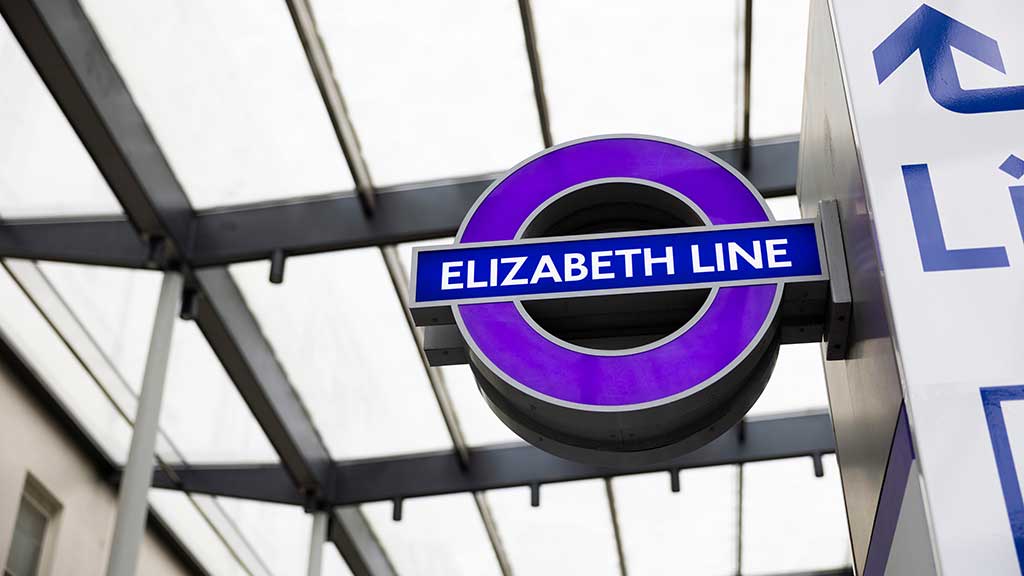
Elizabeth line passenger assistance is moving onto a shared digital platform after technology company Transreport agreed a new partnership with Transport for London (TfL), its first deployment on a metro or urban rail network.
The agreement puts Transreport’s Passenger Assistance technology to work across the whole route, which carries around 800,000 journeys each weekday across 41 stations. For business travellers who rely on staff support to board, alight or change trains, and for the employers who send them, the aim is a more dependable service on one of the capital’s busiest commuter corridors.
Until now, Transreport has worked with national and regional rail networks in Great Britain and Japan. Unlike longer-distance rail, the Elizabeth line’s operating model is built around spontaneous travel, with passengers often arriving at a station and requesting help without booking ahead.
Passengers can ask station staff for support when they arrive, and the new system is designed to make sure that request follows them along the route. TfL calls this turn up and go assistance, and says staff are present at every station on the line while services are running.
Transreport’s technology gives those station teams a shared digital platform to record support needs, share information and coordinate handovers between stations in real time. That matters in a metro environment where trains run minutes apart and staff have to respond quickly to each request.
By giving frontline teams a single operational view, the system is intended to deliver more consistent assisted travel, particularly for passengers who ask for help on arrival and not in advance.
For anyone travelling for work, the handover is usually the weak point of an assisted journey. The member of staff at the destination needs to know who is coming, on which train and what support they need. A shared live record is meant to close that gap, which is significant on a route that runs directly into Heathrow. Travellers planning that trip can find terminal and rail details in our Heathrow airport guide, and with overnight M25 closures affecting Heathrow traffic this October, more of them are likely to be going by train.

The deployment will also build a richer digital picture of assistance activity along the route. Transreport says this will help TfL identify patterns in demand and inform decisions on staffing, training and future accessibility investment.
That evidence has a wider use. The Office of Rail and Road already publishes passenger assistance statistics for train operators, and a clearer view of when and where help is requested on a high-frequency urban railway should show whether the service is keeping up with demand.
For travel managers, the development is a prompt to check how accessible business travel is handled in company travel policy. Employees who need assistance should know that support is available without advance booking on this route, and that the process is being backed by better coordination behind the scenes.
Founder and chief executive Jay Shen said the Elizabeth line represents “an important step” into Metro operations, emphasising that spontaneous, reliable assistance is fundamental to accessible urban travel.
For Transreport, the partnership marks a significant evolution of its platform, demonstrating its capability in high-volume urban transport for the first time. Its Passenger Assistance product has already supported more than 12 million assistance requests across Great Britain and Japan, and the company says further international expansion is under way.
All 41 stations on the line are step-free from street to platform. The technology is designed to complement that physical accessibility by improving the coordination and consistency of assisted journeys delivered by frontline teams.
The announcement did not give a start date or rollout timetable, and nothing changes in how passengers ask for help. What should change, if the system performs as described, is how reliably Elizabeth line passenger assistance is waiting at the other end.