


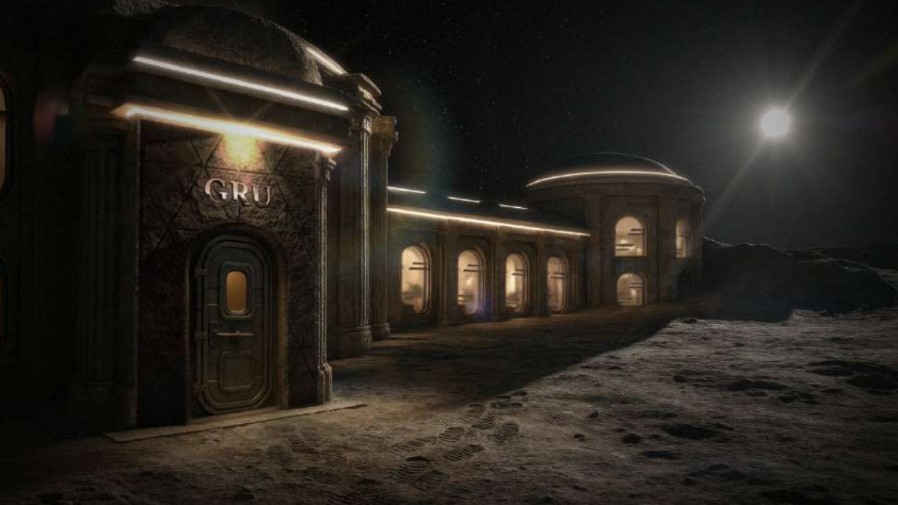
GRU Space has always behaved like a company with a secret map of the future. Founded in 2012 by three propulsion engineers who believed the Moon should be a destination rather than a distant ambition, the company spent its early years quietly dismantling the cost barriers of deep‑space travel.
The turning point came in 2017 with the GRU‑9 engine, a methane‑oxygen system capable of repeated deep‑space burns without refurbishment. Suddenly, lunar cargo delivery wasn’t a fantasy — it was a business model.
From there, the timeline accelerated. By 2019, GRU had achieved its first soft landing of a cargo module on the Moon. In 2022, it unveiled the Lattice habitat system – stackable, pressure‑regulated modules designed for long‑term off‑world living. Two years later, the company completed its first permanent research outpost at the lunar south pole. And in 2026, GRU Space finally revealed the project it had been hinting at for years: LunaLux, the world’s first lunar hotel.
Construction is now underway on the rim of Shackleton Crater, a location chosen for its near‑constant sunlight and uninterrupted views of Earth. LunaLux will offer around 18,000 square feet of pressurised interior space and 42 guest suites, including six premium observation rooms designed for travellers who want to wake up with Earthrise framed like a living artwork. The aesthetic is a serene blend of sci‑fi minimalism and Scandinavian calm – curved corridors, soft‑glow lighting, and a central atrium where a floating light sculpture drifts in one‑sixth gravity.
GRU expects a phased soft‑opening in mid‑2028, with full completion by the end of the year. Early renders show a sleek, silver‑white exterior partially shielded by regolith berms, a horizon‑level lounge with reinforced glass, and suites that feel more like private sanctuaries than space capsules. It’s hospitality reimagined for a world where gravity is optional.
The price tag reflects the ambition. A five‑day stay is expected to cost between £250,000 and £350,000 per person, excluding the mandatory 12‑week training programme, which adds another £80,000 to £120,000. Premium observation suites push the total comfortably beyond half a million. Transport aboard GRU’s heavy‑lift shuttle is priced separately, estimated at £600,000 to £900,000 depending on season and payload. Yet demand is already outstripping expectations. Early‑access applicants must submit a personal statement, medical clearance, a refundable deposit, and a commitment to the full pre‑flight regimen.
For the business‑travel world, LunaLux is more than a headline. It marks the moment space becomes a legitimate extension of the premium travel ecosystem. Corporate retreats in low gravity, product launches with Earthrise backdrops, and branded lunar activations are no longer speculative. They’re the next competitive advantage — and the guest list is opening now.
Our suggestions as to what to pack for a stay on the Moon
A compression‑friendly wardrobe: Low gravity makes loose fabrics float, so fitted, flexible layers are essential. Technical base layers and grip‑soled socks are your friends.
Hydration and skincare essentials: The lunar environment is brutally dry. Bring rich moisturisers, lip treatments, and electrolyte sachets. Aerosols are banned, so stick to creams and solids.
A sleep‑friendly eye mask: With near‑constant sunlight at the south pole, your circadian rhythm will need all the help it can get.
A compact entertainment kit: Wi‑Fi exists, but bandwidth is prioritised for mission systems. Download everything before launch.
A small memento for your Earthrise photo: A scarf, pin, or pocket‑sized object adds a personal touch to the most surreal portrait you’ll ever take.
A willingness to float: The Moon rewards travellers who embrace the absurd. Slow‑motion steps and drifting hair are part of the charm.