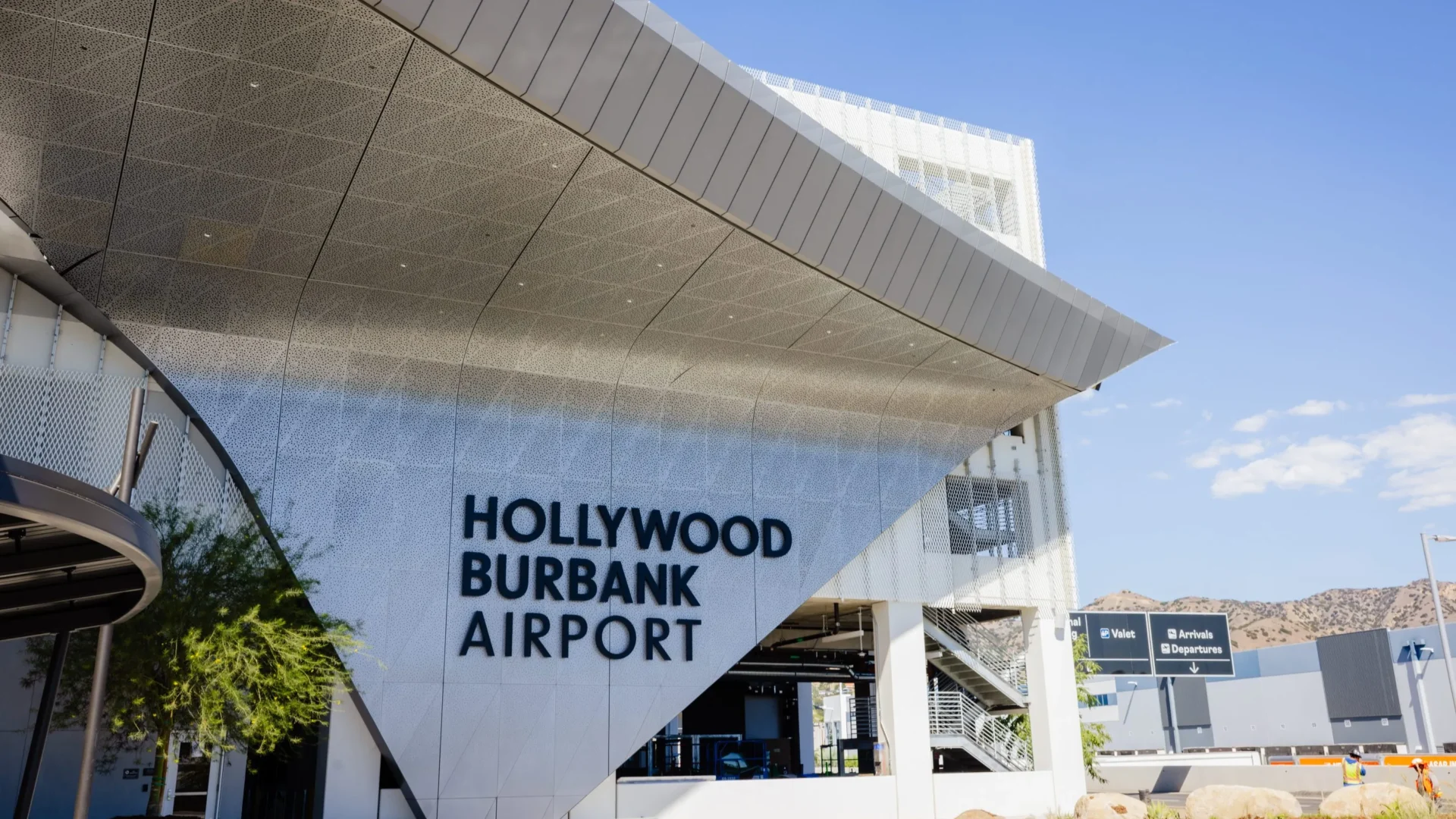
Hollywood Burbank Airport (BUR) has officially opened its long-awaited new passenger terminal, delivering a significantly upgraded travel experience while preserving the airport’s distinctive outdoor boarding tradition.
The new 355,000-square-foot facility welcomed its first passengers on 13 October, marking a major milestone for the airport and its airline partners, including Alaska Airlines, which has served Burbank since 1981.
Designed to streamline the passenger journey, the terminal consolidates key airport functions under one roof, featuring a centralised ticketing hall, a single TSA security checkpoint and a unified indoor baggage claim area. Travellers will also benefit from enhanced post-security amenities, including new dining and retail options, workstation-style seating, digital information displays and power outlets at every seat.
The redevelopment aims to improve both efficiency and passenger comfort, with dedicated arrivals and departures lanes helping ease congestion around the terminal complex.
Despite the modernisation, airport officials have retained one of Hollywood Burbank’s most cherished characteristics: outdoor aircraft boarding and deplaning. The open-air experience has long distinguished BUR from larger Los Angeles-area airports and remains a popular feature among frequent travellers seeking a more relaxed alternative to major aviation hubs.

Located just north of downtown Los Angeles, Hollywood Burbank Airport has built a reputation for its convenience, shorter walking distances and easier access compared with neighbouring airports. The new terminal is intended to strengthen that position while providing the infrastructure and amenities expected by today’s business and leisure travellers.
The new terminal’s centralised layout, modern work-friendly seating areas and improved passenger flow are expected to reduce friction throughout the airport journey. For travellers conducting regular business between Los Angeles and key US markets, the enhanced facilities reinforce Hollywood Burbank’s appeal as a practical alternative to the region’s larger airports.