Korean Air will resume nonstop Melbourne to Seoul flights on 18 December 2026, returning to the Victorian capital for the first time since 2013. The airline will fly three times a week to Seoul Incheon until 14 March 2027, a seasonal schedule covering the Australian summer, and it will be the only carrier on the route without a stop.
For UK businesses with staff, suppliers or customers in Melbourne, the service restores a direct air bridge between Victoria and North Asia and plugs the city into Korean Air’s network at Incheon, one of the region’s busiest hub airports.
The route fills the gap left by Asiana Airlines, which had flown Melbourne to Seoul seasonally since December 2023. Korean Air steps into the slot as its long-running merger with Asiana formally takes effect on 17 December 2026, one day before the first Korean Air service reaches Melbourne. Jim Parashos, Melbourne Airport’s chief of aviation, called the resumption “a great outcome for Victorian travellers and for our tourism and trade ties with South Korea” in the airport’s announcement.
How the Melbourne to Seoul flights will run
Services operate on Wednesdays, Fridays and Sundays. Flight KE409 leaves Incheon at 08.00 and arrives in Melbourne at 20.30, while the return KE410 departs Melbourne at 22.00 and lands at Incheon at 07.35 the following morning. The overnight rotation suits anyone wanting to walk into a Seoul meeting with a full working day ahead of them.
Melbourne becomes Korean Air’s third Australian gateway, joining year-round services from Sydney and Brisbane, and premium passengers changing planes in Korea can take advantage of the transformed flagship lounges Korean Air has unveiled at Incheon Terminal 2.
There is a London dimension too. Korean Air flies nonstop between Heathrow and Seoul, so UK travellers can book a single-airline routing to Melbourne with one change at Incheon during the southern summer. UK interest in the Korean capital has been building since Virgin Atlantic launched daily flights from London Heathrow to Seoul, and Korean Air’s Australian network now gives the hub a further role as a stepping stone beyond North Asia.

Business class trails Sydney’s newer seats
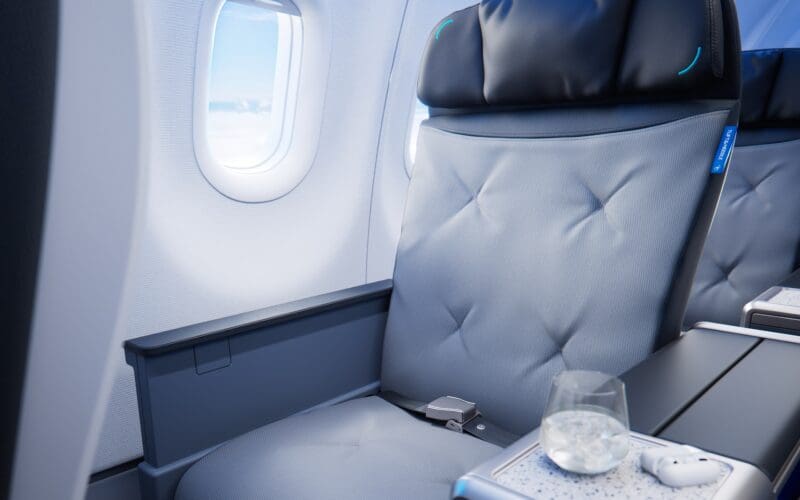
Korean Air will fly the route with a Boeing 787-9 fitted with 24 Prestige Suites in a staggered 2-2-2 layout, giving every business class seat direct aisle access. The seats convert into beds and carry seat-back entertainment screens, although this is an older generation of the airline’s premium cabin.
Sydney passengers have had Prestige Suites 2.0 since late 2025 on Korean Air’s 787-10s, with a 1-2-1 layout, sliding privacy doors, a fully flat 198cm bed and inflight wifi. Melbourne’s aircraft misses out on the doors and the wifi, although the carrier has flagged plans to fit the newer seat across more of its widebody fleet over time as part of a renewal programme that includes a $36bn Boeing order.
In economy, the 787-9 carries a 3-3-3 cabin with seat-back screens throughout, and meals follow Korean Air’s usual long-haul service, including bibimbap, the rice dish that has long been the airline’s calling card in the air.
Time savings against one-stop rivals
With Asiana gone, every alternative between the two cities involves a connection, typically with Cathay Pacific via Hong Kong, Philippine Airlines via Manila or Singapore Airlines via Singapore. Korean Air’s nonstop takes 11 hours and 30 minutes against 13 to 15 hours all-in for the one-stops, so a return trip can hand back most of a working day.
The trade-off is hardware. Cathay Pacific has begun fielding its Aria Suite, a 1-2-1 business class seat with a closing door and a 24-inch 4K screen, on selected Boeing 777-300ER Melbourne rotations, while Singapore Airlines reserves its A380 Suites and First class for the Melbourne to Singapore leg only, with the onward Seoul sector flown by a two-class Boeing 787-10.
For UK firms planning new year travel, the choice comes down to time against seat. The quickest routing between Melbourne and Seoul now belongs to Korean Air, and its window covers the whole of the Australian summer.