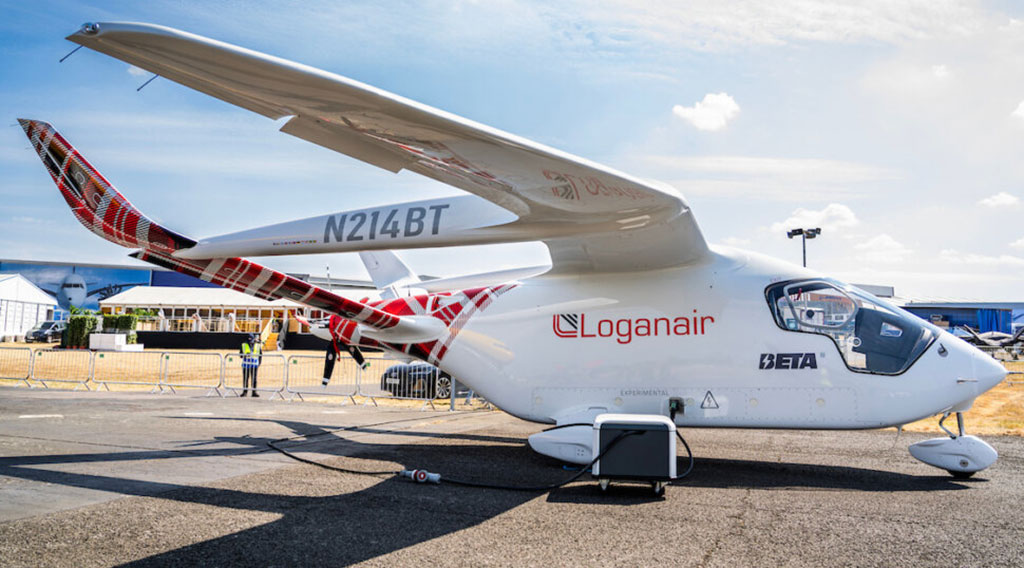
Loganair has agreed to buy five all-electric aircraft from American manufacturer BETA Technologies, a deal the Scottish carrier says will make it the first commercial airline in Europe to operate an electric fleet when the planes enter service in 2029.
The order, announced at July’s Farnborough International Airshow, covers five ALIA CX300 aircraft with an option to purchase five more. For business travellers who depend on Loganair’s regional network, the airline is promising lower operating costs and zero in-flight emissions on the short routes that link Scotland’s islands and cities with the rest of the UK.
The purchase follows a demonstration programme in the Highlands and Islands in March, when electric aircraft completed 23 flights in ten days across the airline’s network, covering more than 1,000 nautical miles.
Trials that turned a concept into an order
Chief executive Luke Farajallah said the March flying programme had answered the commercial question. “This is a truly historic moment for Loganair and for European aviation,” he said. “Our demonstration programme earlier this year proved that electric aviation is no longer a future concept, it is a viable commercial opportunity.
“The aircraft demonstrated the potential to reduce operating costs by up to 80 per cent while maintaining the reliable regional connectivity our customers and communities depend on.
“Signing this agreement is the natural next step in that journey. It reflects our confidence in the technology, our partnership with BETA, and our ambition to remain at the forefront of sustainable regional aviation. We look forward to working together as we prepare to bring these aircraft into commercial service.”
The airline said the agreement marked a “significant step towards bringing electric aviation into commercial routes across the UK” and would “ensure Loganair becomes Europe’s first commercial airline operating an electric aircraft fleet”.

How Loganair’s electric aircraft will operate
The ALIA CX300, built by Vermont-based BETA Technologies, needs no new infrastructure. It will operate from existing runways and can recharge in 20 to 40 minutes using BETA’s fast-charging systems, a turnaround short enough to suit the quick rotations that regional schedules demand. The aircraft will fly both passengers and cargo, and the agreement includes technical support and integration work so the type can slot into Loganair’s existing fleet.
Loganair said last year that a hybrid electric plane could be flying passengers from Sumburgh in Shetland to destinations such as Orkney, Aberdeen and Glasgow by 2030. The BETA order goes further, placing fully electric aircraft at the heart of the airline’s future. Travellers heading to the energy capital on those routes will find practical terminal and transfer detail in our Aberdeen airport guide.
What it means for business travellers
If the 2029 timetable holds, corporate travellers on Scotland’s lifeline and regional routes will be among the first in Europe to board scheduled all-electric services. The cost savings the airline cites matter as much as the environmental case. Thin regional routes are expensive to serve, and any reduction in operating costs improves the odds that marginal business connections survive, and could ease fare pressure over time.
Zero in-flight emissions would also be a gift for travel managers, as firms come under growing pressure to measure and cut the carbon footprint of staff travel. Electric flight offers regional aviation a nearer-term answer while the industry debates the cost and supply of sustainable aviation fuel for longer sectors.
There are still hurdles to clear before 2029, including certification of the aircraft for commercial passenger service and the installation of charging equipment at the airports Loganair serves. But the airline is clearly betting on growth as well as batteries. It has been widening its network too, with a new Southampton base and routes launched from October 2025, and the option over five further BETA aircraft gives it room to scale the electric fleet if the first five deliver.