


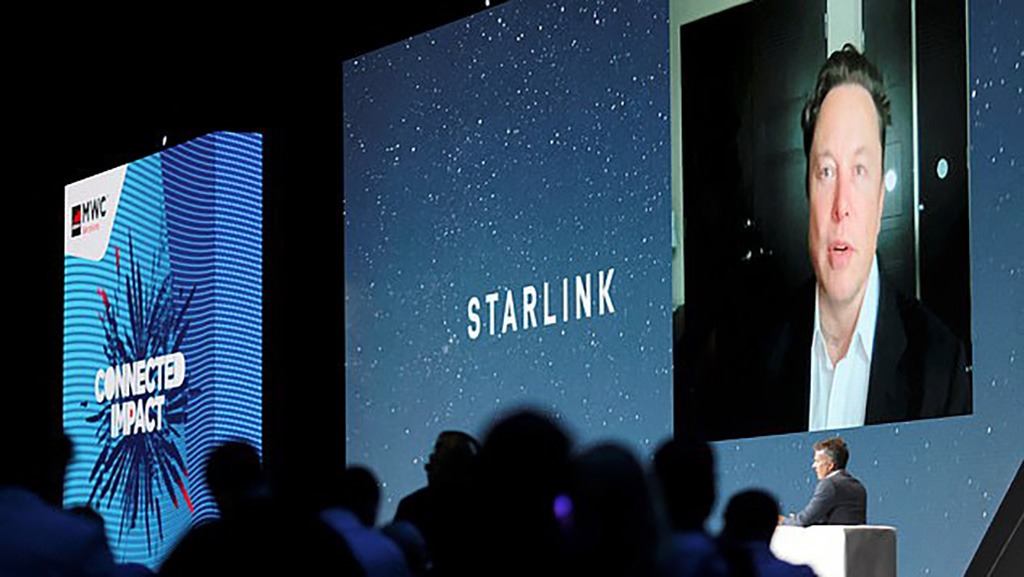
A public spat has erupted between Elon Musk and Michael O’Leary after the Ryanair chief confirmed he has no intention of installing Starlink internet across the airline’s fleet.
The row began after O’Leary dismissed the idea of introducing in-flight Wi-Fi on Ryanair aircraft, citing fuel efficiency and cost concerns. Speaking to Reuters, the outspoken airline boss said fitting external antennae to aircraft would add weight and drag, resulting in what he described as a “two per cent fuel penalty”.
Ryanair operates one of Europe’s largest short-haul networks, with thousands of flights across Europe, North Africa and the Middle East, and currently offers no onboard Wi-Fi. O’Leary said he did not believe passengers on one-hour flights would be willing to pay extra for internet access, making the investment commercially unattractive.
The comments prompted a swift response from Starlink, the satellite broadband service operated by SpaceX. Michael Nicolls, vice-president of Starlink engineering, said on X that O’Leary’s fuel penalty estimate applied to “legacy terminals”, adding that Starlink’s newer equipment is “much lower profile and more efficient”.
Musk then escalated the exchange, also posting on X to accuse O’Leary of being “misinformed” and warning that Ryanair risked losing customers to airlines that offer high-speed connectivity. In one post, Musk went further, calling the Ryanair boss an “idiot” and suggesting he should be fired.
O’Leary responded the following day during an interview on Irish radio station Newstalk, doubling down on his position. He said installing Starlink would cost Ryanair between $200m and $250m a year, equating to roughly an extra dollar per passenger.
“For us, that’s a cost we can’t justify,” he said. “Passengers won’t pay for internet usage. If it’s free, they’ll use it – but they won’t pay one euro each to go online.”
He also dismissed Musk’s criticism outright, telling listeners to “pay no attention whatsoever to Elon Musk”, before adding: “He’s very wealthy, but he’s still an idiot.”
The dispute highlights a growing divide within the airline industry over the value of onboard connectivity, particularly on short-haul routes. While low-cost carriers remain sceptical, some long-haul operators are moving rapidly in the opposite direction.
Emirates, for example, is in the process of upgrading its fleet with Starlink Wi-Fi, making it the world’s largest international airline to roll out the service across its network. From November 2025, passengers on selected Emirates aircraft will be able to stream, video call and browse social media free of charge at cruising altitude.
For Ryanair, however, O’Leary remains unconvinced that in-flight internet aligns with the airline’s ultra-low-cost model, despite mounting pressure from competitors and technology providers.