


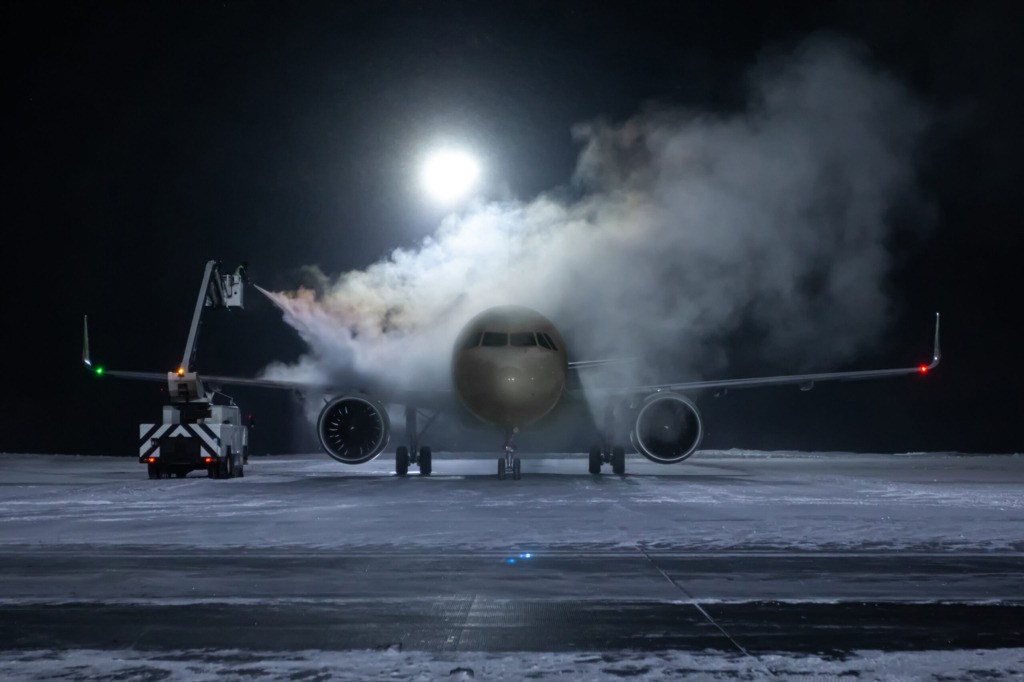
Amsterdam Schiphol Airport — one of Europe’s busiest international hubs — has entered its sixth consecutive day of major disruption as heavy snowfall, strong winds and freezing temperatures continue to cripple operations.
Thousands of passengers have been affected, with widespread cancellations, delays and knock‑on disruption across airline networks.
KLM Faces Deicing Fluid Shortages as Cancellations Mount
KLM, Schiphol’s largest carrier, has been forced to cancel hundreds of flights each day as winter conditions limit the airport’s ability to operate safely. More than 700 flights were cancelled on Wednesday alone, with Schiphol warning that further disruption is inevitable.
The airline’s deicing operations have come under intense strain. KLM has been using around 85,000 litres of deicing fluid per day, and supplies are now critically low. Staff have been dispatched to Germany to secure additional stock, though the airline has not confirmed when supplies may run out.
“We are doing everything we can,” KLM spokesperson Anoesjka Aspeslagh told Reuters, as the airline worked to keep essential operations moving.
The disruption has cascaded across KLM’s network, with aircraft and crew displaced from their scheduled routes. Passengers across Europe and beyond are experiencing delays even if they are not travelling through Amsterdam.
Why the Disruption Will Continue
Weather forecasts show continued snowfall and strong winds in the Amsterdam region, limiting runway capacity and slowing ground handling. Crosswinds in particular restrict the number of aircraft that can safely land or depart.
Once an airport loses operational capacity, recovery is slow. Aircraft and crew become mismatched across destinations, and even after conditions improve, airlines must reposition aircraft and rebuild schedules — a process that can take several days.
The ripple effect is now being felt at other major European hubs as airlines attempt to reroute passengers and reposition aircraft.
High Passenger Volumes Add Pressure
The timing of the disruption has compounded the challenge. With flights still heavily booked following the holiday travel period, rebooking options are limited. Hotels near Schiphol and other major airports are filling quickly, making overnight arrangements difficult for stranded travellers.
Airlines are proactively cancelling flights to stabilise operations, but this leaves thousands of passengers needing alternative travel plans.
Advice for Business Travellers This Week
Travellers scheduled to pass through Amsterdam should prepare for continued disruption. Key steps include:
- Check flight status frequently — schedules are changing throughout the day.
- Contact your airline early to explore rebooking or refund options.
- Expect long queues at check‑in, security and boarding as backlogs clear.
- Plan for possible overnight stays, especially if travelling late in the day.
For those with flexibility, avoiding travel through Amsterdam this week may be the most reliable option.
No Quick Fix in Sight
The ongoing crisis at Schiphol is the result of sustained severe weather — conditions outside the control of airlines or the airport. With forecasts showing little improvement in the coming days, operations are unlikely to return to normal this week.
For business travellers, the message is clear: expect delays, build in contingency time, and consider alternative routings where possible.