


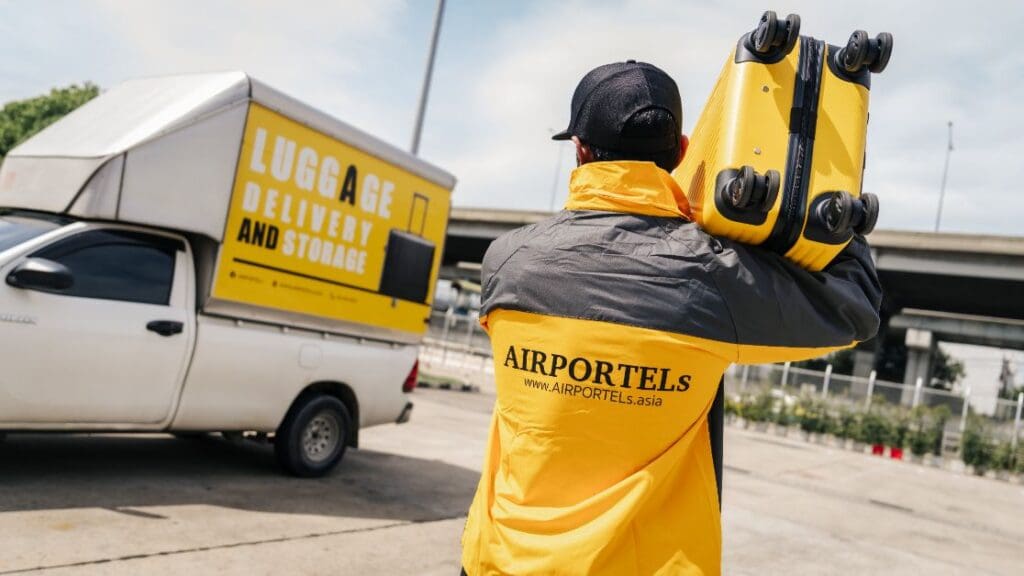
Hands-free travel is emerging as a key trend shaping visitor experiences in Thailand in 2026.
As the New Year holiday season approaches, Thailand tourism continues to attract a growing number of international travellers seeking leisure, culture, and convenience. Alongside the continued momentum of tourism, however, one familiar challenge remains unchanged: crowded airports, tight schedules, and the growing complexity of managing luggage throughout increasingly dynamic journeys.
Recent travel behaviour points to a clear shift in priorities, as highlighted in global travel trend reports by the World Travel & Tourism Council (WTTC). Modern travellers are no longer focused solely on destinations; instead, they are placing greater value on the quality and ease of the travel experience itself. As a result, “hands-free travel” — defined as traveling without the need to physically manage luggage — is emerging as a key travel trend for 2026, particularly during peak periods such as the New Year holiday season.
For many visitors to Thailand, early flight arrivals, late departures, multi-city itineraries, and rigid hotel check-in and check-out times often limit how freely they can explore. Industry insights from airport authorities and travel platforms consistently indicate that navigating airports, public transportation systems, and high-traffic tourist areas while carrying luggage can significantly reduce comfort and mobility, especially during peak travel seasons. In response, travellers are increasingly seeking solutions that allow them to move freely from the moment they land, enabling more efficient use of both time and energy throughout their journey.
According to industry observers — including tourism analysts, travel technology platforms, and destination management organizations — this shift reflects a broader transformation in the tourism market. Travelers are prioritizing convenience, efficiency, and personal well-being over traditional cost-saving considerations. This behaviour is particularly evident among international tourists, families, senior travellers, and business travellers, who increasingly expect seamless, low-friction experiences when visiting major tourism destinations such as Thailand.
“During peak travel periods such as the New Year, congestion and tight schedules are part of the reality,” said Anan Prasertrungruang, Executive Director at AIRPORTELs, a Thailand-based luggage delivery and storage service for travellers. “What we are seeing is a growing desire among travellers to experience Thailand the moment they arrive — not hours later, and not weighed down by luggage. Hands-free travel allows visitors to move more freely, manage their time more effectively, and begin their journey smoothly from day one.”
AIRPORTELs notes that this behaviour is becoming increasingly common among international visitors arriving at Thailand’s major airports, particularly those planning flexible itineraries or multiple destinations within a single trip. As travel patterns become more complex, the ability to transfer luggage directly between airports, hotels, and accommodations is becoming an integral part of modern travel planning.
“Today’s travellers are investing in experiences rather than logistics,” Anan added. “When the physical and mental burden of managing luggage is removed, overall trip satisfaction increases — especially in high-density travel environments.”
As hands-free travel continues to gain momentum, it is increasingly viewed not as a luxury, but as an essential component of modern travel in 2026. In destinations such as Thailand — where travellers often move between airports, cities, and accommodations within limited timeframes — services that reduce physical and logistical burdens play a growing role in shaping overall travel satisfaction. This shift illustrates how tourism ecosystems are evolving to support smoother, more flexible, and experience-focused journeys, particularly during high-season travel periods.
From the perspective of service providers operating within Thailand’s tourism landscape, the rise of hands-free travel represents a natural response to how travellers move today. For AIRPORTELs, this evolution reinforces a long-standing focus on enabling mobility, efficiency, and peace of mind throughout the journey. As Thailand moves forward with continued tourism momentum into 2026, hands-free travel is expected to become an increasingly integral part of the travel experience — supporting visitors in exploring destinations more freely, from arrival to departure.