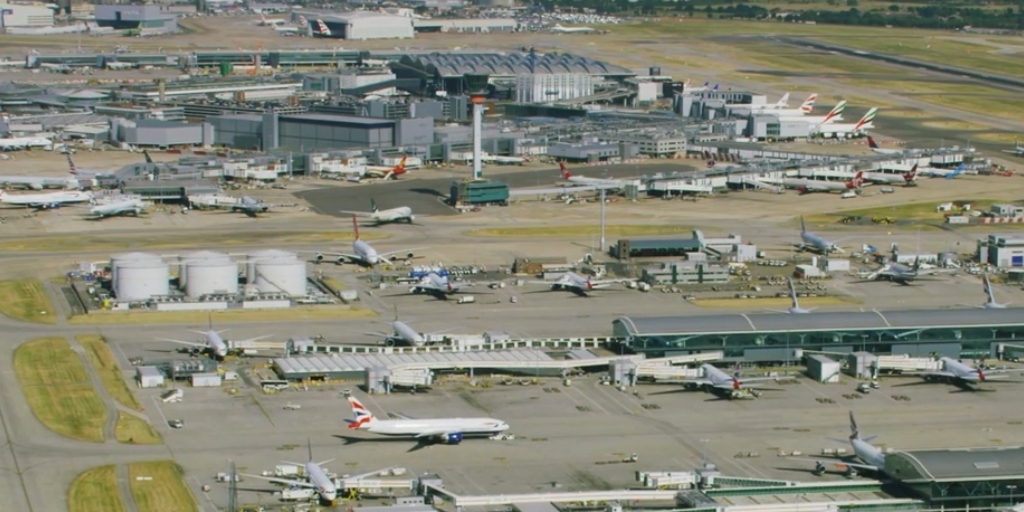
UK airport passenger numbers reached a record 91.3 million between July and September 2026, according to Civil Aviation Authority (CAA) figures. That was 1% higher than a year earlier, or about 1.2 million more journeys, even though the country’s two busiest airports handled fewer passengers.
Heathrow’s traffic fell 2% to 22.9 million in the quarter and Gatwick’s fell 3% to 12.9 million. Growth came instead from other London airports and the regions, driven by low-cost airlines flying to Europe.
Where UK airport passenger numbers grew
London Luton and Newcastle each grew 8% in the quarter, and Stansted grew 6% to 9.2 million passengers. Edinburgh was up 4% to 5.4 million, Birmingham 3%, Glasgow 3%, Manchester 2% to 10.1 million and Bristol 1%.
Low-cost airlines added 2.6 million journeys. Ryanair carried 17.89 million passengers through UK airports, up 9%, and Jet2 grew by the same rate. EasyJet carried 18.01 million, up 2%, while British Airways carried 14.5 million, down 1%.
Over the past 12 months, UK airports handled 305 million passenger journeys, putting them on course to beat the record of 302 million set in 2025.
Why Heathrow and Gatwick fell
Routes to the Middle East and long-haul destinations fell sharply. Passenger numbers to Dubai were down 22% and to Doha down 23%, reflecting disruption in the region, while New York JFK traffic fell 18%. Short European routes grew strongly, including Madrid up 16%, Barcelona up 13% and Paris Charles de Gaulle up 9%.

Heathrow’s own figures show a similar pattern into the autumn. It handled 7.3 million passengers in October, down 1% on last year, with Middle Eastern traffic down 21% and UK domestic traffic down 6%, although Asia-Pacific traffic rose 7.5%. Heathrow is seeking approval for a third runway and argues that its existing runways are operating close to capacity at peak times.
Punctuality and what it means for business travellers
The CAA figures also show how reliable flights were over the summer. Across UK airports, 66% of flights left within 15 minutes of schedule, up two points on last year but still below the pre-pandemic level of 69%. The average delay was 20 minutes per flight.
Heathrow was the most punctual of the big airports, with 75% of flights on time, while Gatwick managed 61% and Manchester 53%. Short-notice cancellations rose to 1.4% of flights in the quarter, up from 0.94%, and peaked at 2.1% in September. Passengers whose flights are cancelled at short notice can claim fixed compensation of up to £520, unless the cause is outside the airline’s control. There were 595,000 commercial flights in the quarter, up 1%, and planes were on average 86% full.
Business travel made up 13% of journeys in a CAA survey of passengers at eight English airports, with the rest for leisure. For business travellers, the latest UK airport passenger numbers point to more choice from regional airports, particularly for short trips to European cities, and to fewer direct options to the Gulf while disruption continues.
Travellers using regional airports should check punctuality before booking tight connections, as performance varied widely. Teesside, Aberdeen and Liverpool were among the most punctual, while Manchester had the lowest on-time rate of the large airports.
Our Heathrow airport guide and Gatwick airport guide cover terminals, lounges and transfers. The full figures are published by the CAA.