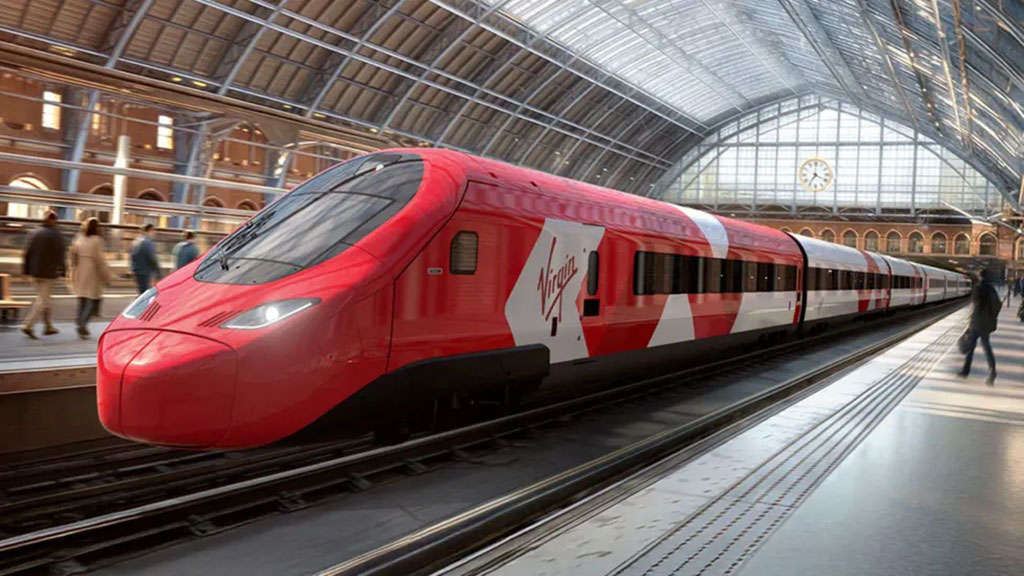
Virgin has cleared a major regulatory hurdle in its bid to end Eurostar’s three-decade monopoly on cross-Channel rail, winning approval from the Office of Rail and Road (ORR) to run up to 20 daily return services through the Channel Tunnel.
The track access agreement runs from 1 October 2030 to 31 December 2040 and covers Virgin’s planned services between London and Paris, Brussels and Amsterdam, three of the busiest corporate corridors out of the capital. For UK business travellers, it is the strongest signal yet that real choice is coming to a route where Eurostar has been the only passenger operator since the tunnel opened in 1994.
What the regulator has approved
The ORR called the decision “a significant step forward” in introducing competition on the route, and said increasing competition would provide “significant benefits” for passengers. For frequent travellers to Paris and Brussels, a second operator would normally be expected to put pressure on fares, widen the choice of departure times and sharpen loyalty offers on a corridor where premium-cabin pricing has long faced criticism.
There are, however, important caveats. The approval covers only the track from London St Pancras to the Channel Tunnel, so Virgin must still secure access to rail networks in mainland Europe. It also needs to obtain its rolling stock and win safety approval from both UK and EU authorities before a single train can run.
Martin Jones, the ORR’s deputy director of access and international, said: “This is an important next step in bringing competition and growth to the market for international rail services. While there is still more work to do, we are supporting Virgin and the wider industry to grow international services.”
A crowded field of challengers
Virgin is not the only operator eyeing the route. Italy’s FS Italiane Group plans to run services through the Channel Tunnel from 2029 using its subsidiary Trenitalia France, which last week signed an agreement for 19 new high-speed trains from Hitachi Rail. Gemini Trains, meanwhile, has set out proposals that include direct London to Cologne services by 2030.
Virgin plans to buy 12 high-speed trains from Alstom to operate its services. Its position was strengthened last year when the ORR approved its application to share the Temple Mills depot in east London with Eurostar. The site is the only UK depot able to accommodate the larger trains used in continental Europe that is already linked to the cross-Channel line.

A Virgin Group spokesperson said: “Our plans for a new London-Europe rail service from 2030 are moving at pace. We welcome the ORR’s pre-approval of our track access agreement and the opportunity to bring competition and Virgin’s award-winning customer experience to the Channel Tunnel.”
How Eurostar is responding
Eurostar said the ORR’s statement confirmed “the huge potential for growth in international rail and the ambition across the industry to bring more passengers to Europe by train”.
“Eurostar will play a full part in that growth, and our focus remains on delivering our own ambitious plans, investing in our fleet and carrying 30 million passengers a year,” the operator said.
The incumbent is not standing still at its London hub either, with a £100m overhaul of the St Pancras terminal designed to speed up boarding and increase capacity ahead of the new competition.
For now, nothing changes for travellers booking cross-Channel trips. But with regulatory approvals stacking up, trains on order and a launch date pencilled in for autumn 2030, the era of choosing your operator to Paris is edging closer to reality.