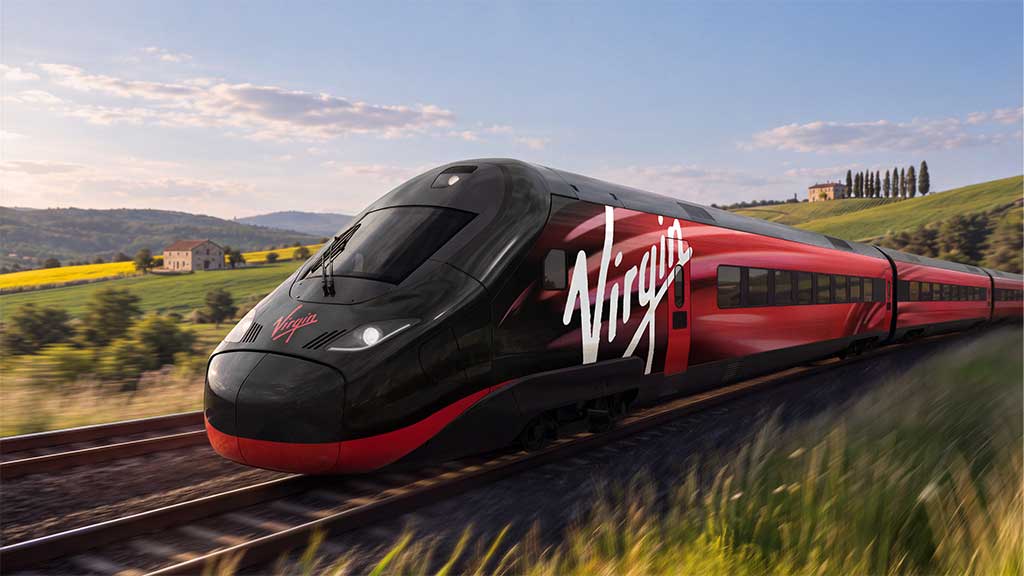
Virgin has released the first image of its black and red high-speed train and shared early details of what passengers can expect on board, as the Virgin cross-Channel trains planned from 2030 begin to take shape.
The group intends to run 20 daily return services between London, Paris, Brussels and Amsterdam, adding almost 7.5 million seats a year to the route and creating up to 1,000 jobs. For UK business travellers, that means a second operator on three of the busiest corporate corridors out of the capital, building on earlier plans to end Eurostar’s monopoly through the Channel Tunnel.
Virgin has signed an agreement with French rail group Alstom to supply 12 Avelia Stream trainsets, capable of speeds of up to 300km/h and fitted with interiors customised for the route. Alstom will also service the fleet under a 30-year maintenance contract, firming up the Alstom train order reported last year.
Services are planned from 2030, with Virgin promising further details of its timetable, trains and customer experience in the coming months.
Two pieces of the operational puzzle are now in place. Virgin has signed an agreement with Eurostar to maintain its trains at the Temple Mills International depot in east London, and the Office of Rail and Road (ORR), which approved Virgin’s depot access application in October 2025, has published the signed agreement.
Virgin also says it is the only prospective new operator through the Channel Tunnel to have secured track access in the UK, confirmed until at least 2040. That follows the regulator’s approval of Virgin’s track access agreement in August.
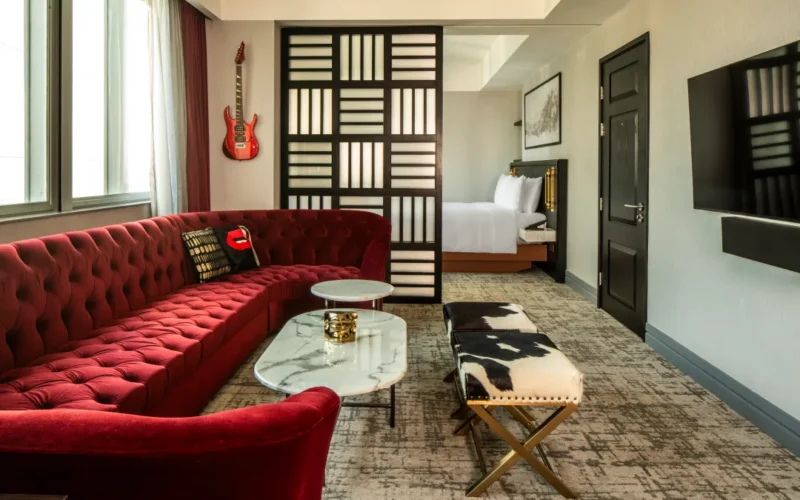
Virgin is leaning on its other travel brands to shape the product. Virgin Atlantic’s Clubhouses will help inspire pre-departure and onboard social spaces, giving passengers more flexibility to work, relax or socialise. Virgin Voyages’ dining will influence the food and drink, while Virgin Hotels’ approach to comfort and design will inform seating and onboard spaces.
Accessibility will be built in from the outset, the company says, and it will draw on its 20 years of operating Virgin Trains in the UK.

The loyalty scheme Virgin Red will extend to rail, allowing passengers to earn Virgin Points and spend them on future journeys, flights, hotel stays, cruises and experiences.
Josh Bayliss, CEO of Virgin Group, said: “We’re confident that more journeys between the UK and Europe will be made by train. We’re adding capacity for millions more international rail journeys each year, growing the market as a whole.”
Andrew DeLeone, Europe Region President at Alstom, said: “Across Europe, passengers are increasingly looking for more seamless cross-border high-speed rail connections, and this project will help deliver exactly that.”
The headline for companies is capacity. Almost 7.5 million extra seats a year on the London to Paris, Brussels and Amsterdam routes should give bookers more departure times to choose from and, with two operators competing for the same corporate accounts, more leverage when negotiating rates.
The points tie-in matters too. Travellers who already collect Virgin Points through flights would be able to earn and spend them on a work trip by rail, which could influence which operator employees ask for once both are bookable.
Virgin will also explore closer links between its rail and airline networks, making it easier for international customers arriving in London with Virgin Atlantic to continue to France and other European destinations, and connecting passengers from France into the airline’s global network. For firms hosting overseas colleagues or clients, a single brand covering the long-haul flight and the onward train could simplify itineraries.
For now there is nothing to book. No fares, timetables or classes of travel have been announced for the Virgin cross-Channel trains, so the practical step for travel managers is to keep the Eurostar rival in mind when reviewing rail policy and any supplier agreements that run towards 2030.