

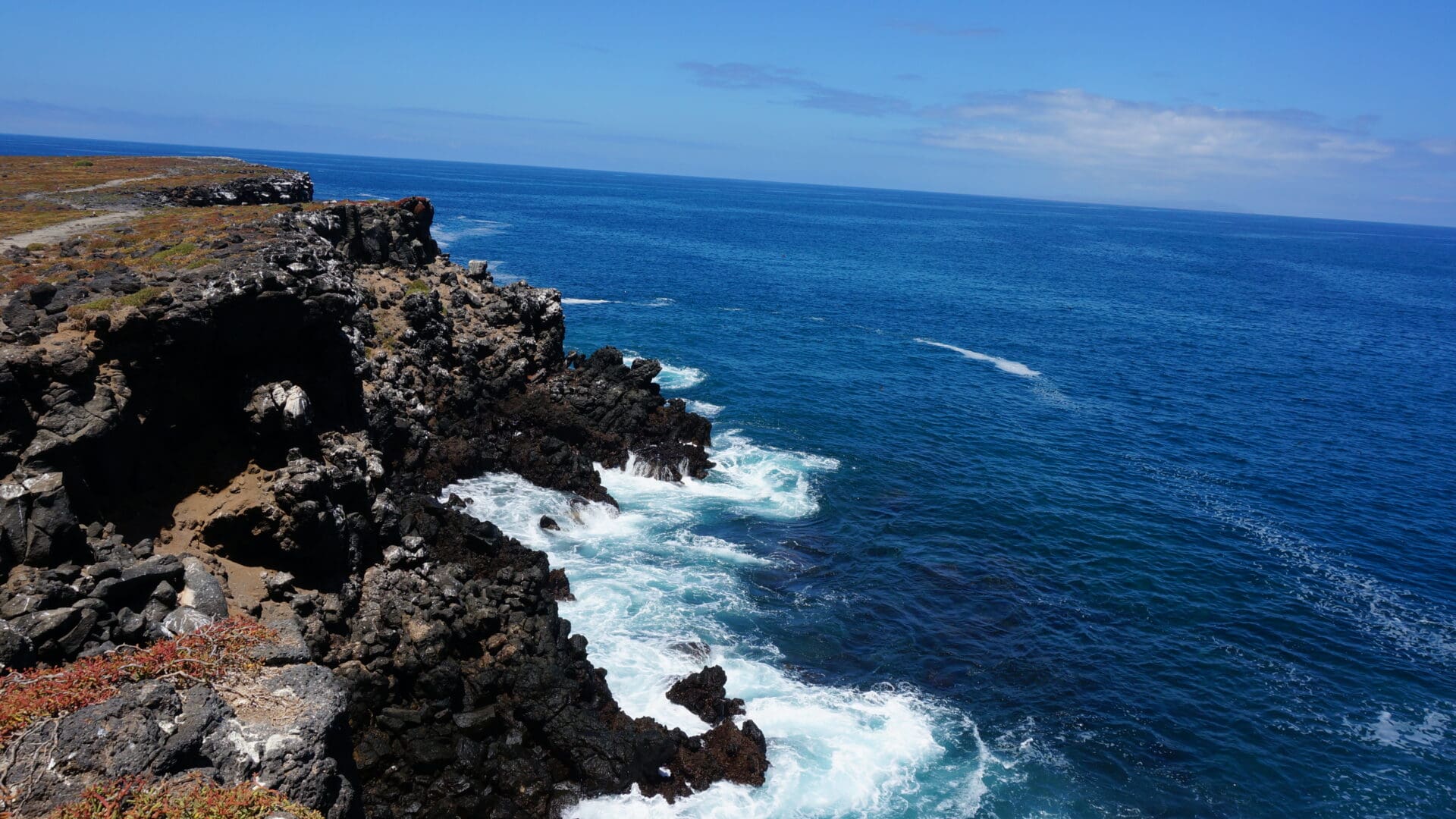
Almost 191 years after Charles Darwin arrived in the Galápagos, scientists are still uncovering insights into the islands and asking important questions about their future.
With research now focusing on the archipelago’s cloud forests, and conservationists preparing to debate “Should you go to Galápagos?” this October, Montemar Eco Luxury Villas offers a small-scale, conservation-led way to experience the islands.
Founded by Ecuadorian conservationists Reyna Oleas and Roberto Plaza, an ecologist and biologist respectively, Montemar is set within 43 acres of restored giant tortoise habitat in the highlands of Santa Cruz.
On 15 September 1835, HMS Beagle arrived in the Galápagos with Charles Darwin on board. Almost 191 years later, the islands remain a living laboratory – but attention is increasingly turning to how their ecosystems will cope with future change.
In 2026, the GArua research project launched to study how climate change and invasive species could affect the Galápagos’ cloud forests and the garúa, the seasonal mist that provides vital moisture to the highlands.
At the same time, annual visitor numbers have risen by around 138% in two decades, prompting a growing question for one of the world’s most environmentally sensitive destinations: not simply whether people should visit, but how.
It is a debate that has been unfolding for decades. Writing about the Galápagos in 2009, Sir David Attenborough described tourism as a “necessary evil”, while making the case that conservation cannot succeed unless local communities benefit from protecting the places they call home. His point remains highly relevant today: tourism can help support conservation and local livelihoods, but only if its growth is carefully managed.
That debate will come to London on 8 October 2026, when Galapagos Conservation Trust hosts its annual Galapagos Day around the question: “Should you go to Galapagos?”
In the highlands of Santa Cruz, Montemar Eco Luxury Villas offers an example of what a smaller-scale, conservation-led approach to tourism can look like.
Reyna Oleas, co-founder of Montemar Eco Luxury Villas, says: “The question is not simply whether people should visit the Galápagos, but what kind of tourism we want to support. Visitors can play an important role in the islands’ future, but tourism needs to work within the limits of this extraordinary ecosystem. For us, that means keeping things small, restoring habitat and helping guests understand that conservation is not separate from their experience of the Galápagos – it is at the heart of it.”
A smaller-scale way to experience the islands
Rather than separating tourism from conservation, Montemar places guests within a working conservation landscape – and offers a reminder that the Galápagos is about more than its surrounding cruise routes. The islands are also home to communities, farms, producers and traditions that form an important part of the archipelago’s identity.
Villa Tortuga sleeps up to eight guests and Villa Lechuza up to four, with both available together for exclusive use.
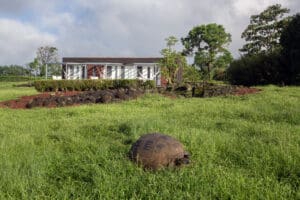
Stays are individually designed with Montemar’s hosts and locally based naturalist guides rather than following a fixed itinerary. Days might include walking amongst giant tortoises, guided wildlife excursions, snorkelling and diving, yacht trips to neighbouring islands or coffee tastings using beans grown on the estate.
Guests can explore the wider archipelago before returning each evening to the same private base on Santa Cruz, allowing more time to experience the island’s landscapes, food and local life as well as its wildlife.
Sustainability is built into the property through giant tortoise habitat restoration, solar energy and water systems, organic growing, locally sourced food and collaborations with scientists. Montemar is also B Corp certified.
Its organic coffee helps fund conservation work, while meals are prepared privately at the villas using produce from the garden alongside locally sourced ingredients and Ecuadorian flavours. This connection to place is central to Montemar’s approach: encouraging visitors to understand the Galápagos not only as a wildlife destination, but as a living landscape shaped by both nature and the people who call it home.
A different side of the Galápagos
The debate around tourism comes as scientists turn increasing attention to the lesser-known ecosystems of the Galápagos highlands.
In 2026, a new research initiative began examining how climate change and invasive species could affect the archipelago’s cloud forests.
The GArua project, coordinated by Marburg University in partnership with the Charles Darwin Foundation and Galápagos National Park Directorate, is studying the garúa – the cool mist that provides essential moisture to the islands’ highlands – and what changes to this cloud cover could mean for native vegetation, water availability and biodiversity.
It is this highland environment that surrounds Montemar.
There has also been encouraging conservation news from Santa Cruz this year. In June, researchers announced the most successful breeding season yet recorded for the island’s population of the Galápagos Little Vermilion Flycatcher.
Scientists documented 56 fledglings in 2026, surpassing the 39 recorded across the whole of 2025. The bird now survives within approximately 19 hectares of actively managed Scalesia forest, following years of habitat restoration and invasive-species control.
Together, these stories highlight a side of the Galápagos that can sometimes be overlooked by visitors: its forests, farms and highland wildlife are as much a part of the islands’ ecology as the better-known marine environment.
Should we still travel to the Galápagos?
Tourism provides important income for local communities and conservation, but its rapid growth also creates environmental pressures. Conservationists are therefore increasingly looking at how tourism can evolve, rather than simply whether people should visit.
For Montemar, that means keeping the experience deliberately small and locally rooted. For families in particular, conservation becomes tangible. Guests can wake to giant tortoises outside their villa, explore the highlands with naturalists, learn where their food and coffee come from and understand some of the challenges facing the islands first-hand
We do not pretend that travelling to the Galápagos comes without an environmental impact. What matters is making that impact count – for conservation, local communities and the future of the islands.


