


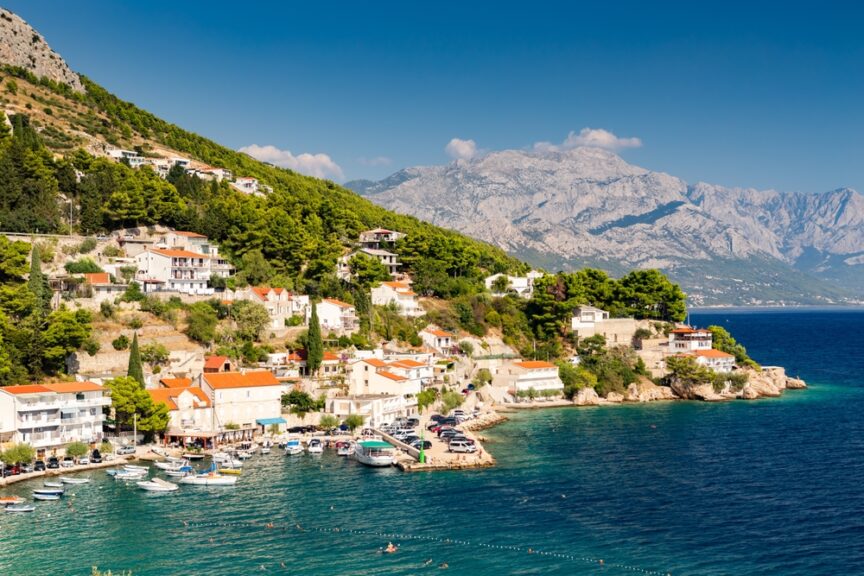
A villa on the Adriatic can make an ideal setting for a leadership offsite, a client incentive or a few days’ work in the sun. Here is how to make sure the property lives up to the listing.
Croatia has become a firm favourite for company retreats. It is a short flight from most UK airports, there is a good choice of large villas along the coast and on the islands, and it offers the kind of setting that gets a team talking. Booking a villa for business, though, is not the same as booking a family holiday. A cramped dining table, a patchy internet connection or a two-hour ferry transfer can quickly undermine the whole point of the trip.
That checking is about to get easier. A new law due to come into force in January means every holiday home advertised online in Croatia will need its own registration number, and many properties will have their official star rating reassessed.
Darijo Šarić, founder and CEO of VIP Holiday Booker, personally inspects every villa in his company’s portfolio. He says the new rules will make it easier to check whether a villa sold as “luxury” really is.
Start with the paperwork
For anyone booking on behalf of a company, the registration number is a useful first check, and a reassuring one for finance teams.
“Over the course of next year, every holiday home advertised online in Croatia will need its own registration number,” says Šarić. “Once that’s in place, a listing that doesn’t include one, or a host who is unable to give it to you, is a good reason to ask more questions before you pay anything.”
Ask for the number at the enquiry stage, and keep it with your booking records alongside the contract and invoice.
Don’t book on stars alone
Croatian villas carry an official star rating, which owners must display on a plaque at the property. But Šarić warns that it measures less than many people assume.
“Contrary to popular belief, a five-star rating doesn’t always mean a luxury stay,” he says. “The rating looks at things like how much indoor space there is and how many bathrooms there are for the number of bedrooms. So while it might tell you a lot about size, it tells you much less about the setting or how well the villa is looked after. A well-run four-star villa with everything you need can be a much nicer stay than a five-star one where things are missing.”
For a working trip, add your own checklist. Is there a table big enough for everyone to sit at together? Is there a quiet room for calls? Is the internet fast and reliable enough for video meetings? Ask for a recent speed test rather than relying on the word “Wi-Fi” in the listing.
Check the journey, not just the villa
Location matters more when you are working to a schedule. “If you’re staying on an island like Brač or Hvar, a villa described as close to Split might still mean you need to catch a ferry, drive, or both,” says Šarić. “Car ferries can fill up in summer, so check the crossing before you book, not after.”
The same goes for historic towns. “Villas in or near old towns like Dubrovnik and Rovinj can be beautiful, but many streets are pedestrian-only or full of steps,” he says. “Ask how close you can park and how far you’ll be carrying your luggage.” With a group, multiply that by every suitcase and box of presentation kit.
If colleagues have mobility needs, also ask about the water. “Most of the Croatian coast is rocky or pebbly rather than sandy, so ‘private sea access’ can mean anything from a small beach to a concrete platform with a ladder into the water,” says Šarić. “Ask for a photo of exactly where you’d get in.”
Think about the season
Many company trips take place in spring, before the summer peak and the higher prices. That calls for a little planning.
“If you’re travelling in April or May, which more Brits will be now that flights are starting earlier, consider looking for a villa with an indoor pool,” Šarić advises. “The bura, a cold north-easterly wind, can make an exposed terrace feel very different from the photos.” The same applies to outdoor meeting or dining space, so make sure there is a comfortable room indoors as a backup.
He adds that traditional stone houses stay cool in summer, but their thick walls often mean smaller windows. “If you want bright, open living spaces, look closely at the interior photos rather than the ones taken outside.” That is worth bearing in mind if the living room will double as your meeting room.
Spend where it counts
For a business group, two things are worth paying extra for. The first is privacy. “If you’re booking a villa because you want your own space, you don’t want to arrive and find that you’re overlooked by neighbouring properties or sharing your pool area with other guests,” says Šarić. That matters even more when discussions are confidential.
The second is support. “If the air conditioning stops working or there’s a problem with the Wi-Fi, having someone on hand who can sort it quickly can make a much bigger difference than paying extra for a feature you might barely use.”
Before you sign off the booking
- Ask for the registration number and the star rating.
- Get a full list of extra costs, such as pool heating, cleaning, and any charge for extra guests.
- Check the tourist tax. It is charged per person, per night. According to Šarić, it is usually under €3 and in most cases already included in the price, but confirm it so your invoice is complete.
- Confirm in writing what workspace and internet speed you will have.
- Get the name and number of the person to call if something goes wrong.
As Šarić puts it: “Think about how you’ll really spend your stay before choosing a villa. Work out what matters to you and spend your money there, rather than paying more for things you probably won’t use.”

