


The government has unveiled a £43 million boost for green aviation projects, positioning the funding as a catalyst for new jobs, private investment and cleaner flying, and explicitly linking it to the UK’s contentious airport expansion agenda at Heathrow, Gatwick and Luton.
Announced today, the package will be delivered through a set of competitive funding calls opening from February, inviting bids from businesses, researchers and universities across the UK. Ministers say the money will be targeted at research and development that helps keep the UK on track for net zero aviation by 2050, while enabling the sector to grow and maintain international competitiveness.
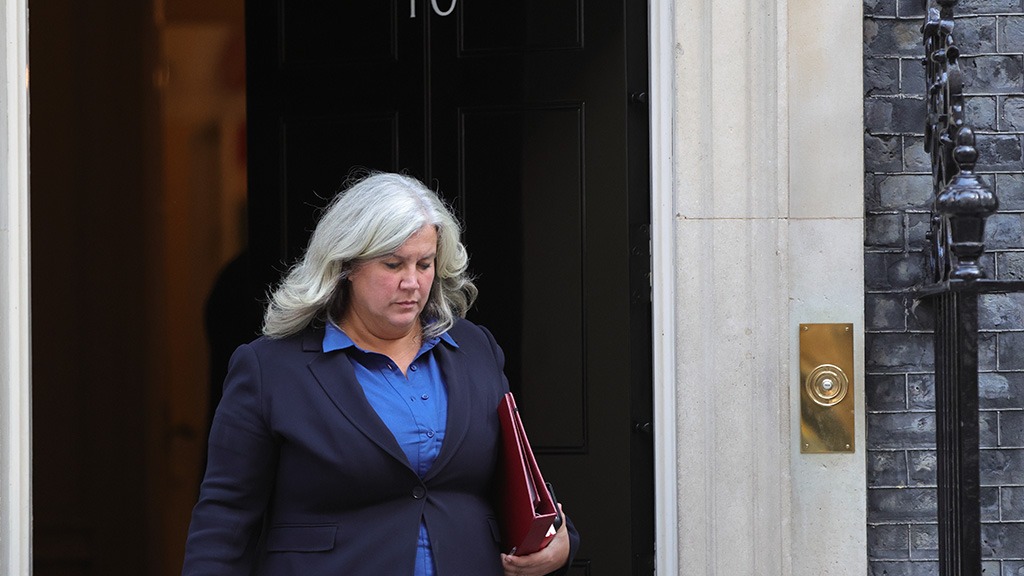
Transport Secretary Heidi Alexander (pictured) said the funding would “deliver the cutting-edge technology of the future” and support “highly skilled jobs” as part of the government’s wider mission to drive growth. The announcement comes with the secretary of state chairing talks with senior figures from airlines, airports, engineering groups and innovators on the role new technology must play in cutting aviation’s climate impact.
At the heart of the funding is a push to accelerate technologies that could materially reduce aviation emissions at source, including zero-emission aircraft, hydrogen fuels and advanced clean-fuel pathways. Ministers argue these technologies will be essential if the government is to expand airport capacity “in line with climate targets”, by pairing growth in connectivity with a credible plan to cut the sector’s environmental footprint and improve local air quality.
One of the most closely watched strands of the funding is expected to focus on contrails, the condensation trails produced by aircraft exhaust at high altitude. While contrails can look harmless, they can contribute to warming under certain atmospheric conditions by forming clouds that trap heat. The government says part of the £43 million could support trials to better understand how contrails can be avoided, for example through operational changes such as minor route adjustments or altitude shifts, paired with improved forecasting. The aim would be to reduce “non-CO₂” climate impacts that are increasingly seen as a crucial piece of the aviation decarbonisation puzzle.
The Civil Aviation Authority (CAA) is also expected to play a central role, using the investment to help develop the regulatory framework required for the broader deployment of hydrogen as an aviation fuel. For the UK, this is not simply a technology challenge, it is a certification, safety and operational challenge, spanning airport infrastructure, refuelling standards, aircraft design requirements and new assurance regimes. The government says the funding will help the regulator and industry partners prepare for the introduction of new zero-carbon technology at scale.
Alongside the domestic technology push, ministers say part of the funding will help strengthen the tracking and use of Sustainable Aviation Fuels (SAF) in regions such as Africa and the Caribbean, enabling better participation in emissions-offsetting schemes and improving the quality and credibility of reporting. The policy rationale is partly defensive: if UK and European airlines are required to meet stringent carbon compliance rules, but carriers in lower-income jurisdictions cannot, due to weak tracking tools or limited implementation capacity, then UK operators risk being disadvantaged on cost.
This international work sits alongside the government’s UK SAF agenda, which is expected to be materially reinforced later this year as the Sustainable Aviation Fuel Bill comes into force. Ministers say the legislation will provide long-term certainty for the emerging UK SAF market by supporting a price-guarantee mechanism — designed to de-risk investment in production and help build domestic supply capacity. In the medium term, the government is positioning SAF as a core transition pathway: cutting lifecycle emissions while allowing existing aircraft to keep flying, even as hydrogen and fully electric flight remain at earlier stages for commercial deployment.
The £43 million fund is also being presented as a lever to unlock private investment. The government argues that targeted public capital at the R&D and early deployment stage can crowd in industry funding, particularly where the path to commercialisation is long, capital-intensive or dependent on regulatory readiness. Ministers point to low-carbon fuels as a major future opportunity, with the production of such fuels forecast to add up to £5 billion to the economy by 2050.
The announcement is being framed as part of a broader package of state support for aviation decarbonisation. Ministers highlight an additional £63 million to accelerate new SAF production plants, and £2.3 billion through the Aerospace Technology Institute programme over the next decade to back aerospace innovation and support skilled employment. The underlying message is that decarbonisation is being treated not as a constraint, but as an industrial strategy, one that could anchor manufacturing, engineering and science jobs in the UK, while keeping British aviation globally competitive.
Industry bodies were quick to welcome the direction of travel. The Hydrogen in Aviation Alliance said the funding would help ensure the UK “leads the future of flight” and argued that hydrogen-powered aviation is central to decarbonising the sector while supporting sustainable growth. Sustainable Aviation’s chief executive Duncan McCourt said the sector is one of the hardest to decarbonise and that progress will require “industry action combined with government investment” to convert ambition into operational reality. Airlines UK chief executive Tim Alderslade said investment in lower-emission technology is now part of a process “well underway”, pointing to last year’s SAF mandate and the expected passage of the SAF revenue-certainty mechanism.
For ministers, the hard test will be delivery: whether the funding calls attract a deep pool of investable projects, whether pilots translate into deployment, and whether regulatory work keeps pace with the technology curve. Equally, the political risk remains acute. Linking airport expansion to decarbonisation intensifies scrutiny on whether the UK can genuinely scale clean fuels and next-generation aircraft fast enough, and whether the sector can cut emissions while passenger demand continues to grow.
For now, the government is betting that £43 million of targeted innovation funding, combined with SAF market reform and a longer-term aerospace R&D pipeline, can help turn aviation decarbonisation into a growth story, rather than a growth constraint.