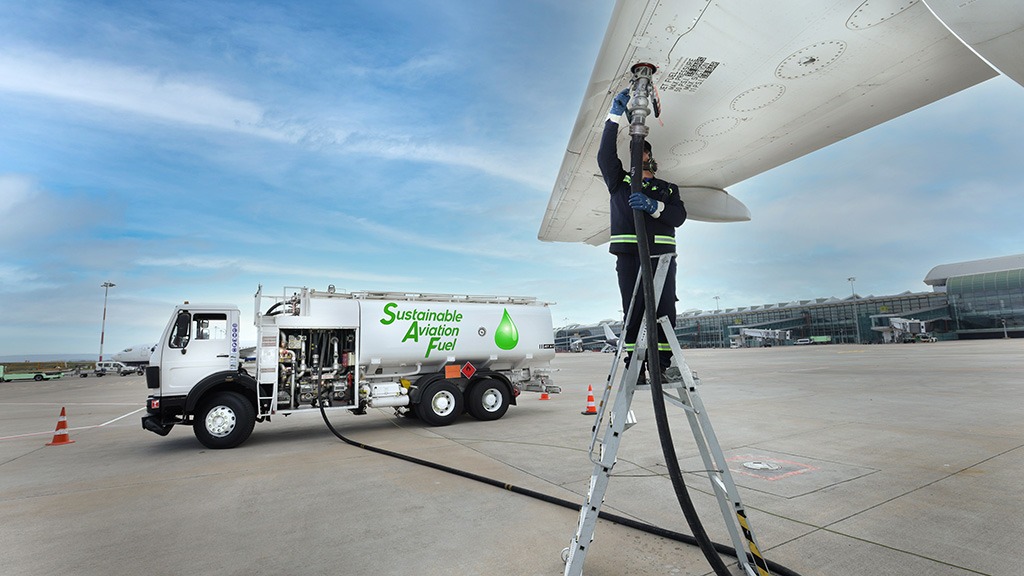
The take-up of sustainable aviation fuel (SAF) is on track to fall short of the UK government’s first annual mandate, according to provisional official data, raising fresh doubts over the pace of aviation decarbonisation.
Figures published by the Department for Transport (DfT), covering most of 2025, show that SAF accounted for just 1.6 per cent of aviation fuel supplied for UK flights. That is around a fifth lower in volume than the 2 per cent required under the mandate introduced at the start of the year.
The policy, which came into force in January, obliges fuel suppliers to blend a minimum proportion of SAF into the overall aviation fuel mix. The targets rise sharply over time, increasing to 10 per cent by 2030 and 22 per cent by 2040, including the use of so-called second-generation fuels that are viewed as more sustainable but are not yet produced at scale.
So far, all of the SAF supplied to the UK market has been derived from recycled cooking oil sourced from Asia, predominantly China, the data shows. Just over 160 million litres of SAF were used by early October, out of roughly 10 billion litres of jet fuel consumed by UK aviation over the same period.
The DfT stressed that the figures are provisional and subject to verification delays, with final data for the year not expected until November 2026. A spokesperson said SAF volumes are continuing to rise and that not all suppliers have yet reported the fuel they have delivered.
While aircraft burning SAF emit similar levels of carbon dioxide in flight to conventional jet fuel, the fuel is classed as lower-carbon overall because of how it is produced. Despite scepticism from some scientists and environmental groups, SAF is widely regarded as the main route for cutting emissions from long-haul aviation in particular.
The data comes as the government continues to back aviation expansion as part of its growth strategy, granting approval for projects at airports including Gatwick and Luton, while promising to consult the Climate Change Committee over plans for a third runway at Heathrow.

Earlier this month, the aviation minister Keir Mather told an industry conference that decarbonisation would be a “licence for growth” and said SAF represented the sector’s biggest opportunity to reduce emissions. He pointed to the government’s SAF bill, currently passing through the House of Lords, which is designed to guarantee prices for SAF and reduce investment risk for producers.
Heathrow airport has already introduced incentives to encourage airlines to use cleaner fuels, cutting landing charges for carriers that adopt SAF. The airport expects to meet its own target of 3 per cent SAF use over 2025, although airlines operating outside major hubs say supplies remain limited.
Industry bodies have warned that future mandates could be difficult to meet, particularly as more expensive second-generation and power-to-liquid fuels are brought into the targets before production capacity is fully established.
Globally, the UK remains ahead of most markets. The airline trade body Iata recently said SAF accounted for just 0.6 per cent of worldwide jet fuel use in 2025, rising to a projected 0.8 per cent next year. Its director general Willie Walsh has criticised mandates, arguing that governments need to design incentives that genuinely stimulate production.
Duncan McCourt, chief executive of the industry group Sustainable Aviation, said the provisional figures showed the UK was already using “significant quantities” of SAF and added that the sector remained confident the mandate would be met as supply continues to grow in the coming years.