The head of Europe’s airports trade body has told politicians to “stop pretending” the region’s new digital border control system is working, warning that the disruption is keeping him and other industry bosses awake at night.
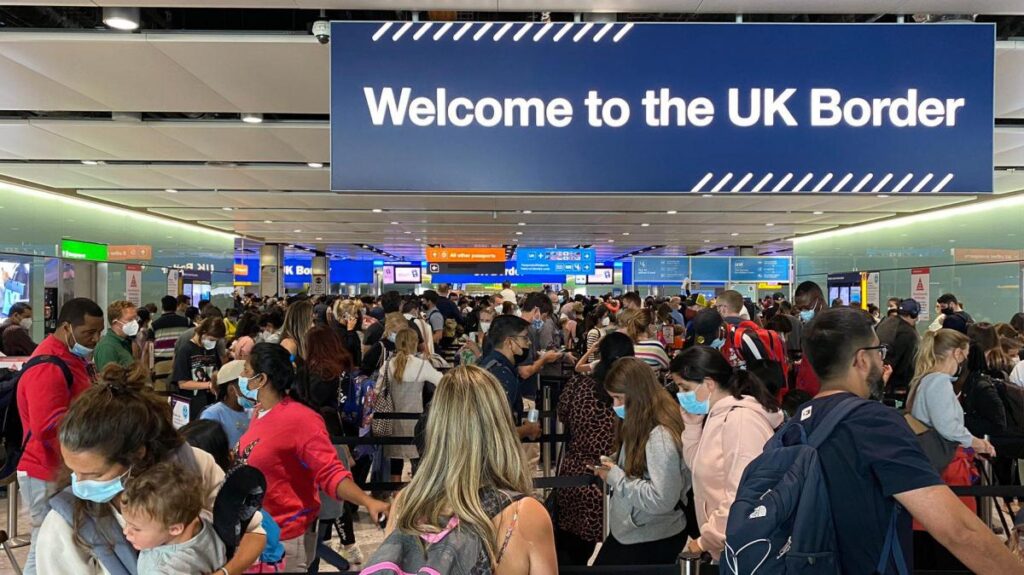
Earlier this year the EU completed the roll-out of its Entry-Exit System (EES), which requires travellers from outside the bloc to register biometric information on arrival in most European countries, with those details then checked when they leave. While the scheme has run smoothly in some states, it has been blamed for significant delays at a number of airports, with some passengers missing flights altogether.
Stefan Schulte, president of ACI Europe and chief executive of the company that owns Frankfurt Airport, did not mince his words at an industry event in Prague. Politicians, he said, should “stop pretending… that EES is working just fine. It is not.”
“Passengers are queueing for hours at peak traffic times and I just do not know how we will be able to cope in the coming weeks with the expected increase in traffic,” he added.
The intervention is the latest sign that patience across the aviation sector is wearing thin. As Travelling For Business has reported, the new checks have been linked to queues of up to three hours at major European gateways, with carriers and airport operators demanding the power to switch the system off when terminals seize up.
The warnings are not hypothetical. Earlier this month, dozens of Ryanair passengers were stranded in Athens after their flight to London Luton departed without them. Ryanair blamed border delays, while the airport said it had been dealing with congestion linked to “additional processing requirements”. Neither directly named EES as the cause.
It was not an isolated case. In April, passengers due to fly from Milan Bergamo and Milan Linate to Manchester also missed their flights because of problems at passport control.
Under the scheme, most travellers from outside the European Economic Area must register biometric data, including facial scans and fingerprints, which can then be checked each time they cross the borders of the Schengen free travel zone. The shift away from manual passport stamping is set out in detail on the European Union’s official EES portal, and UK travellers can find country-by-country guidance through GOV.UK’s EU Entry/Exit System advice.
Wizz Air has previously urged British holidaymakers to arrive at European airports three hours before their return flight departs, citing the lengthy queues caused by the new checks.

Schulte used the Prague platform to press for far greater operational freedom at the border. “We urgently need full flexibility for border control authorities to suspend the EES whenever needed to avoid further chaos, along with a rethink of those processes,” he said.
“This is about showing respect and decency for those who chose to travel to the EU, and safeguarding our reputation as a welcoming and efficient destination.”
The European Commission is permitting EES to be suspended in some circumstances until September, a concession previously detailed by Travelling For Business. But Schulte told the BBC’s World at One that the decision to suspend the system rests with individual governments rather than airports, and that queues lengthened while those decisions were being made.
He also cautioned that the summer peak lasts well beyond early September, after which the industry was potentially looking at the “complete collapse of the system”.
The trade body is not alone in lobbying Brussels. ABTA has written to the European Commission over the challenges thrown up by the new regime, reflecting mounting frustration across the travel trade.
The picture is further muddied by uncertainty over national exemptions. Earlier this year Greece’s tourism minister, Olga Kefalogianni, said she did not want visitors to be “burdened” by bureaucratic procedures, promising that British passengers would not face biometric checks when travelling to Greece this summer. The Greek Foreign Ministry later disputed that any such exemption existed.
There were also reports that Portugal and Italy were weighing exemptions for British nationals at their airports, though the European Commission has said no such plans are in place, leaving travellers, and the businesses that send them across Europe, with little certainty heading into the busiest weeks of the year.