


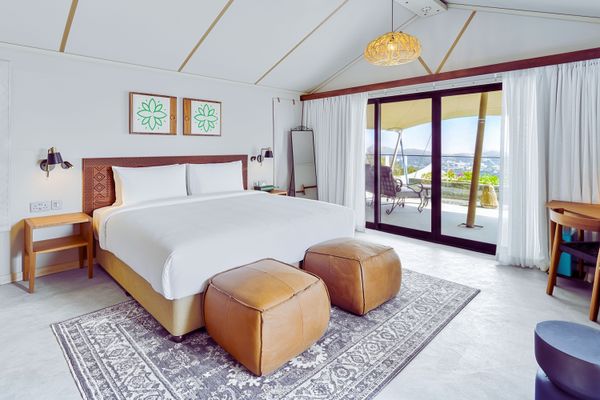
Accor has opened Gamra Mountain Resort by Mantis on Khairah Mountain in south west Saudi Arabia, giving corporate travellers and incentive planners an Al Baha mountain resort option some 2,260 metres above sea level. It is the first property in the Kingdom for Mantis, the group’s conservation focused collection, and it lands in a region marketed as the Garden of the Hijaz rather than the desert or coastal destinations most UK visitors know.
For anyone building an itinerary around Riyadh or Jeddah, the appeal is the climate as much as the setting. Temperatures in Al Baha typically sit between 15C and 22C, which makes outdoor meetings, walking sessions and team activities workable at times of year when the Gulf cities are effectively indoor destinations. The province holds more than 100 forests, juniper and acacia trees, terraced farmland and orchards producing apricots and pomegranates.
Inside the Al Baha mountain resort
The resort has 30 tented Mountain Suites, styled on camp and lodge stays rather than conventional hotel rooms, which puts a natural ceiling on group size. Buyers looking to book out the property for a leadership offsite or a small incentive group should plan around that number.
A one kilometre internal route connects the suites to an Adventure Park at the centre of the site, which has yet to open. When it does, it will carry 14 indoor and outdoor attractions spanning ground based and elevated activities, pitched at everyone from younger visitors to adults after something more demanding. Guided buggy trips run beyond the resort across the surrounding highlands and mountain trails.
Food is split between two venues. Jamra is an open air restaurant built around live fire cooking, serving flame grilled dishes alongside Arabic cuisine. Hala runs from breakfast to dinner with Mediterranean and Arabic menus drawing on regional produce including pomegranates, Shadawi coffee and mountain honey. Beyond the site, Raghadan Forest, Khairah Forest, Baljurashi National Park, Al Hamda Waterfall and Bakhroush bin Allaas Castle are all within reach, along with stone villages, watchtowers and historic mosques.

The wider point for travel managers is that Saudi Arabia keeps adding room stock outside its main commercial centres, a trend that sits alongside the Kingdom’s aviation expansion and forms part of Accor’s 2026 growth plans.
Getting there and what it costs
Access is the main planning consideration. International arrivals connect through King Khalid International Airport in Riyadh or King Abdulaziz International Airport in Jeddah, then take a domestic flight to King Saud Bin Abdulaziz Airport (ABT) in Al Baha. That leg runs to roughly 90 minutes from Riyadh and one hour from Jeddah, followed by a 55 minute drive to the resort. Driving the whole way takes about four hours from Jeddah or Makkah and around ten hours from Riyadh, so the domestic flight is the realistic option on a short trip.
Rates start at £378 per night in low season and rise to £619 in high season, quoted as US$512 to US$838 or 440 to 720 euros, based on two sharing on a bed and breakfast basis. That positions the property at the upper end for a domestic Saudi stay, which will matter for companies working to capped nightly rates. Anyone travelling for the first time should check entry requirements and local rules in the FCDO guidance for Saudi Arabia, and our own briefing on making the most of a Saudi business trip covers the practical ground.
Environmental commitments
Sustainability reporting will interest buyers with disclosure obligations. Before opening, the resort worked with Al Baha Municipality and the Ministry of Environment, Water and Agriculture on the Gamra Grows initiative, planting 1,000 seedlings. A second scheme, Gamra from the Roots, run with the National Center for Vegetation Cover Development and Combating Desertification, has a phased target of 7,000 seedlings, of which 350 have been planted so far. The resort also cites responsible water and energy use, waste management and local sourcing.
Timing can be built around the region’s produce calendar. The International Honey Festival brings beekeepers to Prince Hussam Park from late July into August, while coffee cherries are hand harvested in the lower valleys between November and January.

