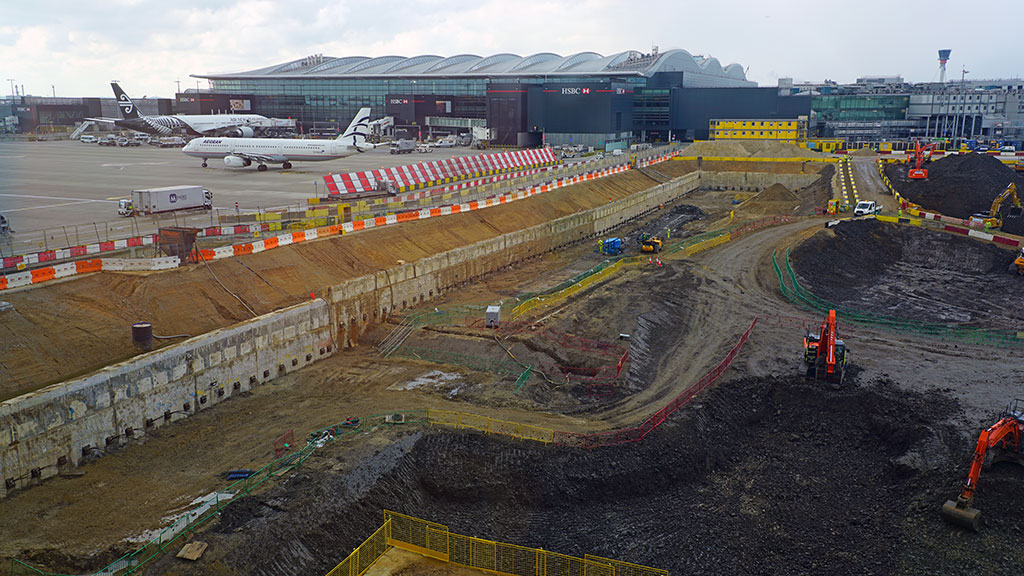
Heathrow will be permitted to pass up to £320m of third runway planning costs on to airlines through higher passenger charges, in a Civil Aviation Authority decision that adds roughly 15p to the price of a ticket from 2028 and around 30p in the years that follow.
For UK companies booking through Heathrow, the sums involved are small per seat but the principle is significant: passengers are now paying for a runway that does not yet have planning permission, let alone concrete. The costs being recovered at this stage cover only early planning and design work carried out during 2025 and 2026. What the construction itself will add to fares remains unknown and will not become clear for some time.
What the CAA has actually approved
The regulator will allow Heathrow to claw back up to £320m through the maximum airport charge levied on airlines for each passenger. Arora Group’s Heathrow West, the unsuccessful bidder whose rival design featured a shorter runway, will also be permitted to recover £4.1m in costs incurred up to November last year, again collected through Heathrow’s charges.
Tim Johnson, the CAA’s director of consumers and markets, told the BBC: “We’ve announced that the first tranche of costs, which is to help with the planning of this, can be recovered from passengers. That’s up to a maximum of £320m.”
Johnson said the decision “strikes a balance between supporting the delivery of benefits to consumers through timely progress on Heathrow expansion, whilst also protecting them from undue increases in costs”. Both the CAA and the airport said safeguards would be applied to shield consumers from unjustified costs, including transparency and cost reporting requirements plus assurance from independent experts.
Why travel managers should watch the charge, not the pence
Fifteen pence will not trouble anyone’s travel budget. The direction of travel might. Airlines have long argued that Heathrow is the world’s most expensive hub airport, and carriers have repeatedly warned that expansion will push charges higher still. That matters because the per passenger charge feeds into fares on every route through the airport, and Heathrow’s cost base is already a live dispute between the airport and its airline customers. Business travellers who use the hub regularly will find it worth understanding how Heathrow’s charging model works before the construction bill arrives.

The government picked Heathrow’s own £33bn scheme over Arora’s alternative in November, with the Department for Transport saying the airport’s proposal was the most deliverable option and offered the “greatest likelihood” of securing planning approval within this parliament. That preference had been contested: IAG and Virgin Atlantic had publicly backed the Heathrow West design on cost grounds.
A decision that is still years away
A Heathrow spokesperson said: “This project is about making travel more affordable and giving passengers more choice, while providing a real economic boost to every region and nation of the country.” The airport added: “We are carefully considering the CAA proposals and will make investment decisions accordingly.”
Ministers hope for a planning decision by 2029. Proposals for a third runway date back decades, with government support first given in 2003, and opposition has been just as persistent. Climate campaigners, many local residents and several politicians argue an additional runway would worsen air and noise pollution and breach the government’s legally binding climate commitments.
For now, the practical effect on anyone flying out of Terminal 5 next quarter is nil. From 2028, the runway starts appearing on the invoice. Regular users of the airport can find terminal, rail and lounge detail in our Heathrow airport guide. The CAA’s full draft decision on early cost recovery sets out the safeguards in detail, and the regulator’s capacity expansion pages track the process to final decision.