Britain’s two biggest long-haul carriers have lined up behind a rival blueprint for Heathrow’s third runway, piling fresh pressure on the airport’s incumbent owners to justify their £49 billion expansion scheme.
International Airlines Group (IAG), parent of British Airways, together with Virgin Atlantic and the International Air Transport Association (IATA), have publicly endorsed the Arora Group’s revised “Heathrow West” proposal, submitted to the UK government on Monday 18 May.
The intervention sets the stage for a head-to-head fight over how, and by whom, the long-delayed third runway should be delivered, after Chancellor Rachel Reeves gave political backing to expansion in January 2025 and the Civil Aviation Authority opened a formal consultation on competing regulatory models earlier this month.
A phased runway, no M25 move
Devised by hotel and property entrepreneur Surinder Arora and engineered with American construction consultancy Bechtel, the Heathrow West plan would deliver an initial 2,400-metre runway without the need to divert the M25 motorway, a costly and disruptive element of Heathrow Airport Limited’s current scheme.
Arora says the shorter strip could be operational by 2035, in line with the government’s stated timetable, and would be “future-proofed to allow for expansion as demand warrants”. During any later extension, the existing 2,400-metre runway would continue to operate “with minimal impact”, the group said in a statement.
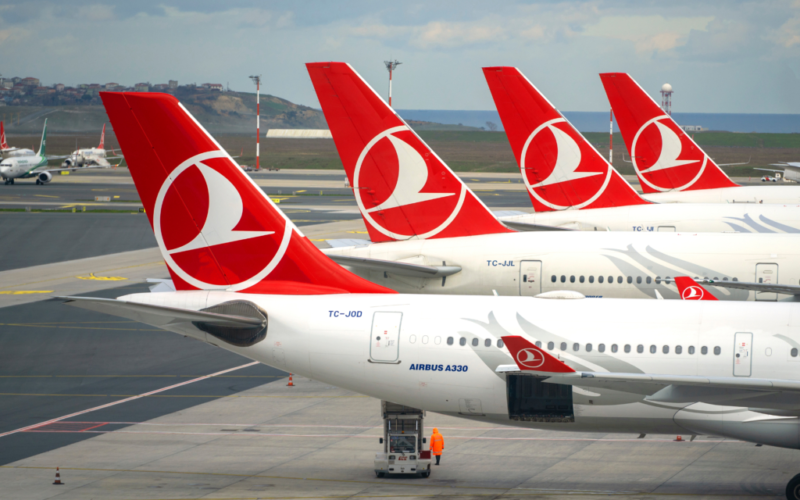
The proposal also includes a new Terminal 6, sited to the west of Terminal 5, designed to handle up to 40 million passengers a year, a meaningful uplift in capacity for a hub airport that, as previously reported by Travelling for Business, has lost its top-ranked European slot to Istanbul as capacity constraints bite.
Arora argues that the phased approach “accelerates delivery of a third runway, in line with the government’s ambitions, and also retains a disciplined focus on affordability, operational realism and constructive engagement with airline customers”.
Airlines line up behind the challenger
The endorsement from IAG is the most commercially significant. Luis Gallego, chief executive of the British Airways owner, described the Heathrow West blueprint as “a credible option with the potential to cap costs for passengers and deliver the benefits of expansion as soon as possible for the UK”.
“We think it is worth further development and should be carefully considered by the UK government,” Gallego added.
Virgin Atlantic chief executive Corneel Koster was similarly supportive, saying “any approach that delivers affordable expansion to the benefit of consumers, the UK aviation sector and UK economy, is welcomed”.
Willie Walsh, outgoing director general of IATA and a long-standing critic of Heathrow’s charging regime, delivered the most pointed verdict. Heathrow’s expansion, he said, “must be deliverable, financeable, and affordable. Arora is the only party to engage seriously with those constraints in a practical way. This is not theoretical planning; it is a scheme being built with real-world delivery in mind.”

The airline backing matters because carriers, through landing charges, ultimately foot the bill for any expansion, and passenger fares typically follow. IAG has already warned that geopolitical and fuel cost pressures will be passed on to corporate flyers, having previously signalled premium fare increases off the back of the Hormuz crisis and a €9bn fuel bill. Cheaper expansion is, in plain terms, cheaper tickets.
CAA consultation reopens the playing field
Arora’s lobbying is timed to coincide with a landmark consultation by the Civil Aviation Authority, launched earlier in May, which puts four possible regulatory models for Heathrow’s expansion on the table.
These range from enhancements to the existing framework, including tougher governance of capital expenditure and procurement at Heathrow Airport Limited, to a longer-term price control model, competitive tendering of expansion elements, and, most radically, an “alternative developer model” that would allow a third party to design, build, finance, own and operate new infrastructure such as a terminal.
The CAA has said that the alternative developer route would in practice depend on an alternative developer being granted permission through the Development Consent Order (DCO) planning process.
Echoing campaign group Heathrow Reimagined, which includes the Heathrow Airline Operators’ Committee, Arora Group, IAG and Virgin Atlantic, Arora is now pressing the regulator to establish a “formal, rules-based framework” for assessing competing expansion proposals on a like-for-like basis.
The CAA’s consultation runs until 15 June 2026, with a high-level update on the outcome expected in July.
What happens next
Arora has confirmed it intends to submit a DCO application for Heathrow West in November 2027, putting the challenger firmly on the formal planning track, regardless of whether the regulator opts for the alternative developer model.
“We have committed significant time and resource to producing our latest plans to ensure that they are highly credible, in line with the Government’s objectives and offering better value to airlines and passengers,” said Surinder Arora, founder and chairman of the Arora Group. “We will continue to engage fully with airlines and other stakeholders as we prepare to submit for planning.”
Full technical detail of the Heathrow West scheme is published on the Arora Group’s dedicated project site.
For business travellers, the political and regulatory choreography of the next 18 months will determine more than just when a new runway breaks ground. With three of Britain’s most powerful aviation voices now publicly aligned against Heathrow Airport Limited’s £49 billion plan, the question is no longer whether expansion will happen — but whose blueprint, and whose costs, will shape the next era of UK business travel.