

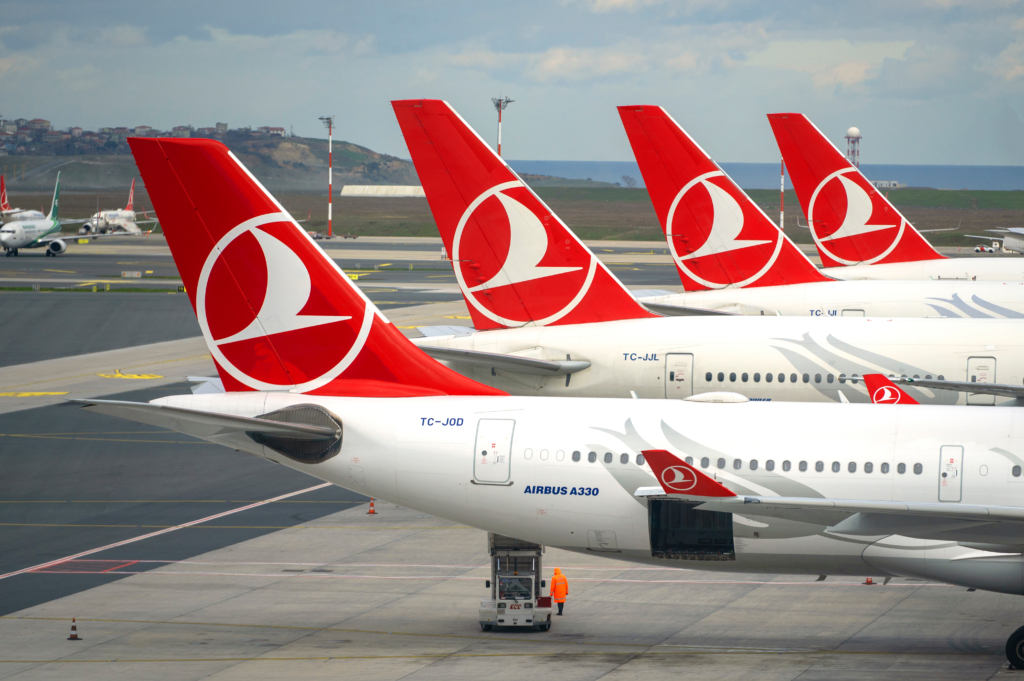
London Heathrow has slipped to second place in the aviation industry’s best known connectivity table, after Istanbul Airport connections were judged the strongest in the world for the first time in figures published by the aviation data firm OAG on 16 September 2026.
The OAG Megahubs 2026 report places Istanbul Airport (IST) first, up from second last year, making it the world’s most connected airport, with Heathrow (LHR) second and Amsterdam Schiphol third. For UK employers the result is more than a league table. It marks the point at which the widest choice of onward international flights, on the measure the industry uses, sits outside western Europe.
How many destinations does Istanbul Airport serve?
Istanbul serves 337 destinations worldwide, a network built largely by Turkish Airlines, which accounts for around 80 per cent of capacity at the airport. That concentration is what lifts a hub up the table: one carrier timing arrivals and departures into waves creates far more usable transfers than a spread of unrelated airlines can.
John Grant, chief analyst at OAG, said Istanbul’s rise reflects both the airline network and the city’s advantageous position between major global markets.
“The 2026 rankings reflect a global aviation landscape that is still recalibrating after significant disruption,” Grant said. “Istanbul’s rise to the top reflects the strength of Turkish Airlines’ network and the airport’s geographic position as a connecting hub between east and west.”

Why Istanbul Airport connections score higher than Heathrow’s
The ranking is not a count of routes. OAG’s Megahubs index measures the number of possible connections between arriving and departing international flights, set against the destinations an airport serves, so frequency, schedule design and the way an airline builds its connecting banks matter as much as the raw route map. The OAG Megahubs 2026 report also records a 6 per cent year on year fall in the potential connections available at Heathrow on the busiest day it measured.
That distinction explains how an airport can stay full and still slide down the table. Heathrow is still the only genuine long-haul hub in the UK, but a capacity constrained airfield leaves little room to thicken schedules in the way OAG’s analysis of the forces behind this year’s rankings describes.
What the change means for business travel from the UK
For most business travel out of the UK, the practical consequence is choice rather than upheaval. Istanbul Airport connections now open up more onward options to the Gulf, central Asia, the Indian subcontinent and secondary African cities than a like-for-like transfer at a western European hub, frequently at a lower fare and on a same day itinerary from a UK regional airport.
The trade-off is time and predictability. A transfer at Istanbul adds flying time on westbound sectors and puts the connection outside the European Union’s delay and cancellation compensation rules, which matters when a meeting cannot move. Booking tools sort by price and elapsed journey time rather than by hub, so firms with a view on where their people should change planes need to write it into travel policy instead of assuming the default will deliver it.
None of this displaces Heathrow for point to point flying. It holds the densest schedule to the destinations UK firms use most, and continuing terminal work keeps changing what travellers find on the ground, as our Heathrow airport guide sets out. The global result also follows Heathrow losing the title of Europe’s busiest airport to the same rival, and comes in a year of record monthly passenger figures at Turkish Airlines.
The number worth carrying into the next policy review is 337. Until Heathrow can add capacity, Istanbul Airport connections will keep setting the benchmark that itineraries starting in the UK are measured against.

