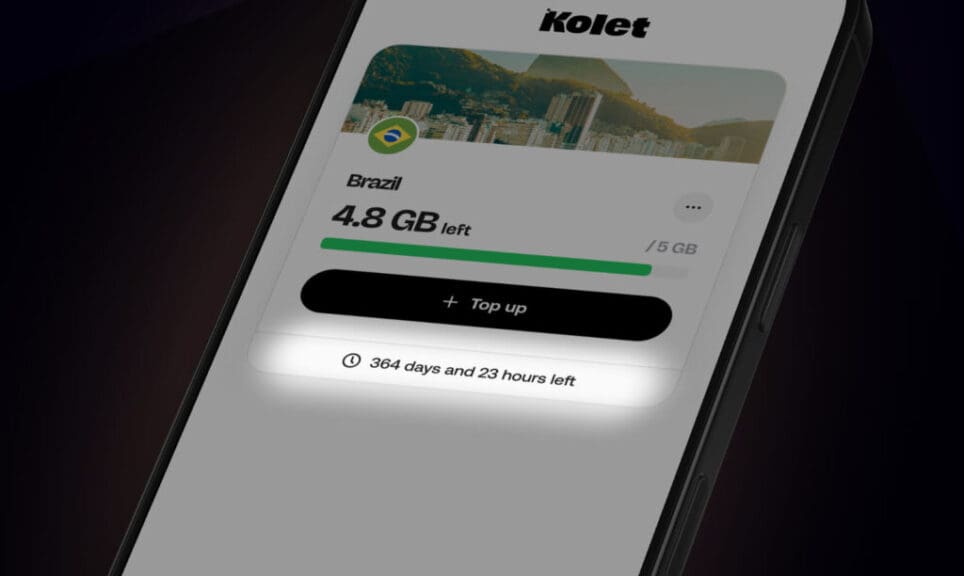
Travel eSIM provider Kolet has passed one million users, a tenfold increase in under two years, as more travellers switch to a Kolet eSIM instead of roaming. The French start-up has also launched unlimited data plans in 100 destinations and extended the validity of its standard data packages from 30 days to 365 days.
More than one million travellers have now activated a Kolet eSIM, the company said in an announcement on 9 November 2026. Unlimited plans start from €3.99 a day.
How Kolet eSIM grew so quickly
Kolet says its rapid growth over the past two years has come largely through partnerships with more than 150 travel brands, including Air France-KLM, Virgin Atlantic, Transavia and Omio. Those partners offer Kolet data to their customers at the point of booking, so travellers can sort out mobile data at the same time as their flight or train.
Founded in 2024, Kolet operates in more than 190 destinations. It aims to make mobile data part of the travel booking process rather than something travellers arrange after they land. The company says around 40% of its users come back for a second trip, a sign of strong customer loyalty.
What the new Kolet eSIM plans offer
The new unlimited plans are daily passes available in selected destinations. According to Kolet’s own guide to its unlimited plans, they include 5 GB of high-speed data a day, after which speeds are reduced until the allowance resets. For now, they can only be bought through the Kolet app.
The longer validity on standard plans is the bigger change for frequent travellers. A data package that lasts a year rather than a month means unused data from one trip can be used on the next, which suits people who travel often but for short periods.

What business travellers should consider
For business travellers, eSIMs can be a cheaper and more flexible alternative to roaming on a company phone. Buying data before departure also means staff are connected as soon as they land, without having to find Wi-Fi or a local SIM.
There are trade-offs. Unlimited plans with a daily high-speed cap may not suit heavy users who join long video calls or upload large files, so travellers should check the allowance against how they work. Company phones also need to be eSIM-compatible and unlocked, and IT teams may have rules about installing new mobile profiles on managed devices.
Travel managers should also decide who pays. If staff buy their own eSIM data, the travel policy should make clear whether it can be claimed as an expense, and whether it replaces the company’s roaming arrangements. Kolet also offers a business service, so companies can manage data for teams centrally.
Our guide to choosing a travel eSIM for work trips sets out what to look for, from network coverage to support. Some destinations also have their own rules on eSIM use, as we reported when Turkey’s eSIM restrictions continued into 2026.
The eSIM market is growing quickly, with several providers competing on price, coverage and airline partnerships, so it pays to compare options before each trip. For Kolet, the challenge now is to turn its airline partnerships into loyal repeat customers, and the year-long data validity is clearly designed to bring travellers back for their next journey rather than buying from a rival.