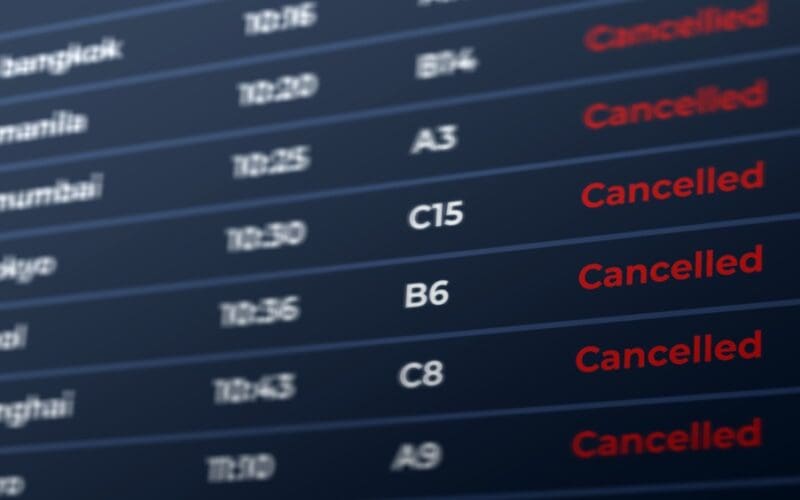
Turkish Airlines is to withdraw from 18 international destinations spanning Europe, Africa, the Middle East and Central Asia, in one of the most significant network contractions ever undertaken by the Istanbul‑based carrier.
The flag carrier, long celebrated for flying to more countries than any of its rivals, is reshaping its schedule for the remainder of 2026 as the wider industry continues to absorb the operational shockwaves of the Iranian–US conflict.
Among the casualties are four Iranian cities, Esfahan, Mashhad, Shiraz and Tabriz, alongside Havana, Hurghada, Kinshasa, Luanda, Libreville, Monrovia, Freetown and Billund. A number of African tag‑on sectors and circular routings are being dropped altogether, and the airline has confirmed they will not be reinstated for the summer 2026 season.
Although Turkish Airlines has yet to publish an official rationale, industry analysts attribute the cull to a combination of pressures: heightened fuel‑supply uncertainty stemming from the conflict, the stubbornly high operating costs of multi‑stop African services, and continuing difficulties in repatriating revenue from a handful of markets.

The decision is expected to release aircraft and crew for more lucrative summer flying, with capacity redirected towards long‑haul growth to China and a clutch of new short‑haul additions, including London Stansted, Yerevan, Tirana and Timișoara.
Even with the retrenchment, the airline’s growth trajectory remains intact. Turkish Airlines currently operates 407 aircraft and has more than 300 on order, as it presses ahead with its ambition to reach a 1,000‑strong fleet by 2036.
For corporate travel buyers and frequent flyers, the practical fallout will be concentrated in secondary markets across Africa and the Middle East, where alternative connections may now require routing via Gulf hubs. The carrier’s principal global gateways, by contrast, remain untouched.