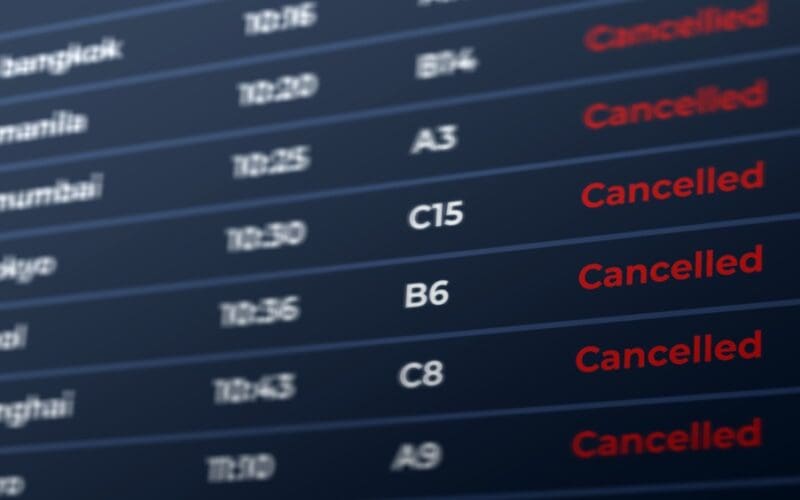
Britain’s business travellers are facing a summer of cancelled flights, consolidated routes and sharply higher fares after Goldman Sachs warned that the United Kingdom is the country most exposed to a deepening jet fuel crisis triggered by the Iran war.
In a research note circulated to clients this week, the Wall Street investment bank said the prolonged closure of the Strait of Hormuz had created “extreme tightness” across the European jet fuel market, with the UK at the sharpest end of the squeeze because of its low stockpiles, heavy reliance on imports and dwindling domestic refining capacity.
“The UK is the largest net importer of jet fuel in Europe, and it holds no strategic reserves, leaving commercial inventories as the primary buffer,” the bank’s analysts wrote. “As a result, inventories in some countries, especially the UK, could fall to critically low levels, increasing the likelihood of rationing measures.”
The warning lands at the worst possible moment for corporate travel managers, who are already grappling with a doubling of jet fuel prices since the conflict began on 28 February. Globally, carriers have stripped almost two million seats from their May schedules over the past fortnight, with executives fearing far deeper cuts if the strait, through which roughly a fifth of internationally traded fuel passes, remains closed into the peak summer travel season.
For UK-headquartered businesses, the read-across is uncomfortable. Fuel typically accounts for up to a quarter of an airline’s operating costs, and IAG, parent of British Airways, has already signalled higher fares despite its hedging programme, conceding it was “not immune” to fuel volatility. Air France expects an additional $2.4 billion (£1.9 billion) on its annual fuel bill this year, while American Airlines has flagged a hit of more than $4 billion, accompanied by reduced passenger benefits and fresh surcharges.
Michael O’Leary, chief executive of Ryanair, Europe’s largest carrier by passenger numbers, told reporters on Friday that rivals were “desperately” combing their networks for flights to cancel and would begin doing so within weeks. Fuel suppliers have indicated to airlines that May should remain manageable, but flagged “mid to late June as the potential start of disruptions” if Hormuz is not reopened.

Whitehall has so far played down the prospect of a UK-specific squeeze, insisting alternative supply routes can fill the gap. Privately, however, fuel providers tell carriers that Britain has the “most limited visibility” of any European market on jet fuel availability, a direct consequence of its dependence on Middle Eastern barrels.
The structural weakness has been compounded by the loss of refining capacity at home. Goldman Sachs highlighted last April’s closure of Grangemouth, Scotland’s only oil refinery, as a key reason for the country’s exposure. Question marks continue to hang over the Prax Lindsey refinery in North Lincolnshire, although new owner Phillips 66 insists the acquisition will shore up domestic supply.
In Brussels, the European Commission moved to calm nerves on Monday, with spokeswoman Anna-Kaisa Itkonen confirming that fresh guidance for airlines would be issued later this week. “I don’t think anyone knows how long this situation will last, so the best we can do, and the most effective thing that we can do, and that we are doing, is to prepare for all eventualities,” she said.
Sir Keir Starmer has gone further still, suggesting last week that British holidaymakers may have to reconsider “where they go on holiday”, a remark that has done little to reassure the UK travel industry.
A separate report published this week by the Tony Blair Institute argued that Europe’s framing of energy primarily as a climate issue had left the continent with electricity prices two to three times higher than its competitors and an ever-deeper reliance on imports. It is a verdict that will resonate uncomfortably with UK chief financial officers now bracing for a longer, costlier road back from the Hormuz shock.
For travel buyers, the practical implication is clear: build flexibility into third-quarter itineraries, expect schedule volatility, and budget for fares that, in the worst case, could climb well into double digits before the autumn.