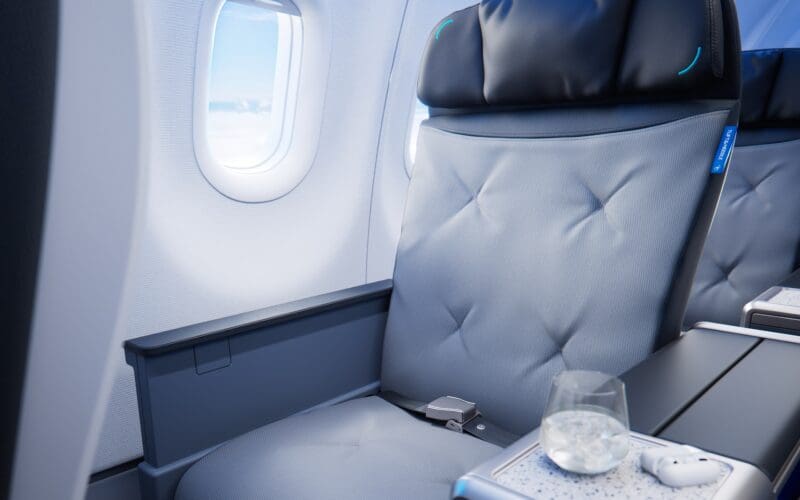
British Airways’ premium cabin customers are first in the firing line for fare rises as parent group IAG scrambles to claw back a €2bn (£1.7bn) jump in its fuel bill sparked by the closure of the Strait of Hormuz.
Speaking as IAG slashed its full-year profit guidance, chief executive Luis Gallego said the group would attempt to pass roughly 60 per cent of the additional fuel cost on to travellers, with corporate flyers and other premium passengers expected to absorb the bulk of the increase.
Mr Gallego said he was “particularly confident” in the willingness of passengers on long-haul premium routes, notably BA’s transatlantic services to the United States, to wear higher fares, a clear signal that business class tickets will bear the brunt of repricing. The remarks follow Virgin Atlantic’s decision last month to slap a £360 fuel surcharge on its most expensive fares.
Even after the fare rises, IAG expects to swallow an unrecoverable €800m hit, dragging annual profits below previous forecasts. The group has lifted its forecast fuel bill for the year to roughly €9bn, up from €7bn before the Iran war forced the closure of the Gulf waterway, which normally handles a fifth of global oil and gas shipments.
IAG warned of a deeper crisis should the strait remain blocked, flagging the “potential for supplies of jet fuel to be restricted on a global basis”. The International Air Transport Association (IATA) echoed those concerns, calling on European regulators to permit the use of US-grade Jet A fuel to ease supply pressure. “If the war continues, it won’t be long before we see fuel shortfalls in parts of the world. European fuel supply could come under pressure,” said Stuart Fox, IATA’s director for flight and technical operations.
European safety regulator EASA has indicated it would have no objection to the use of US Jet A, which freezes at slightly higher temperatures than the Jet A-1 grade traditionally used across Europe.
While IAG said summer supplies at major hubs including Heathrow remain secure, the wider industry is increasingly anxious about turnaround refuelling for long-haul services into Asia and Africa, where many airports rely on Gulf-shipped kerosene. Lufthansa this week confirmed that one of its South African services was forced to divert to Namibia after Cape Town airport ran out of jet fuel.
To shield operations, BA and sister carrier Iberia are tankering more fuel out of North and South America, where prices remain lower and supplies plentiful. The group has also drawn on its own strategic reserves. “We have a problem in the Strait of Hormuz, but you can have the supply to replace it. We have, for example, regular supplies now from the US,” Mr Gallego said. “In the last 10 years, we have been investing to have a backup plan in a situation like this. We have our own supply of fuel, our own inventory in the UK and Ireland.”

Those reserves include a dedicated BA depot on the Isle of Grain in the Thames Estuary, from where two trains a day shuttle fuel directly to Heathrow. Stocks can also be redirected to Spain and Ireland to support Iberia and Aer Lingus.
The crisis is reshaping BA’s network. The carrier has already axed several of its busiest Middle East routes, including Dubai and Abu Dhabi, as the UAE and neighbouring Gulf states face missile and drone attacks from Tehran. IAG said overall passenger capacity will fall below earlier guidance, with replacement services launched to destinations in India and Africa.
BA chief executive Sean Doyle said a further reshuffle was likely once Whitehall finalises plans allowing carriers to mothball airport slots to conserve fuel without losing future rights to them. “A chunk of what we’re hoping to unlock with the slot consultation is the ability to redeploy capacity,” he said. “Right now we’re not able to fully effectively redeploy capacity out of markets where people aren’t travelling to, such as the Middle East, into markets where people want to travel to.”
The industry-wide picture remains bleak. Oil climbed back above $100 a barrel on Friday after Donald Trump confirmed US strikes on several Iranian facilities in retaliation for attacks on US Navy vessels. Jet fuel prices have roughly doubled since the United States opened its February campaign against Iran, with IATA data putting average global jet fuel at around $181 per barrel this week.
Ryanair chief Michael O’Leary warned last month that “two or three European airlines” could fold in October or November if jet fuel prices fail to ease, while Jet2, Britain’s biggest tour operator, reported a surge in package holiday bookings as nervous consumers seek the financial protection that comes with ATOL cover. Packages now account for 51 per cent of its sales, up five percentage points since the war began.
For corporate travel buyers, the message from Madrid is unambiguous: the era of cheap premium long-haul is over for now, and budgets for transatlantic business class will need to stretch further through the autumn booking cycle.