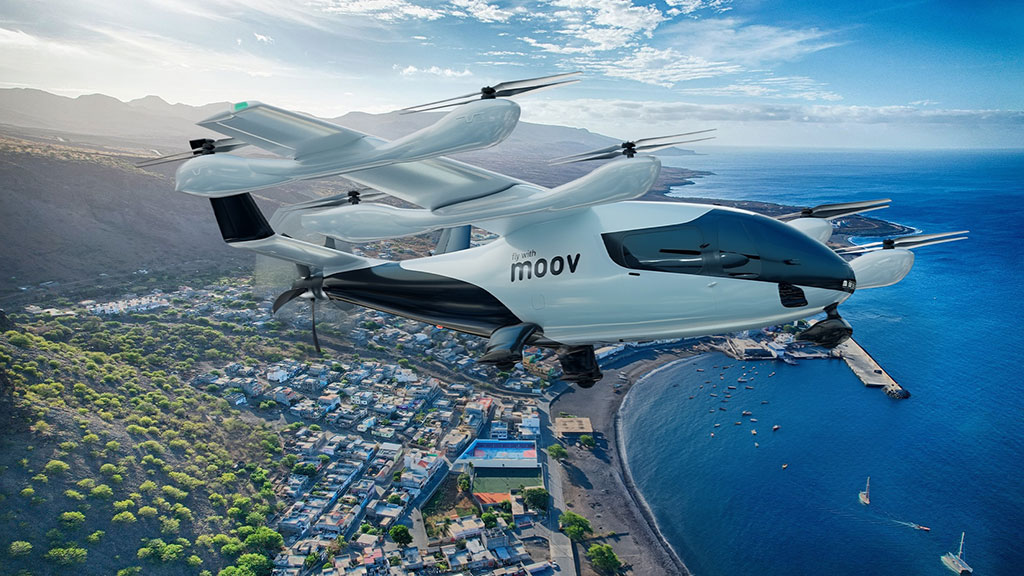
Eve Air Mobility has signed a partnership with the Florida Department of Transportation (FDOT) to run an Advanced Air Mobility programme at SunTrax Air, the state’s dedicated research facility for next-generation aviation.
The work will focus on the infrastructure, operational procedures and airspace navigation procedures needed to fold electric air taxis into Florida’s wider transport network.
For UK business travellers, the significance is less about Florida and more about what a fully worked-through operating model looks like. Florida is one of the busiest transatlantic corridors for British companies, with Orlando, Miami and Tampa all carrying substantial UK business traffic. If a state-level transport authority can settle questions of vertiport siting, passenger handling and airspace integration in a controlled environment, the answers travel. British firms watching the UK government’s own 2028 target for commercial flying taxi services will find the Florida work a useful benchmark for how quickly theory converts into scheduled operations.
Eve, listed on the NYSE as EVEX and on Brazil’s B3 as EVEB31, will bring its eVTOL aircraft, operations and services expertise to the FDOT-led initiative. SunTrax Air, owned and operated by FDOT, functions as Florida’s Advanced Air Mobility research and development hub, providing an environment to evaluate technologies, operational concepts and supporting infrastructure.
The two parties will assess operational concepts, infrastructure readiness, passenger experience and future ecosystem requirements. Passenger experience is the line worth noting. Much of the eVTOL sector’s public commentary has concentrated on aircraft certification, while the practical business travel questions, how long a transfer actually takes door to door, what security screening looks like, whether luggage allowances work for a two-day trip, have had far less attention.

“Florida recognizes its strategic role in the future of Advanced Air Mobility and is proactively building the ecosystem needed to support it,” said Johann Bordais, chief executive officer of Eve Air Mobility. “Chief Will Watts and the FDOT team understand that successfully introducing a new mode of transportation requires alignment across aircraft, infrastructure, operations, and communities. Building on Embraer’s longstanding relationship with the state, Eve is proud to bring its expertise to help advance Florida’s vision and readiness for eVTOL operations.”
“This partnership is another step of forward-progress being made in Florida toward achieving the implementation of Advanced Air Mobility,” said Jared W. Perdue, P.E., FDOT Secretary. “The unique resources and infrastructure found only at SunTrax will play a key role in Eve’s research and testing needed to ensure the safe integration of Advanced Air Mobility into our transportation system.”
The UK is running a parallel process. The Civil Aviation Authority’s delivery model for commercial eVTOL flights sets an ambition to have the regulatory framework and operational systems in place for initial commercial passenger operations from the end of 2028, covering airworthiness, flight operations, pilot licensing and landing sites.
Nothing here changes travel policy this year. Eve’s aircraft is still in flight testing, and no commercial passenger service has been announced. But infrastructure is the long pole. The first operational vertiport at Bicester Motion took years to deliver, and airport-to-city eVTOL links will only reach corporate travel programmes once vertiports, airspace rules and pricing are all settled.
Travel managers at smaller firms should treat this as a planning signal rather than a procurement decision. The realistic first use case remains the airport transfer, replacing an hour in traffic with a ten-minute hop, and Florida’s testing will help establish whether the economics support anything beyond premium pricing.