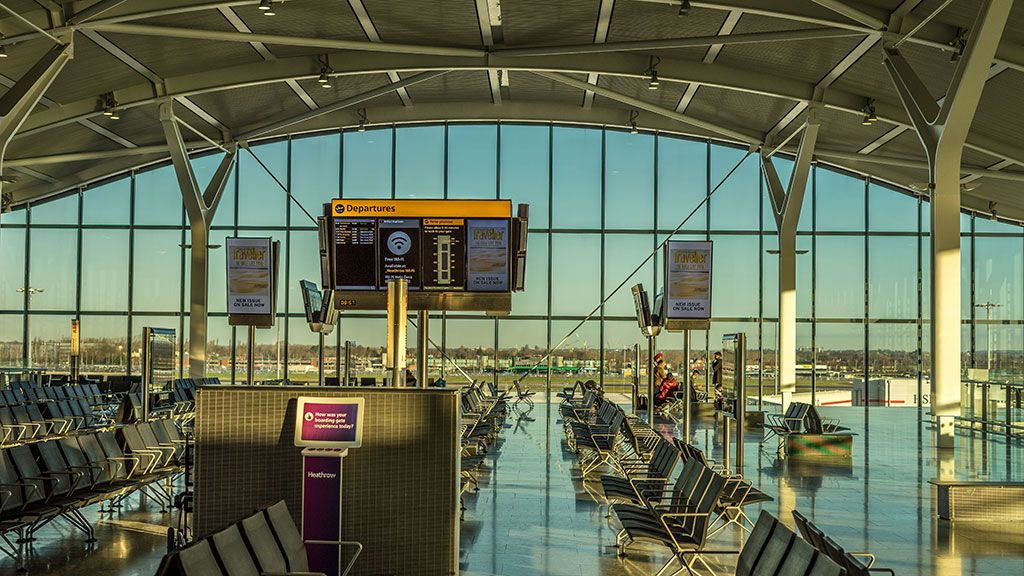
Heathrow has warned that passenger numbers and profits will both slip this year, blaming the war in the Middle East for knocking demand at Europe’s busiest airport.
In its latest investor report, the west London hub said it now expected total passenger numbers to fall by 1.1% to 83.6 million as the Iran conflict weighs on air travel. “The ongoing conflict in the Middle East is putting notable downward pressure on traffic,” the airport said. “This reflects the risk that continued volatility in the Middle East could dampen traffic volumes, with impacts extending beyond the region to global travel demand over the remainder of the year.”
The downgrade comes despite a solid start to 2026. Heathrow reported a 0.7% rise in passengers to 32.8 million in the year to the end of May, helped in part by a jump in travellers using the airport to connect onwards as rival hubs felt the strain of the regional conflict.
Profits, however, are set to take the bigger hit. The airport expects adjusted earnings to drop by £147m year on year, and by £60m against the forecast it published in December. Having posted adjusted profits of £2.03bn last year, Heathrow now anticipates £1.88bn for 2026.
The trading update landed as Heathrow confirmed it had been “engaging closely” with its regulator, the Civil Aviation Authority, over the cost of its plan to build a third runway. The CAA has been weighing how much of the early expansion bill can be passed on, a question that goes to the heart of how much passengers will ultimately pay at the gate. Details of the regulator’s work are set out on the CAA’s capacity expansion pages, and the watchdog has already opened the door to a rival, Arora-led runway scheme in a landmark consultation.
The financial warning also follows a bruising fortnight for the expansion case. Earlier this month the Department for Transport published documents as part of its Heathrow expansion consultation estimating that the economic boost from a third runway could be a tiny fraction of previous claims.

The government’s own analysis suggests the runway would lift GDP by up to 0.05%, some 90% below the 0.5% figure previously cited, while the overall trade-off from a bigger airport could leave the UK as much as £62.5bn worse off in net present value terms.
Heathrow pushed back hard, arguing the modelling failed to capture the wider prize. “When the benefits of increasing UK trade by £150bn a year and £33bn of private capital to expand Heathrow aren’t captured by this economic assessment, it clearly doesn’t represent the full picture,” a spokesperson said. “The government itself is clear that the model is extremely limited and only designed for publicly funded projects. It doesn’t capture any value from increased trade, inbound tourism or massive private investment into UK supply chains, businesses and steel producers. It’s not fit for purpose and needs to be reformed to capture these clear benefits.”
The expansion debate is not only about pounds and pence. Analysis carried out for the DfT by consultants Aecom warned that enlarging London’s hub airport could have “major adverse” effects on the health and wellbeing of up to 3 million people living nearby, worsening noise and air quality while harming access to housing, education, healthcare, open space and transport.
The project has also been dogged by questions over whether it can realistically be delivered. Heathrow’s chief executive has himself cast doubt on the deliverability of the third runway, and in May the airport’s new chair opened talks with airlines and the billionaire local landowner Surinder Arora to try to defuse a row that threatens further delay. Carriers including British Airways owner IAG and Virgin Atlantic have thrown their weight behind Arora’s alternative “Heathrow West” plan, adding to the pressure on the airport’s own blueprint.
For all the turbulence, Heathrow insists the strategic case is intact. “Our expansion plans are widely supported by businesses and trade unions across the UK because they understand the transformative difference this project will make with improved prosperity and new job opportunities for their communities,” the spokesperson added.
For business travellers, the immediate takeaway is more modest: a year of softer demand at the UK’s gateway hub, even as the longer argument over its future rumbles on.