


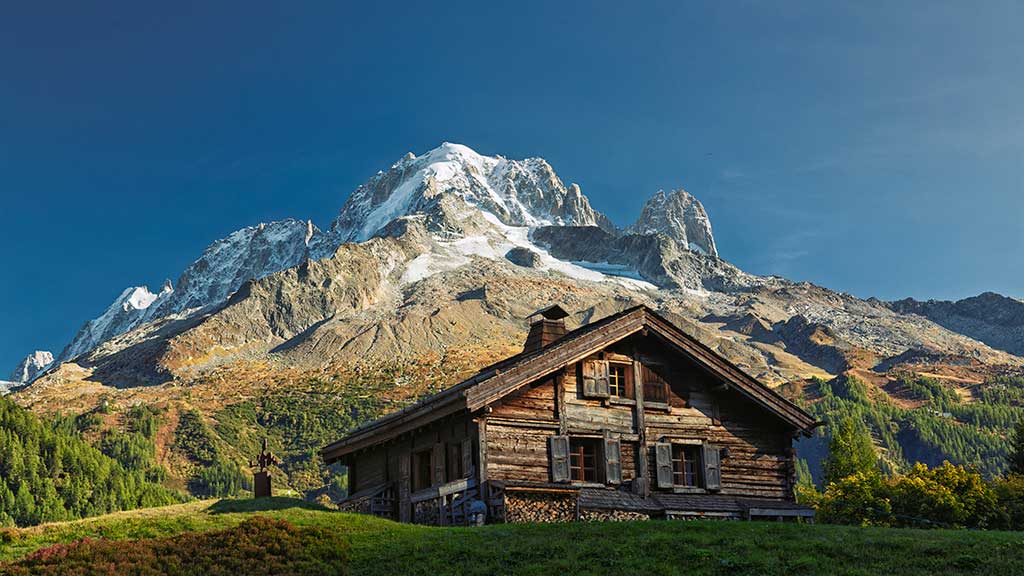
Every winter, Haute Savoie fills with skiers chasing powder beneath Mont Blanc.
In our cover story, reviews and features editor Andrea Thompson arrives after the melt and finds a region that does not hibernate between seasons but changes character entirely. Her verdict, reached across vineyards, waterfalls and mountain villages, is that summer is not the consolation prize here. It may be the main event.
The journey begins in Saint Gervais Mont Blanc, a village that spends the winter as a launchpad for the vast Evasion Mont Blanc ski domain and the summer as something closer to a spa town. The Thermes de Saint Gervais Mont Blanc set the tone, with warm pools framed by rock and thermal waters that have flowed through the mountainside for more than two centuries. From there, the Tramway du Mont Blanc climbs slowly through forest and pasture to the Nid d’Aigle, the Eagle’s Nest, where glaciers glint overhead and non skiers can reach the high mountains without crampons, guides or technical skill. It is, as Andrea writes, a reminder that this is a year round stage for drama rather than a winter playground with an off season.
Chamonix, so often shorthand for extreme sport, reveals a gentler personality once the snow retreats. The town’s Michelin starred restaurants spill onto sunlit pavements, artisan shops sell local cheeses and chocolates, and a newly reopened museum traces the valley’s mountaineering history through hands on displays that captivate even confirmed non climbers. Further into the Haut Giffre valley waits the Rouget waterfall at Sixt Fer a Cheval, known locally as the Queen of the Alps and at its thunderous best in summer, when snowmelt swells the cascade. The village beyond is a cluster of chalets, cobbled lanes and food shops selling reblochon, saucisson and mountain honey.
There are surprises for the palate too. Haute Savoie is not widely known for wine, yet a tasting at a tiny family domaine reveals crisp alpine whites, delicate roses and complex reds built on ancestral Gringet grapes, made by a third generation winemaker whose vines survive genuinely cold winters. Electric mountain bikes then carry the writer from Les Carroz through forests and wildflower meadows, flattening the climbs and turning former ski runs into sweeping summer descents. In Samoens, one of the prettiest villages in the French Alps, the Jaysinia Alpine Botanical Garden displays more than 2,500 species of alpine plants in a steep, winding garden carved into the mountainside, with free entry and views across a village that feels cultural rather than commercial.
Adrenaline seekers are not forgotten. Once the snow melts, the same slopes that carry skiers become an open air playground of mountain bike trails, whitewater rafting, paragliding launch points and hiking routes that climb straight up the ridgelines, while paragliders drift above the villages in bright arcs of colour. The ski lifts keep running too, carrying cyclists, hikers and families to mountaintop restaurants with astonishing ease.
What lingers most, though, is the tone of the piece. The writer arrived expecting a summer version of a ski resort and found forests humming with life, waterfalls in full voice and villages that invite exploration rather than conquest. For business travellers, the practical appeal is obvious. Geneva’s airport sits within easy reach, the region works brilliantly for incentive trips and team escapes, and the summer months offer hiking, rafting and spa recovery without winter’s crowds or costs. Whether you are extending a Swiss business trip or planning a leadership offsite with real wow factor, this feature makes a persuasive case for the green season. Winter may remain Haute Savoie’s headline act, the article concludes, but summer, autumn and spring are its soul.
To read the full article go to pages 10 to 15 of the digital edition.
