


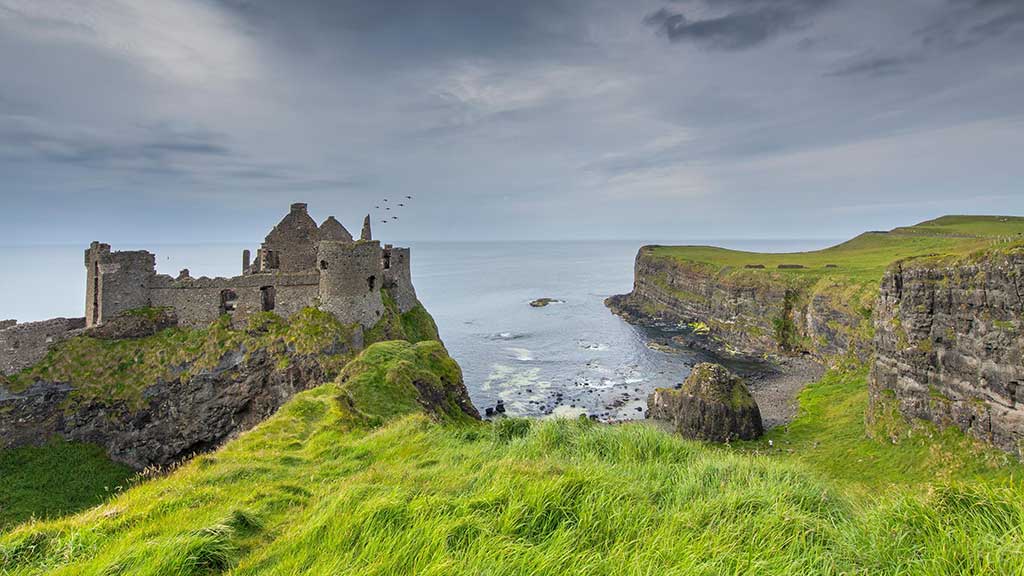

Some destinations feel visited and others feel encountered. In this issue’s second destination review, Andrea Thompson travels the northeastern corner of County Antrim and finds a chain of nine emerald valleys that belong firmly in the second category
Stretching along the celebrated Causeway Coastal Route from Glenarm in the south to Glentaisie in the north, the Glens of Antrim form a sequence of natural amphitheatres where Atlantic light shifts by the minute and the past feels unusually close.
The feature opens with folklore, because in the Glens folklore is unavoidable. Locals will tell you that fairies once danced in the hollows, that giants shaped the cliffs and that the ancient kingdom of Dalriada still whispers through the forests. Believe the stories or not, the valleys are so green they seem lit from within, and it is easy to understand why storytellers have gathered here for centuries.
Each glen has its own personality. Glenariff, often called the Queen of the Glens, is the most dramatic of the nine, its forest park a world of cascades, wooden walkways and moss covered ravines that feel almost tropical after rain. Glenarm sets a gentler tone with its stately castle and walled gardens, home to the Earls of Antrim for centuries. Glendun curls around a graceful stone bridge, while Glentaisie opens out toward Ballycastle and views that seem to stretch all the way to Scotland. The connecting drive is one of Ireland’s most spectacular, hugging cliffs, skirting beaches and, on misty days, conjuring the ghostly silhouette of the Mull of Kintyre across the water.
The article is generous with practical guidance. It recommends coffee stops in Glenarm, a wander around Carnlough Harbour, forest trails at Glenariff and time in Cushendun, a village with a distinctly Cornish feel whose sea caves have appeared in Game of Thrones. On accommodation, choices run from the Marine Hotel on Ballycastle’s seafront to family run B&Bs in Cushendall and Cushendun and country house stays around Glenarm. Beyond the valleys sit some of Ireland’s biggest sightseeing draws, including the 600 foot cliffs of Fair Head, the puffin colonies of Rathlin Island and the basalt columns of the Giant’s Causeway, best visited early or late when the coach parties thin.
Getting there is refreshingly simple for UK business travellers thinking about a bleisure extension. Belfast International Airport is roughly 40 minutes from the Glens and Belfast City Airport about an hour, with car hire available at both and in the city centre, though pre booking is advised in peak season. Ferries run from Cairnryan and Liverpool for anyone who wants their own car, which the feature strongly recommends, since Translink buses serve the main towns but individual glens sparingly. From Belfast the route follows the M2 north before joining the A2 Coast Road, one of the most scenic drives in Ireland, and the article picks out Cushendall, Cushendun and Ballycastle as the best base towns. Late spring to early autumn brings the best weather for hiking, coastal drives and photography.
The people complete the picture. Stop in any village pub, the writer notes, and you will hear tales of fishermen, musicians, poets and farmers who have shaped life here for generations. As the piece concludes, the magic of the Glens lies in their contrasts, wild yet gentle, remote yet welcoming, ancient yet alive with everyday life, and they linger in the memory long after the drive ends.
To read the full article go to pages 20 to 24 of the digital edition.
