


For years Lisbon occupied a curious position in the European imagination, adored by holidaymakers yet peripheral to the grand sweep of global decision making.
That era, as our MICE destination review makes clear, has quietly ended. In 2025 Lisbon was ranked the number one city on earth for international association congresses, moving ahead of Paris, Barcelona and Vienna, and collecting a shelf of leading meetings and conference destination trophies along the way.
What makes the story compelling is how little of the transformation relies on reinvention. Lisbon has not tried to become somewhere else. Instead it has taken the qualities that made it irresistible, the light, the food, the river, the human scale, and layered on the serious hardware that global organisations need. The engine room is Parque das Nacoes, the former Expo 98 site on the Tagus, where FIL, the Lisbon Exhibition and Congress Centre, anchors the district with vast column free pavilions. Next door, the 20,000 seat Altice Arena has become synonymous with Web Summit and the city’s tech identity.
Logistics play their part. Humberto Delgado Airport sits inside the city limits, a rare luxury for a European capital, meaning delegates can land, clear arrivals and be at the river within minutes. As the hub of TAP Air Portugal, Lisbon connects naturally to Europe, the Americas and Africa, sparing many travellers awkward transfers. On the ground, a modern metro, affordable taxis and walkable neighbourhoods keep things intuitive, while the hotel scene has expanded rapidly from international five star names to design led boutiques that feel distinctly Lisbon.
Then there is value, which the feature argues is the deeper reason the city has surged. Compared with London, Paris or Zurich, Lisbon stretches an event budget without ever feeling like a compromise. Meals linger longer, rooms feel larger and days feel brighter, and with nearly 300 days of sunshine a year the city sidesteps the seasonal bottlenecks that squeeze rival capitals. Even winter here is a gentle, Atlantic washed season of blue skies and crisp mornings, perfect for exploring without crowds. Organisers also get atmosphere in abundance. The Cordoaria Nacional, once a rope factory, hosts dinners that echo with maritime history, palaces along the river open their doors for receptions, and stepping into Belem for a warm pastel de nata, baked there since 1837, feels like entering a chapter of Portugal’s story. Turismo de Portugal and the Lisbon Convention Bureau have become adept supporters too, offering bid assistance, ambassador programmes and sustainability guidance.
There is a sense of a city and a country working in concert. Portugal’s leadership in renewable energy lends credibility to events with environmental commitments, while a national hospitality culture that is warm, unfussy and quietly proud means visitors feel looked after without being fussed over.
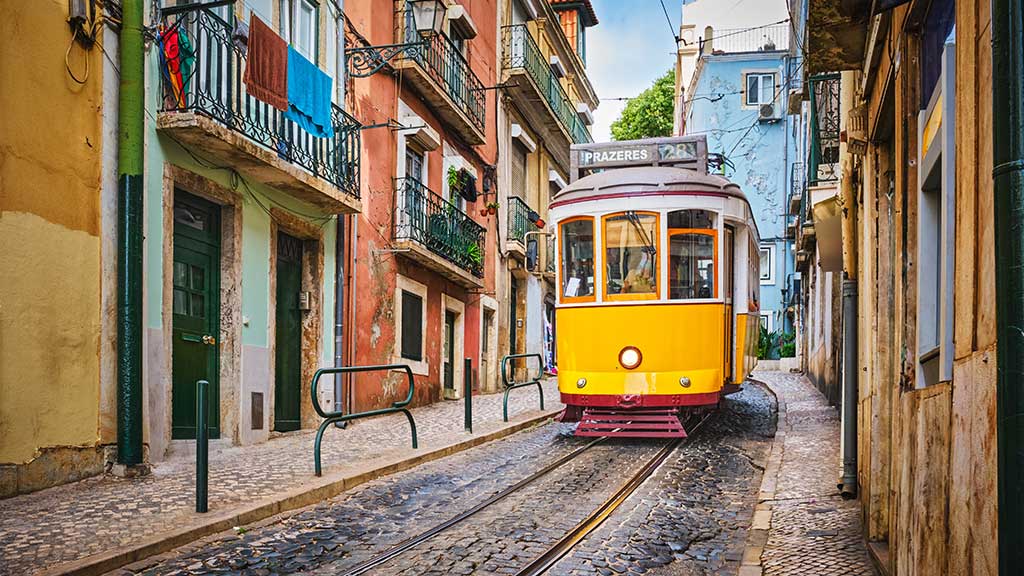
The review saves space for what happens after the final session, because Lisbon’s real magnetism reveals itself when delegates spill into the streets. Tram 28 rattles through Alfama’s tiled lanes, the climb to Castelo de Sao Jorge rewards with a panorama of red rooftops, Bairro Alto’s taverns drift with fado into the night, and a spare day opens up Sintra, Cascais and the Alentejo’s cork forests and wineries. By day a city of infrastructure and capability, by night a place of music, food and river breezes, Delegates arrive for a conference and leave planning a holiday, and travellers come for a weekend and find themselves imagining a life here.
What Lisbon has achieved is rare, a dual identity that feels entirely natural, and it has stopped being the charming alternative and become the obvious choice, a city that understands exactly what people want from a destination today: competence, beauty and a sense of welcome.
To read the full article go to pages 38 to 41 of the digital edition.
