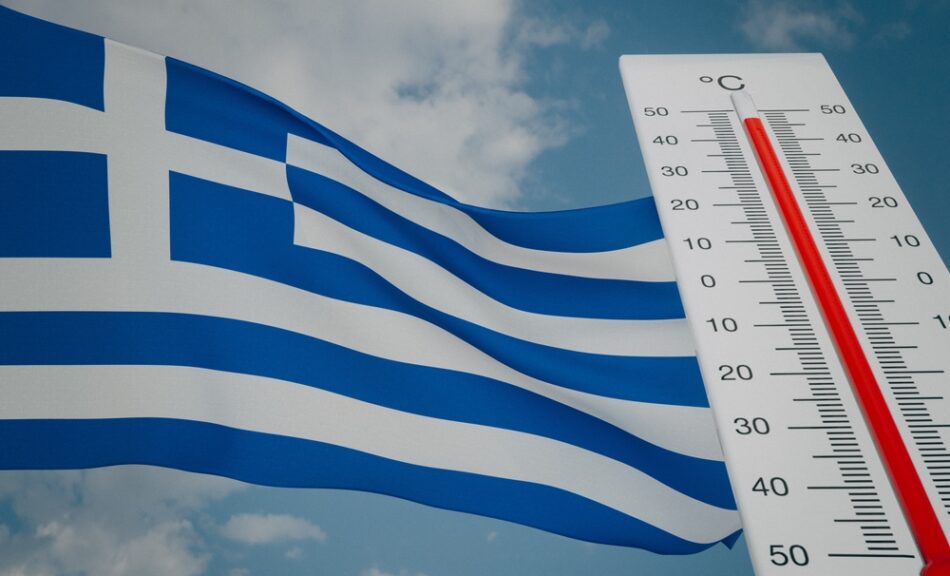
Greece has imposed a mandatory four-hour work ban across Athens, Thessaly, the Peloponnese and central Greece, ordering outdoor labour to stop between 1pm and 5pm as temperatures push beyond 40C. For UK business travellers with meetings, site visits or logistics running through the Greek summer, the practical effect is a country that now shuts down for the hottest part of the afternoon.
The Labour and Social Security Ministry confirmed the measure covers outdoor manual labourers, food delivery workers, couriers and shipyard staff, with employers urged to offer remote working options where the job allows it. It is a public health intervention rather than a travel restriction, but anyone travelling on business in the affected regions will feel it in the shape of their day.
What to expect on the ground
Construction sites fall silent, deliveries pause and some hospitality operations that rely on outdoor staff scale back between 1pm and 5pm. In smaller towns and resort areas where teams are thinner, the impact is sharper: a hotel or venue with a handful of outdoor workers may simply stop until late afternoon.
The sensible response is to treat the Greek working day as two blocks rather than one. Schedule site visits, port inspections and anything requiring outdoor staff for the morning, and push client dinners and evening meetings later than a UK diary would normally allow. Expect couriered documents and equipment deliveries to arrive either side of the window, not during it, and build that into any timeline that depends on same-day movement of goods.
Streets will be noticeably quieter through the afternoon, which has its own upside for anyone who needs a few hours to work from an air-conditioned office or hotel. It is worth confirming with hotels and venues whether their own service levels change during the ban, particularly at properties outside the main city centres.

Wildfire risk and Foreign Office guidance
The shutdown arrives as Greece sits at its highest wildfire alert level following record heat. The Foreign Office has updated its Greece travel advice accordingly, warning of elevated wildfire risk through the summer season and urging visitors to make sure their mobile phone is registered to receive Greek emergency alerts. The FCDO safety and security guidance for Greece also flags that access to affected areas can be restricted at short notice, and that conditions change quickly.
That pattern will look familiar to anyone who has followed the travel advice around wildfires in France this summer, where the operational risk sat on the roads rather than in the air. Flights largely keep running; it is ground transport and access to specific districts that becomes unpredictable. Travel insurance should be checked against the itinerary rather than assumed to cover disruption caused by heat or fire.
The cost to Greek business
The measure protects workers but slows output in shipping, construction and tourism services, three sectors that matter to UK companies trading with Greece. Businesses face compressed operating hours, and travellers should anticipate slower turnaround on deliveries, excursions and anything scheduled tightly around the afternoon. Officials have stressed the ban is temporary and proportionate to the risk of heat-related illness.
Greece is not alone in reshaping the working day around heat. The Acropolis has already closed during peak afternoon temperatures this summer, and similar patterns have appeared in Italy’s updated summer travel guidance. For UK firms sending staff to southern Europe between June and September, the useful assumption is no longer that a normal business day is available. Plan for mornings and evenings, and treat the afternoon as lost time.